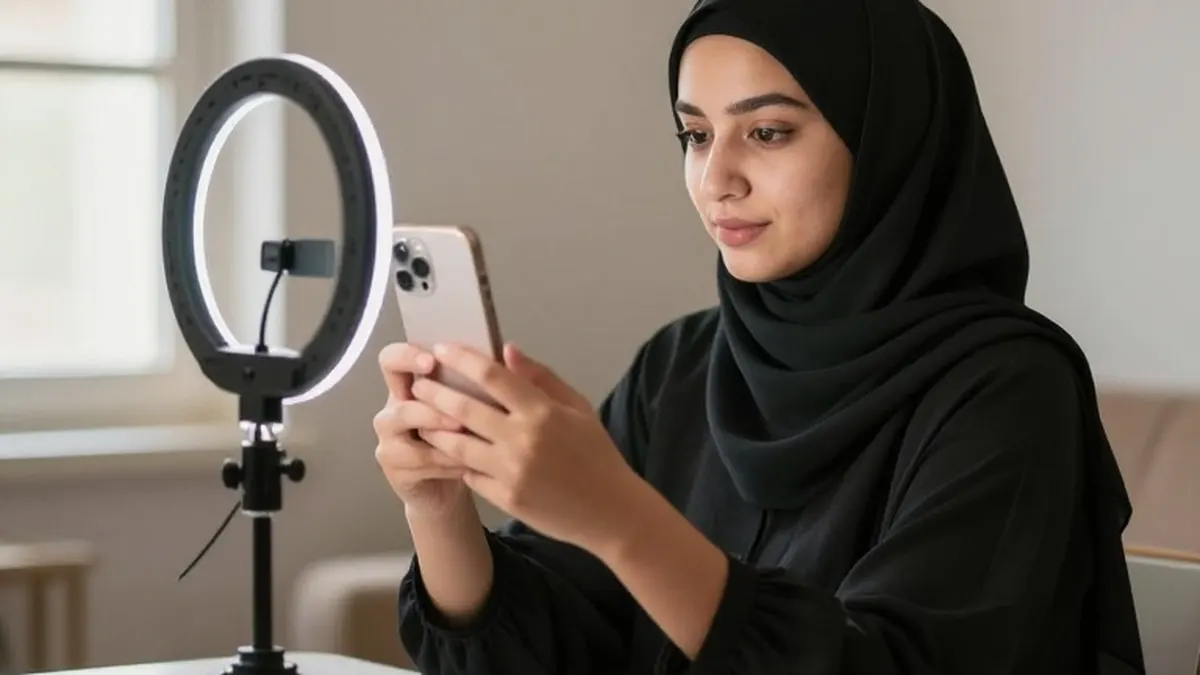
Under the strict governance of the Taliban, many Afghan women have turned to digital platforms such as Instagram, TikTok, and YouTube to sustain their livelihoods and maintain a sense of autonomy. With physical doors to education and employment often closed, these women are building personal brands by sharing content that ranges from cooking and shopping in local bazaars to exploring nature and reciting poetry. For a significant number of them, this digital presence has evolved from a hobby into a primary source of income and a private refuge from public restrictions.
Narges Badr, a 22-year-old resident of Kabul, began her journey as an influencer in October 2023. At the time, she found herself without a profession or a path to continue her higher education, as girls had been barred from secondary schools and women from universities since the Taliban returned to power in 2021. Badr stated that she sought a meaningful way to occupy her time while striving to achieve financial independence. Her initial content focused on books, but as her audience grew to several thousand followers, she expanded her efforts.
Badr leveraged her growing online presence to launch a small business producing women's handbags. She taught herself the technical skills required for content creation, including photography, video shooting, and editing. Today, her personal and business accounts collectively command nearly 100,000 followers across various platforms. She describes this as a significant achievement for a young woman in Kabul, noting that she built her following largely on her own. The work has become her full-time occupation, and she now employs several individuals, including her brothers, to handle the technical aspects of her content production.
While Badr has achieved commercial success, not all women in this space have reached the same level of financial stability. Sara Firooz, a 21-year-old poet living in the remote Shugnan region of Badakhshan, reads classical Persian verse and local Shugni poetry against the backdrop of the Pamir Mountains. Since starting her channel in 2025, she has gathered approximately 14,400 followers and is considered a local celebrity in her village. However, she has not yet earned money from her account and relies on side jobs, such as dressmaking, to cover her expenses. Her main challenges are not social resistance but rather infrastructure issues, specifically weak internet speeds and frequent power outages during winter.
Experts and peers note that successful female influencers in Afghanistan typically follow one of two paths: using their fame to promote a specific business or maintaining a personal brand funded by advertising. Asra Safi represents the former approach. She utilized her strong following to launch a startup that sells women's dresses and Islamic hijabs. Safi emphasized that in traditional Afghan families, men are often viewed as the primary breadwinners, but many women are actively seeking financial independence. She highlighted her self-taught journey, stating that she had confidence in herself and started from scratch without formal guidance.
In the northern city of Mazar-e Sharif, another 23-year-old woman has found a unique niche by serving the diaspora. After building a following of tens of thousands, mostly comprising Afghans living in the West, she noticed many followers struggling to send money home due to broken banking systems and a lack of international couriers. She began accepting informal transfers to purchase cakes, flowers, and gifts for their families. This informal arrangement eventually evolved into a reliable cross-border gifting service, which now provides a stable income for her family. She recalled the early uncertainty of the venture, noting that she initially received very few customers but persisted until the business took off.
Navigating a conservative society while operating in the modern digital sphere requires adherence to local norms. Badr, who wears the Islamic hijab in her posts, stresses that her online business respects the traditions and restrictions of her community. She has become a recognizable figure in the Afghan social media scene, frequently attending gatherings and workshops for women creators. At these events, she often receives warm greetings from followers who are delighted to see her in person. Her advice to aspiring creators is straightforward: if you have a dream, you must work hard and put in significant effort for it to materialize.
These stories illustrate a broader trend of adaptation and resilience among Afghan women. By harnessing the power of social media, they are creating economic opportunities and personal spaces that allow them to thrive despite the challenges posed by their current living conditions. Whether through poetry, retail, or cross-border services, these women are rewriting the narrative of their daily lives and securing a degree of financial and social independence.