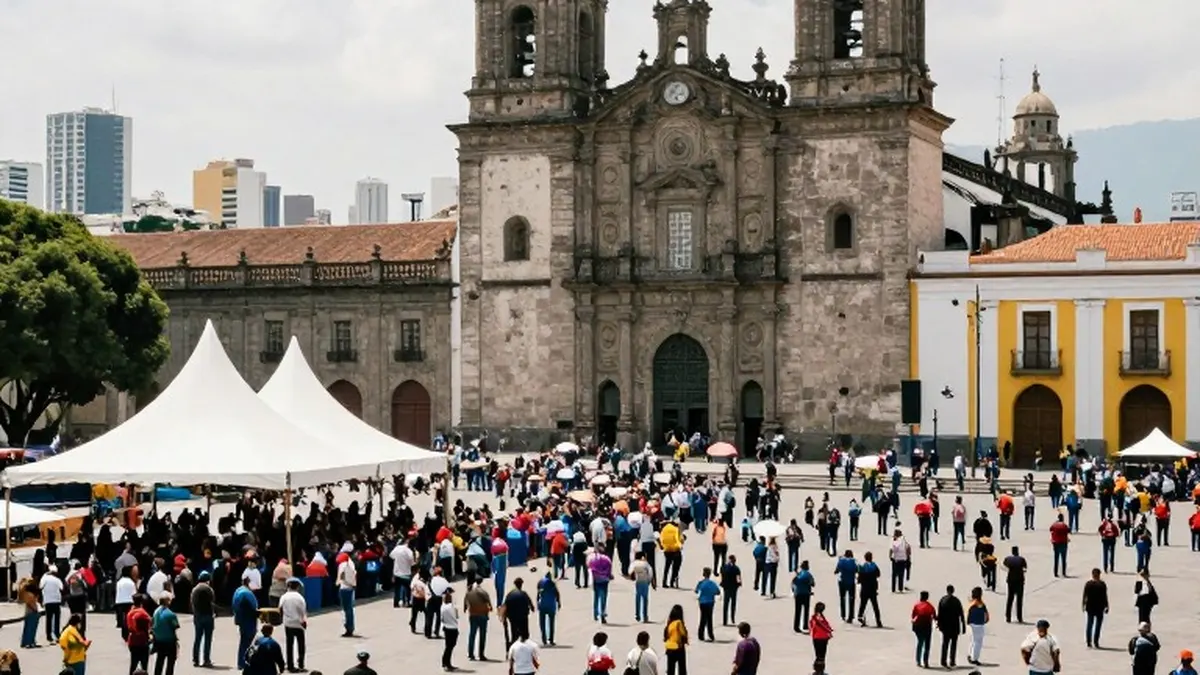
Pope Leo XIV concluded his first stop in South America on Sunday in Florida, Uruguay, before departing for Argentina. The visit to the Uruguayan city, located north of Montevideo, marked the feast of the Virgin of the Thirty-three. The Pope celebrated Mass in a small town with a population of roughly 40,000, drawing an estimated 50,000 attendees under clear skies.
During the ceremony, Leo addressed the role of the Catholic Church in a nation that has historically followed a secular path. He highlighted the tradition of 33 independence patriots who carried a Guaraní statue when Uruguay declared independence from the Brazilian Empire in 1825. The Pope emphasized that the history of the people is inextricably linked to faith and maternal guidance.
In his homily, the Pontiff specifically thanked mothers and grandmothers for their efforts in passing on the faith, even when those efforts did not always result in continued practice. He acknowledged the pain of seeing children stop praying or attending Mass. He urged these women to remain persistent, stating that they should never tire of sharing their beliefs with the next generation.
The arrival in Argentina is anticipated to be the most politically sensitive part of the tour. President Javier Milei, a libertarian, is scheduled to greet the Pope at the airport. The meeting follows sharp criticisms from the local Catholic Church regarding Milei's austerity measures, which have significantly reduced social spending. Milei has described social justice as an aberration and has defended his economic reforms as necessary to fix the country's troubled economy.
Public sentiment in Buenos Aires is mixed. Posters appeared across the city playing on the Spanish word for the Pope's name, Leon, which means lion. This imagery contrasts with the lion motifs often used by Milei in his public persona. Experts note that the country is currently facing deep polarization, an economic crisis, and a leader who has previously challenged the papacy.
The economic context is severe. Official data indicates that poverty reached 32.3% of the population in the first half of 2026, affecting approximately 15 million people. Milei's government has slashed the healthcare budget by 48% in real terms since taking office in late 2023. These cuts, along with planned reductions in public university funding, have sparked protests. The administration argues that these measures are essential to eliminate waste and fraud.
Leo, who chose a name inspired by a 19th-century Pope known for social teachings, has focused his ministry on the poor. This approach mirrors the legacy of his Argentine predecessor, Pope Francis. The current Pontiff is completing unfinished business by visiting the country where Francis served as a priest and archbishop. Francis never returned to his native Buenos Aires during his 12-year pontificate, a fact that has generated significant debate in Argentina.
The visit also touches on contemporary issues such as artificial intelligence. Milei has actively courted AI investment and data centers, a strategy that aligns with his government's deregulation efforts. In contrast, Leo has warned about the potential threats AI poses to humanity and the environment, calling for strict international safeguards.
Despite the political stakes, the Argentine government maintains that the visit is purely religious. Karina Milei, the President's sister and a key advisor, stated that the Pope belongs to all Argentines rather than any specific political camp. The administration has worked closely with church leaders to plan the itinerary.
Security concerns have also emerged. The Argentine state intelligence agency announced the arrest of one individual on Saturday following death threats against the Pope. A federal court in Campana, northwest of Buenos Aires, ordered the detention after receiving a tip less than 24 hours prior. The Pope will conclude his South American journey with a visit to Peru, where he spent two decades as a missionary.