Canada possesses a 243,000-kilometre coastline bordering three oceans, yet it maintains a fleet of only about 20 underwater drones to help defend these waters. Defence officials have discussed the urgent need for a short-term solution to assert sovereignty, but the Royal Canadian Navy confirms that an interim fix is not yet ready. Vice-Admiral Dan Charlebois, the navy's commander, stated in an interview that the service is working closely with industry but has not yet reached the desired capability level.
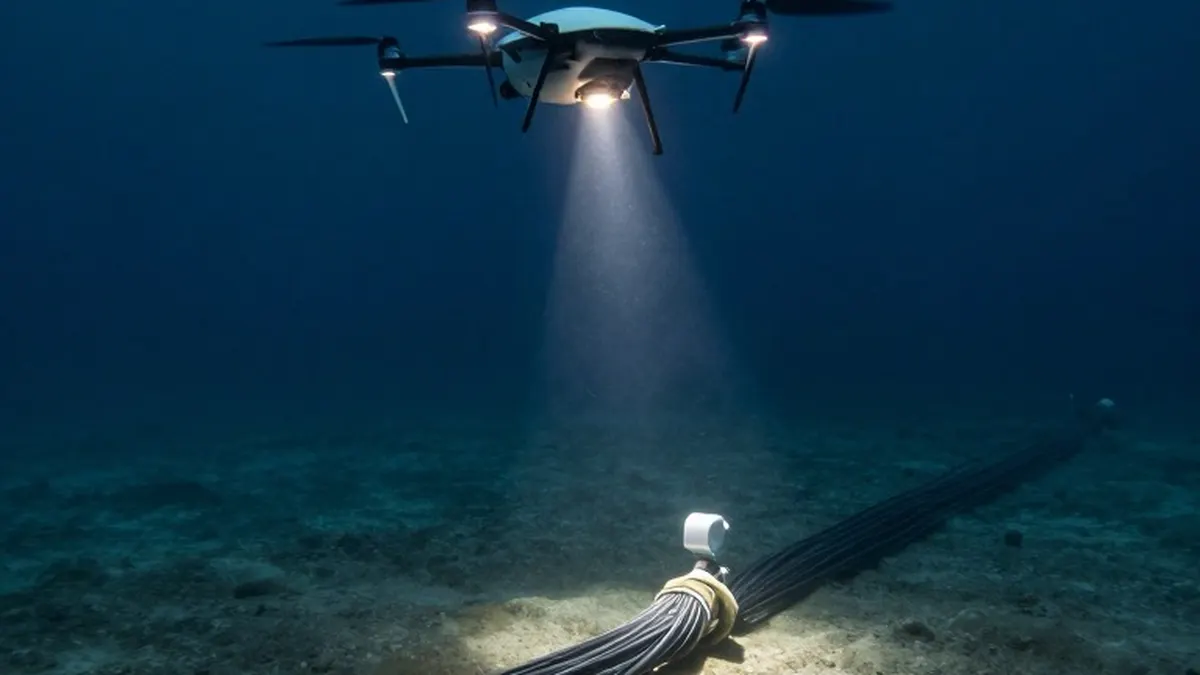
The gap in surveillance capability has become a significant concern as NATO allies race to protect critical underwater cables from potential sabotage. A massive global network of fiber-optic cables runs along ocean floors, carrying more than 95 per cent of internet traffic and trillions in financial transactions. Damage to this infrastructure could cripple societies, prompting hundreds of submarine cables to be targeted or monitored for security threats.
Canadian companies such as Kraken Robotics and B.C.-based Cellula Robotics are viewed as world leaders in this technology. They are already selling their systems to allies around the globe for surveillance purposes, but they have not yet sold them to Canada. The navy currently uses a small fleet of American-made drones equipped with technology built by Kraken Robotics, but these are primarily used for mine hunting and testing rather than routine surveillance.
Rob Huebert, a defence expert at the University of Calgary, described Canada's situation as having very significant vulnerabilities due to an inability to fully detect adversaries entering Canadian waters. He noted that Canada has long relied on cooperation with the U.S. Navy as a safety net, allowing its own fleets and satellites to age. Huebert characterized this reliance on American support as a policy of hope, given the current state of Canadian assets.
The Royal Canadian Navy is undergoing its largest peacetime fleet renewal since the Second World War, but some replacements will not arrive until the 2030s and 2040s. Ottawa is currently in the initial procurement phase for an underwater surveillance system valued between $250-million and $499-million. This system will use drones and sensors to detect and monitor threats in Canadian waters, including the Arctic, and during deployments abroad. Charlebois expects to take delivery of large autonomous vehicles in the early 2030s, with full delivery of the system targeted for 2043.
Prime Minister Mark Carney has promised to speed up procurement through the Defence Investment Agency and vowed to massively scale up drone production. He noted that Canada currently has about 2,000 drones in its inventory but will need millions in the coming years. Industry Minister Melanie Joly announced that the government is creating a roster of preapproved companies for sole-source contracting to streamline the process.
Dave Shea, executive vice-president of strategy and growth at Kraken Robotics, said the pace of procurement has been a major challenge in Canada. His company outfitted the navy's current drones with synthetic aperture sonar systems that scan the sea floor and listen for submarines. Shea expressed excitement about the government's push to speed up processes, noting that Kraken's technology is already used by the navies of Denmark, Poland, and Australia to monitor for tampering with cables and pipelines.
Neil Manning, CEO of Cellula Robotics, stated that his company has sold its long-range Guardian drones to five NATO allies in Europe, the U.S., and Asia, but not yet to Canada. These drones use hydrogen fuel cell technology adapted from NASA space launches, allowing them to travel up to 5,000 kilometres or remain at sea for 45 days. Manning expressed confidence that domestic spending will increase as the company continues to build trust with local governments.
Defence Minister David McGuinty said the government is rebuilding capacity underwater, on land, in the air, and in space. He described a combined layered approach to identifying threats to Canada. While the navy maintains it has a layered network of capabilities to protect infrastructure, it acknowledges that the government, owners, and allies share responsibility for this security effort.