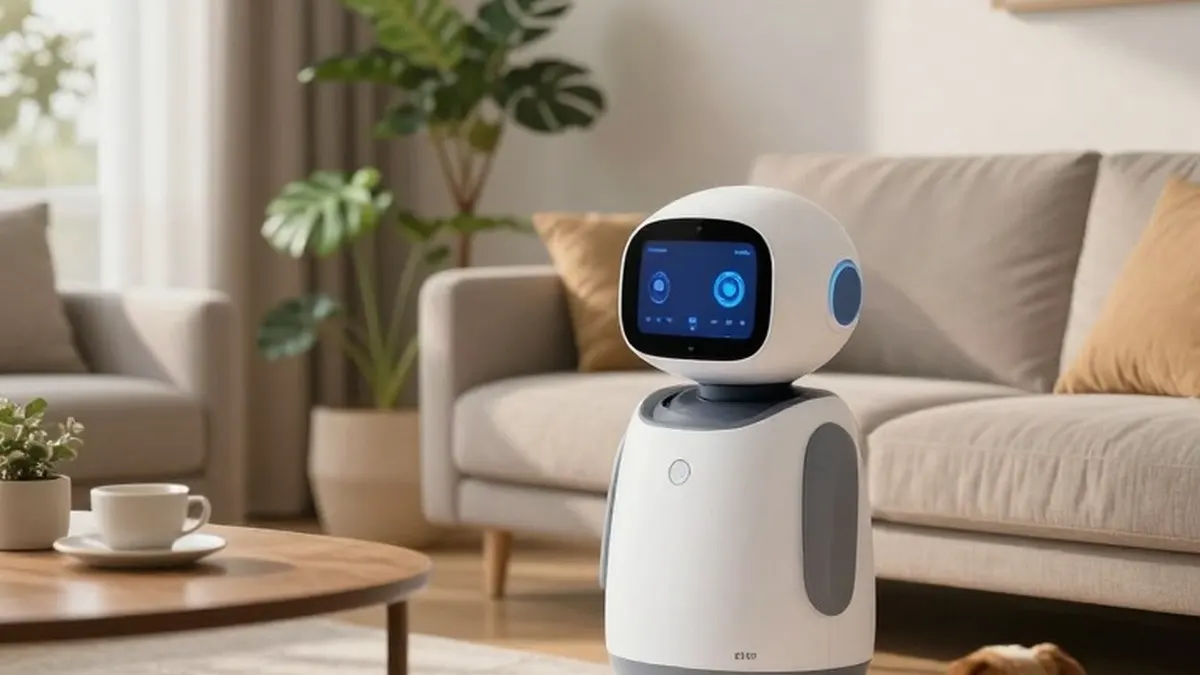
Jeff Bezos made a bold bet in 2017. Convinced that consumers would one day have a robot in their home, the Amazon founder and then-CEO told top device executives to build one. The result, unveiled at Amazon's fall 2021 event, was Astro, a $1,450 Alexa-equipped tablet on wheels that can navigate a home on its own, recognize faces and serve as a roving security monitor.
Astro never moved beyond an invite-only product, shipping to just a few thousand customers. A business version launched in 2023 was sunsetted less than a year later, and some owners now believe the robot's days are numbered. Emily Lugo Velez, 52, who has lived with Astro in her North Carolina home since 2023, said she still uses it to check on pets and appliances while away, but the device has mostly become a party trick and a "trip hazard." "I feel like we're just stuck with it, and we'll let it run around the house until it eventually dies, then send it to the trash heap," she said.
Amazon is not abandoning Bezos' vision. Over the past several months the company has assembled a new team working on a "new-to-world robot product," according to a CNBC analysis of job posts. One listing for an engineer, since removed, declared: "Robots are about to step out of the movies and into our homes," describing a product able to navigate "dynamic home environments" and operate autonomously alongside family members. A June posting hinted at an effort to "create robots that are not just functional, but delightful."
Earlier this year Amazon redeployed much of the Astro team and brought in an MIT roboticist, LinkedIn profiles show. In March it acquired New York-based Fauna Robotics, maker of Sprout, a 3.5-foot-tall humanoid with expressive yellow eyebrows that has mainly been used by developers and researchers. Amazon said Fauna would join a new Personal Robotics Group, which includes veterans of Lab126, the R&D unit behind the Kindle, Echo and Fire TV, as well as the failed Fire Phone. An October job listing seeks a user experience designer to "define what it feels like to live with a Fauna robot," with the stated goal to "make robots people actually want to live and interact with in everyday human spaces."
Amazon spokesperson Brad Glasser said the company bought Fauna because it is "committed to tackling the challenges that can unlock the personal robotics category," adding that a substantial gap remains between what works in a lab and what works in a living room. The push fits a pattern of long-term bets: in his latest annual letter, CEO Andy Jassy called artificial intelligence and robotics among the "biggest inflections of our lifetime." Analysts see potential too. Barclays forecast in January that the humanoid market, now valued at $2 billion to $3 billion, could reach roughly $40 billion by 2035, or as high as $200 billion "under the most optimistic scenarios."
Ken Washington, Amazon's vice president of consumer robotics until 2023, said Astro executives had discussed adding an arm so the robot could pick up and inspect items, and that he pushed for a bipedal design but leadership disagreed. "[Astro] was so ahead of its time," he said. A former Amazon employee who worked on the project, speaking anonymously, said its limited functionality and price were a tough sell: "Our poor little Astro was around $2,000 when it came out, and that's a lot."
Amazon has deep robotics roots, having bought Kiva Systems for $775 million in 2012 and grown its warehouse fleet to more than one million robots. But homes are harder. "Children, pets, grandparents, stairways. Nobody's home is set up exactly the same," said Jeff Burnstein, president of the Association for Advancing Automation. Colin Angle, co-founder and former CEO of Roomba maker iRobot, which Amazon tried to acquire in 2022 before walking away two years later, said the tools have improved dramatically. "The toolkit that the Astro team had when they did it was clubs with nails in them, just incredibly primitive," he said.
The field is now crowded. Tesla has developed its bipedal Optimus since 2021, startups including Apptronik, Boston Dynamics, Unitree, Figure and 1X are building humanoids, and Agility Robotics, backed by Amazon, went public via a SPAC on Thursday. Venture capital firms poured $33.4 billion into robotics and physical AI in the first half of the year, topping the $28.7 billion invested in all of 2025, according to PitchBook. Apple is reportedly exploring home robots, and Hugging Face released the $399 Microduck in August.
Some Astro owners see warning signs, complaining in Facebook groups about diminished customer service and the lack of support for Amazon's Alexa+ assistant, with some selling units at a discount on eBay and Facebook Marketplace. Glasser said Amazon continues to support Astro customers. Joe Martin, 65, an Astro owner near Tucson, Arizona, remains open to what's next: "Astro was $1,000 and it was pretty limited, but if it could bring a drink to me or dust furniture, I'd be intrigued by that. I think that's right around the corner."