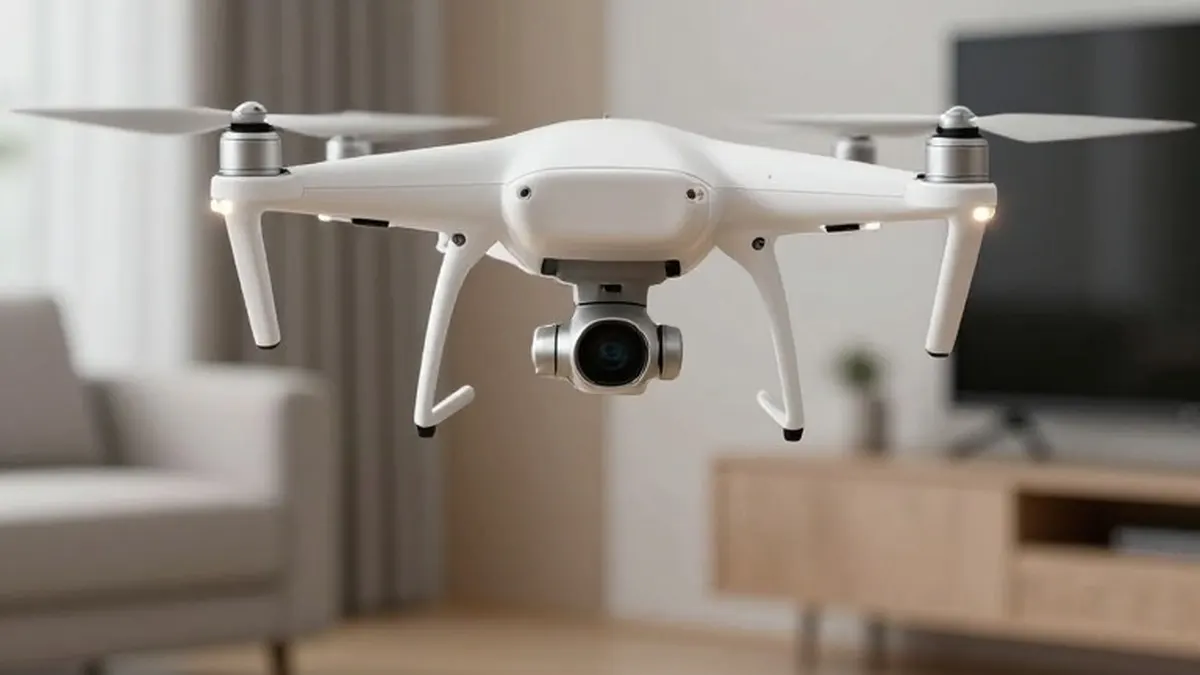
Amazon’s home security brand Ring announced the release of its first mobile security robots on Tuesday, marking a significant expansion beyond traditional stationary cameras. The new product line includes an indoor security drone and a ground-based rover, both designed to offer homeowners and businesses surveillance capabilities that fixed cameras cannot provide.
The centerpiece of the new lineup is the Ring Drone Camera, priced at 250 dollars. This small quadcopter device is equipped with a lens capable of capturing moving images, allowing it to fly from room to room inside a residence. The company stated that the drone is intended to reach areas of the home where installing additional physical cameras would be impractical or aesthetically unappealing.
Jamie Siminoff, the founder and chief inventor of Ring, explained that the development of these devices was driven by long-standing customer requests. He noted that consumers frequently expressed a desire for broader coverage without the burden of installing more hardware throughout their properties. Siminoff emphasized that the solution required reimagining the nature of security devices rather than simply adding more units.
In a statement released by the company, Siminoff said, “For years, customers told us they wanted eyes in the places a fixed camera couldn’t reach, and peace of mind in the spots they’d never want one.” He added that the honest answer to this need was not more cameras, but a reimagining of what a security device could be. He described the new robotics line as the beginning of a future where proactive and autonomous protection is available to both homes and businesses.
The Ring Drone Camera is engineered to provide what the company calls wall-to-wall coverage. It features a lens with 148 degrees of peripheral vision and the mechanical ability to rotate 360 degrees. These specifications allow the device to quickly identify potential threats by scanning its surroundings comprehensively. Additionally, the drone is equipped with LED lights to function effectively in low-light environments, ensuring that users can obtain clear and crisp video footage at any time.
Alongside the consumer-focused drone, Ring also launched the Ring Rover Cam, a device tailored specifically for business environments. Priced at 1,000 dollars, this ground-based robot is designed to navigate properties autonomously. Businesses can deploy the rover to investigate disturbances or to conduct regular security sweeps of the premises.
The company highlighted the versatility of the Rover Cam, noting that it allows users to get a closer look at specific areas without the complexity and expense of wiring every corner of every room. This mobile approach aims to reduce the infrastructure required for comprehensive security monitoring in commercial spaces.
Both the drone and the rover require a subscription service to function fully. A customer service representative told NBC News that the fee for this service is 5 dollars per month or 60 dollars if paid annually. This recurring cost is separate from the initial purchase price of the hardware.
The introduction of these devices represents a shift in the home security industry toward autonomous technology. By moving away from static positions, Ring aims to address the limitations of fixed cameras, which can only monitor a specific field of view. The new robots offer a dynamic alternative that can adapt to the layout of a space and respond to events as they happen.
As the company rolls out these new products, it positions itself at the forefront of a new category in security technology. The focus on autonomous and proactive protection suggests a future where security systems are not just passive recorders, but active participants in monitoring and safeguarding properties. The response to these new tools will determine how quickly mobile security becomes a standard feature in both residential and commercial settings.