More than fifty years after its creation, the Rubik's Cube is returning to the country where it was first conceived. Production of the iconic puzzle has officially restarted in Hungary, marking a significant moment for the object that has become a global cultural symbol. The new manufacturing facility is located in the city of Jaszbereny, and the launch was attended by the inventor, Erno Rubik, who is now 82 years old.
Rubik, who is an architect, sculptor, and professor, stated that Hungary is the true home of the cube. He emphasized that the puzzle was born in this region. The invention originated in 1974 while Rubik was teaching design at the Academy of Applied Arts and Design in Budapest. At the time, he was seeking to create a three-dimensional object that he described as infinite. His initial prototype was made of wood and consisted of 27 blocks that could rotate on multiple axes.
The puzzle, originally known as the Magic Cube, began to see commercial success in 1977. An initial batch of 5,000 units was sold at specialty shops in the Hungarian capital. As demand grew, Rubik faced challenges in sourcing materials within the socialist economy of the time. He noted that the producers were not prepared for the scale of production required to meet worldwide market needs.
To meet the rising demand, the cube was licensed to toy companies in Britain and the United States, and production moved abroad. This shift led to an explosion in popularity during the early 1980s, a period Rubik referred to as the first big wave. During the years between 1980 and 1983, approximately 200 million units were sold globally.
Although sales numbers dipped after that initial surge, the puzzle has maintained a strong following over the decades. Millions of cubes are still sold every year, attracting new users who are eager to attempt solving the complex mechanism. The puzzle has seen a renewed surge in interest in recent years, driven by the proliferation of global competitions that measure solving speed.
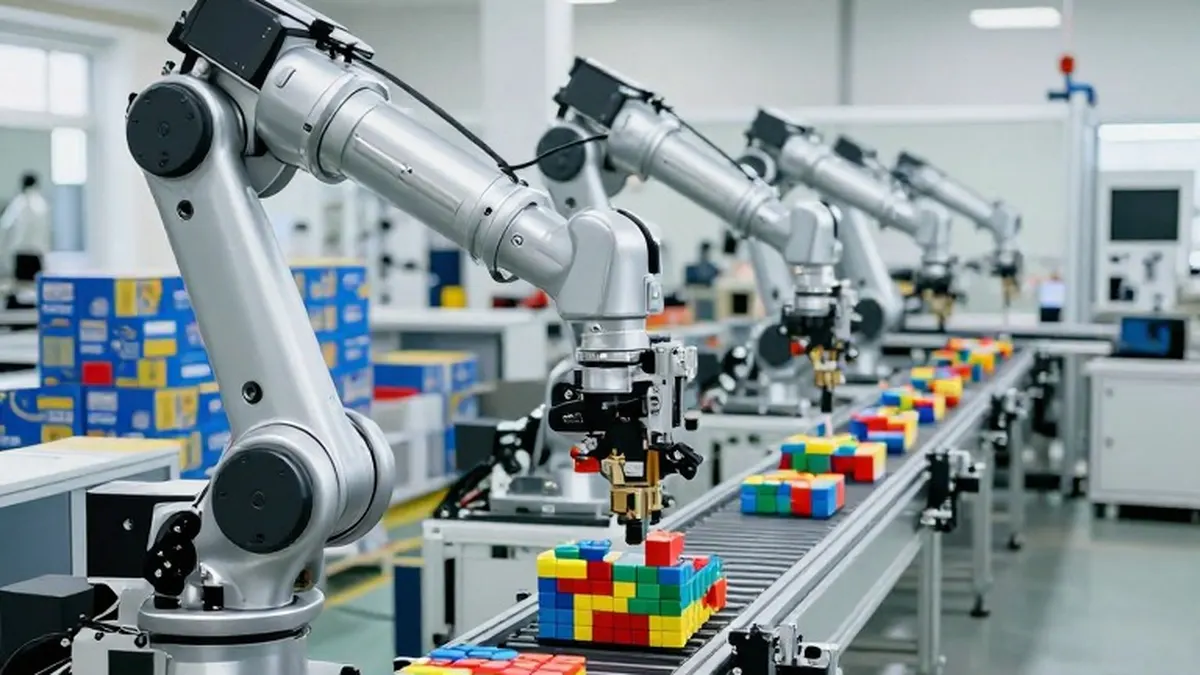
The new production line in Jaszbereny represents a major shift in manufacturing technology. It features a series of robotic arms that assemble the cubes and test them for both functionality and durability. Rubik described this level of automation as very different from the early days, when the puzzles were assembled by hand. The facility plans to produce one million cubes annually.
Steve Radewych, a senior vice president at Spin Master, the Canadian toy company that owns the Rubik's Cube trademark, highlighted the significance of the event. He described the theme of the day as the cube coming home to its roots. Radewych praised the discovery as a global social phenomenon that has incredible staying power, continuing to fascinate young people even today.
Radewych added that the cube represents an intellectual journey and a symbol of intelligence, problem-solving, and cognitive discipline. He noted that it has brought both joy and frustration to many generations. The World Cube Association, which organizes and certifies competitions worldwide, reported that the current speed record was set last month in China. A nine-year-old named Xuanyi Geng solved the puzzle in 2.51 seconds.
For Rubik, the cube is not merely a toy for speed competition. He views it as a transformable sculpture that sits at the intersection of art and engineering. He believes that the device allows users to manipulate and change the cube in nearly endless variations, offering a chance to do something meaningful and beautiful.