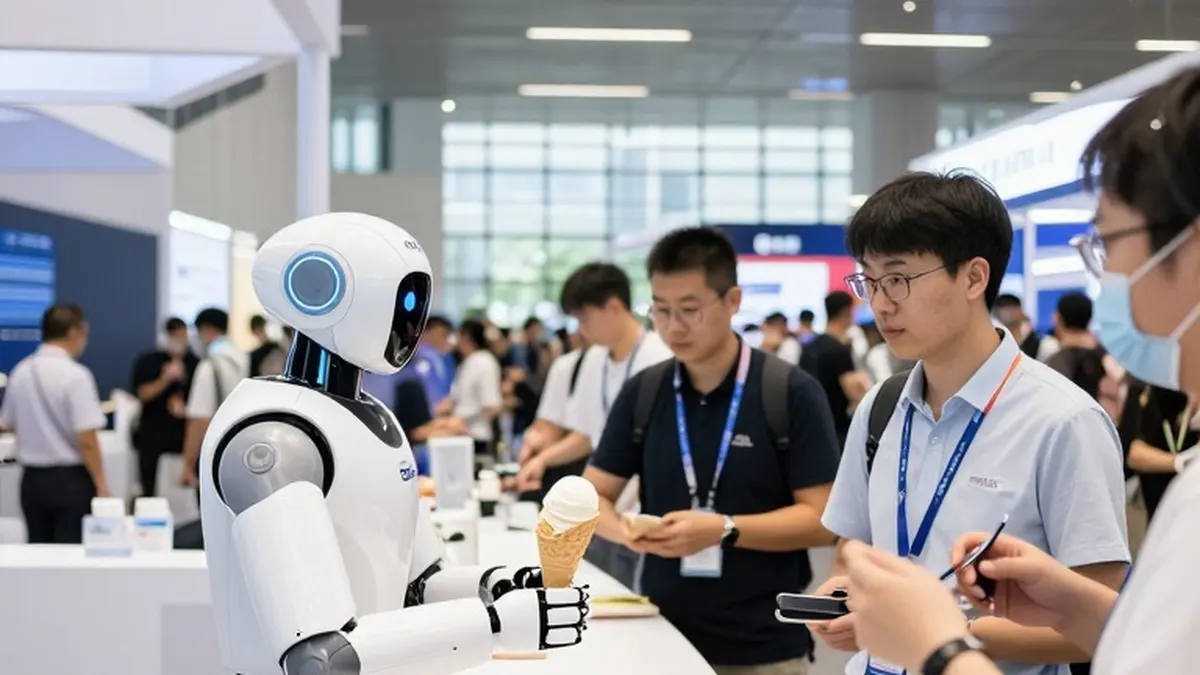
China has welcomed international leaders to the Asia Pacific Economic Cooperation summit in Shenzhen, presenting a nation that has evolved significantly since it last hosted the event in 2014. Amidst a backdrop of global conflicts, tariff disputes, and economic instability, Beijing is using the gathering to cast itself as a reliable global power. The city of Shenzhen, once a small fishing village, has transformed into a sprawling metropolis and a hub for technological self-reliance. It is home to major companies such as electric vehicle maker BYD and telecom giant Huawei, placing the talks in the heart of China's strategic industrial drive.
A central feature of the summit is a proposed tripartite meeting between Chinese President Xi Jinping, U.S. President Donald Trump, and Russian President Vladimir Putin. These three leaders represent the world's largest nuclear powers. Some observers have drawn comparisons to the 1945 Yalta Conference, where the United States, the United Kingdom, and the Soviet Union formalized their post-war spheres of influence. Greg Chin, an associate professor at York University, noted that few other nations are currently positioned to broker such a high-level three-way dialogue.
The diplomatic context is complex for all parties involved. President Trump arrives in a weakened domestic position following a significant midterm election defeat, with voter anxiety over the cost of living and the U.S.-Israel war with Iran taking center stage. Given that both China and Russia maintain strategic partnerships with Iran, that conflict is expected to be a key discussion point. Additionally, the war in Ukraine is likely to be addressed, notably in the absence of Ukrainian or other European representatives at the table. Henry Huiyao Wang, founder of the Center for China and Globalization, observed that while the U.S. and Russia are engaged in active conflicts, China remains the only major power without a war, creating an opening for it to act as a mediator.
Economic and trade discussions will run parallel to these high-profile diplomatic efforts. The shakeup at Nvidia, where CEO Jensen Huang resigned following revelations of an affair with an alleged Chinese spy, adds a layer of complexity to chip access negotiations. Although the U.S. loosened restrictions on chip exports last year at Huang's lobbying, his ouster has prompted Congress to close the loophole that allowed China to access advanced microchips. Consequently, artificial intelligence competition between Washington and Beijing is expected to be high on the agenda.
Despite these thorny issues, several trade deals have already been announced. Canada and China agreed to loosen restrictions on Canadian pork and seafood imports into China. In exchange, Canadian market access was granted for Chinese steel and aluminum. This agreement signals Ottawa's continuing strategic pivot away from reliance on the United States. Prime Minister Mark Carney, speaking from the Philippines earlier in the week, indicated that Canada could turn to Chinese automakers if trade talks with the U.S. fail to preserve the North American auto industry. This statement follows the announcement that Stellantis is selling its Brampton, Ontario assembly plant to armoured vehicle manufacturer Roshel.
Carney's comments on the automotive sector have already drawn ire from the White House, and the new steel deal is likely to further irritate President Trump. Whether these tensions come up during the Shenzhen talks remains to be seen. With geopolitical caveats affecting trade relationships with North America and Europe, China may focus on maintaining and expanding its ties with other APEC member economies, particularly emerging markets in Latin America and Southeast Asia.
Ning Leng, an assistant professor at Georgetown University, noted that these regions are becoming increasingly important. Beijing is expected to reassure these countries by promising industrial upgrades, AI capacity building, and digital infrastructure development. Although China faces its own economic challenges, including issues of overcapacity, analysts suggest that stability is relative. Chin from York University argued that compared to other major global powers, China is still performing reasonably well in the current economic landscape.