Eighty seven animals evacuated from the temporarily occupied city of Oleshky are now in the care of the animal rights organisation UAnimals, with many of the cats and dogs arriving exhausted and some suffering concussions or suspected tumours, Ukrainska Pravda reports.
According to the organisation, the animals endured a long and difficult journey. The UAnimals team met them at night once they reached Ukrainian controlled territory, moved them into special transport and delivered them to veterinary clinics. Some of the cats and dogs arrived frightened, exhausted and dirty.
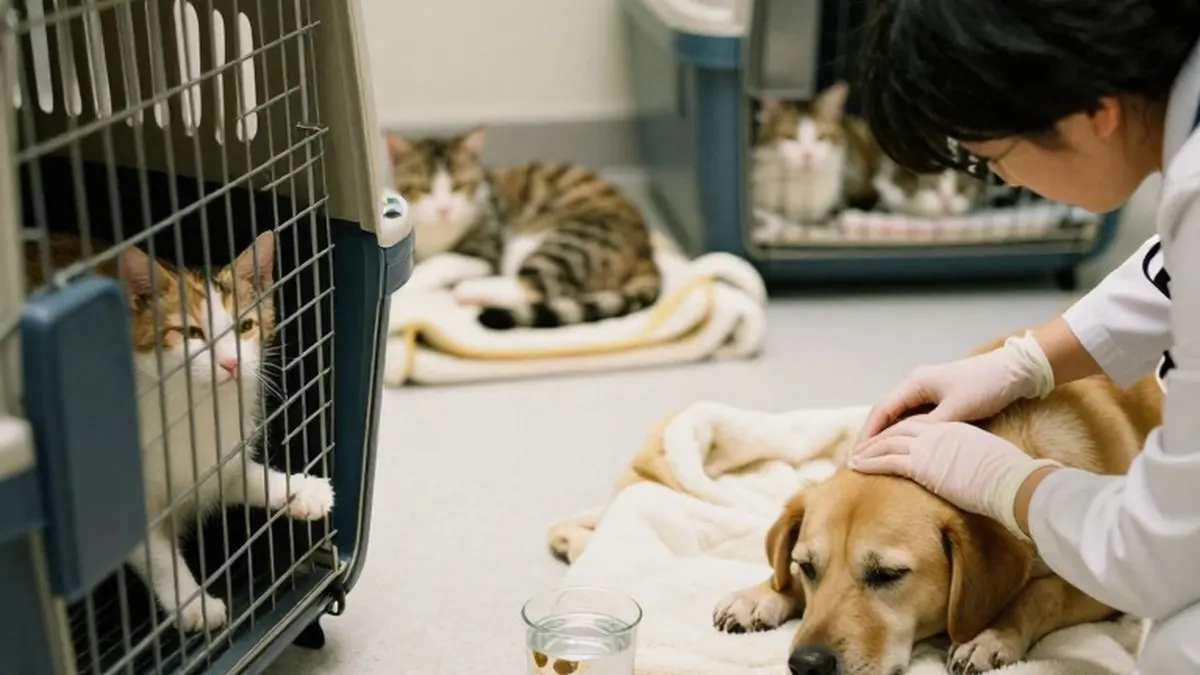
"We ensured that immediately upon arrival at the clinics, the animals were placed in warm, dry rooms under the supervision of veterinarians. They were given food and water," UAnimals said.
Some residents evacuated from Oleshky had travelled by bus together with their pets and went on to hospitals with them. Because the animals also needed medical check ups, the UAnimals team collected almost all of the cats and dogs on 1 and 2 November and brought them to veterinary clinics.
Organisation representatives visiting the hospitals met evacuees who still did not know whether their pets had survived the journey or what condition they were in. Anastasiia Heichuk, head of the rescue department at UAnimals, described those encounters.
"When I entered the wards, the first thing people asked was where their animals were. They didn't yet know if they had arrived, if they were alive, or what condition they were in. For some, I was the first person they could talk to about their animals after arriving," she said. "There were people who left with almost no belongings but took their pets with them. And even in the hospital, when they themselves needed help, their first priority was to find out what had happened to their pets."
The rescued animals are now spread across six veterinary clinics. Alongside weakened cats and dogs and animals with concussions, some require dental treatment, while others are scheduled for further examinations because of suspected tumours or hernias. One animal will likely need surgery. Veterinarians are waiting for test results before confirming diagnoses and deciding on treatment.
"Most of the animals have families and will be able to return to them. Others will go to shelters," UAnimals said. The organisation is covering all care and treatment costs and has not launched a separate fundraiser for this mission, though supporters can contribute through donations or by subscribing to its Animal Rescuers Club.
The evacuation of Oleshky residents concluded on 31 October. Those leaving the occupied city were taken out by bus, flown to Belarus and then crossed the border in Chernihiv Oblast to reach Ukrainian controlled territory. According to Dmytro Lubinets, the Ukrainian Parliamentary Commissioner for Human Rights, evacuees brought their pets with them, including dogs, cats, a parrot and even a raccoon, with special transport fitted with cages organised for the animals.