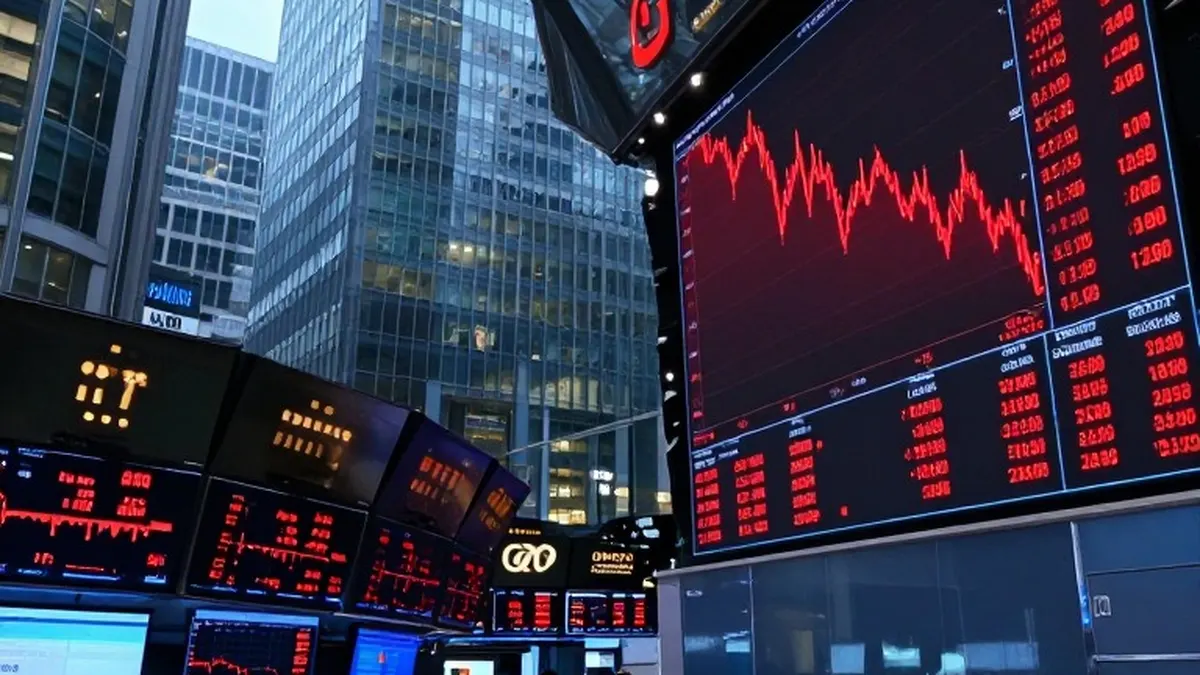
Anthropic experienced a sharp decline in its share price on Friday, moving back toward the level at which it began trading on the Nasdaq. This drop followed a highly volatile first day of trading that had initially been viewed as a major success for the artificial intelligence sector.
The company's introduction to the public markets on Thursday was considered a critical test for the industry. Trading commenced at $111.50, and the shares reached a peak of $115 before settling at $97.17 by the end of the day, representing a 17% gain.
However, the momentum reversed on Friday. The stock fell by more than 10% to approximately $87.30. This price point is very close to the initial public offering price of $83, indicating that the initial surge was not sustained in the short term.
Analysts have explained that such volatility is anticipated in the early days of a new listing. As the first frontier AI firm to go public, Anthropic lacks direct comparable peers, making it difficult for investors to establish a stable baseline for valuation.
Market strategist Ed Moya of AlphaSense noted that while the IPO itself was massive, raising a record $81 billion, it did not immediately restore broader confidence in the AI market. Moya told the BBC that investors are currently reassessing how much they are willing to pay for growth.
Moya observed that Wall Street is shifting its focus from rewarding growth at any cost to demanding stronger cash flows and clearer paths to profitability. He added that recent weeks have surfaced additional risks that are influencing investor sentiment.
The decline in Anthropic's stock mirrored a wider downturn in the technology sector. The Nasdaq Composite Index fell 2.8% during morning trade on Friday, while the S&P 500 dropped 1.2%. The Dow Jones Industrial Average remained largely unchanged.
Other major US tech companies also saw their shares decrease. Nvidia and SpaceX both fell by more than 6%, while Tesla lost over 3% and Meta declined by 3.4%. Apple, Amazon, and Microsoft experienced smaller losses, whereas Alphabet managed to rise by 1.2%.
European markets, which have a lower concentration of tech stocks, also traded lower. Germany's Dax index dropped 2%, and the UK's FTSE 100 was down 0.5%.
Asia witnessed the steepest declines earlier in the week. South Korea's Kospi and Japan's Nikkei 225 indexes closed down by about 5%. Significant losses were recorded by memory chip makers such as SK Hynix, Kioxia, and Tokyo Electron, as well as Samsung Electronics. Taiwan's stock market fell approximately 6%, marking its largest weekly drop since 1990.