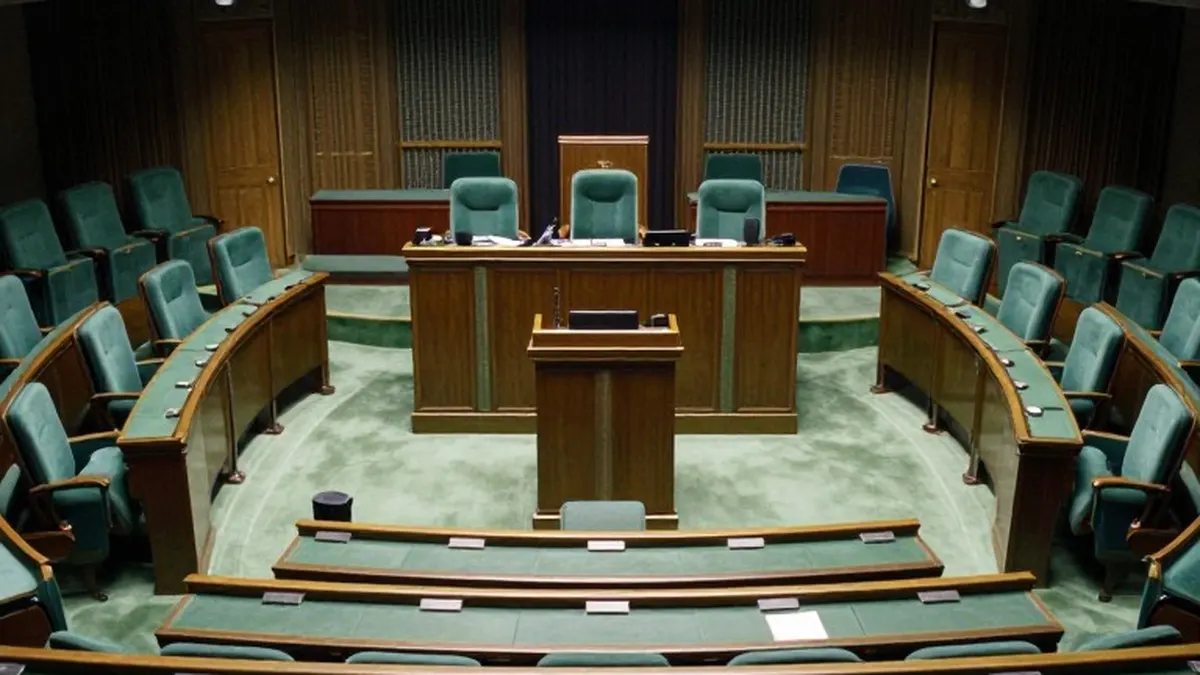
Following the recent Israeli election results, the political coalition opposing Prime Minister Benjamin Netanyahu has moved swiftly to organize a new leadership structure for the parliament. The group intends to elect a new speaker of the Knesset without delay, viewing the position as a critical strategic asset rather than a simple procedural role. This maneuver is part of a broader effort led by Gadi Eisenkot, the de facto leader of the opposition, to form a government that excludes Netanyahu, his coalition partners, and their previous legislative legacy.
While some observers describe these expectations as optimistic, the speaker holds significant authority under Israeli law. The role grants the power to set the legislative agenda, preside over parliamentary proceedings, and manage the process according to the Knesset Rules of Procedure. This includes the specific ability to convene the parliament for votes of confidence in the government. These powers are central to the opposition's plan to drive change within state institutions.
The agreement on nominations for the speaker and key committee chairs was reached among Eisenkot and his allies in the Change bloc. A formal request to hold a vote was submitted when the 26th Knesset was sworn in on November 10. The actual vote to determine the new speaker is scheduled to take place in the Knesset on Tuesday.
To secure the necessary majority, Arab-led Israeli parties have pledged their support for the candidate. Ahmad Tibi, the leader of the Joint List and recently elected deputy speaker, stated that his political alliance of Arab-majority parties would do whatever was needed to support the change. Tibi emphasized the urgency of the situation, noting that the coalition needs to remove the Netanyahu government as soon as possible.
The nominated candidate, Matan Kahana, recently joined the Yashar party but has an established political career. He first entered parliament in 2019 as a member of the Yamina alliance, which was led by former Prime Minister Naftali Bennett. In 2022, he became part of the National Unity alliance, a bloc formed by Eisenkot and former Defense Minister Benny Gantz, among others.
Within the predominantly right-wing opposition bloc, Kahana is viewed as a figure capable of forging working relationships. His supporters believe he can effectively push forward the legislative agenda that Change bloc voters endorsed during the recent election. His background is seen as an advantage in navigating the complex dynamics of the current parliamentary landscape.
Once the new speaker is in place, the opposition plans to introduce several key pieces of legislation. A primary goal is to create an independent commission of inquiry into the Hamas-led attacks on Israel in October 2023. The Netanyahu coalition has previously blocked such an inquiry, despite public polling indicating that a majority of Israelis support it.
The opposition also seeks to restore the powers of the attorney general and reverse major changes made by the Netanyahu coalition that the opposition argues weakened the judiciary. These judicial reforms are criticized for preventing effective oversight of the government. By securing the speaker position, the opposition aims to regain control over the legislative process to implement these restorative measures.
Another significant legislative target is a law imposing a two-term limit on the premiership. If passed, this law would disqualify Netanyahu from serving as prime minister again. These bills can be introduced and voted on while coalition negotiations continue and while Netanyahu remains in his role as caretaker prime minister.
Citizens who turned out in historic numbers to end Netanyahu's nearly two-decade grip on power are expected to welcome the potential undoing of parts of his political legacy. The upcoming vote represents a pivotal moment in the transition of power and the future direction of Israeli governance.