On Oct. 11, the New York Giants were in field goal range at the two-minute warning of overtime against Washington, with any points enough to win. Running back Cam Skattebo was hit in the backfield and, after shedding the tackle with his forearms, could not get the ball back to his chest. Commanders defensive lineman Daron Payne swung at the exposed ball. Ball out. The game ended in a tie.
A day later, Buffalo Bills running back James Cook III fell to the same move against the Los Angeles Rams. Carrying low at his left side in overtime, Cook left a gap between armpit and wrist, and linebacker Nate Landman wedged the ball loose. Only a blocked field goal minutes later saved Buffalo.
Both were victims of the Peanut Punch, a defender throwing a haymaker at the football rather than wrapping up. The technique, popularized around 2012, is named for former Chicago Bears defender Charles 'Peanut' Tillman.
Consequences followed. Skattebo got no carries the next week, and Bills coach Joe Brady threatened reduced playing time for Cook, the NFL's rushing leader, if his ball security did not improve. Cook leads all running backs with 11 fumbles since the start of the 2025 season, playoffs included, one every 44 carries; Skattebo fumbles once every 40. Brady said every opponent will be told to punch at Cook, with Buffalo (6-1) preparing for the Minnesota Vikings (6-1), who led the NFL in forced fumbles in 2025.
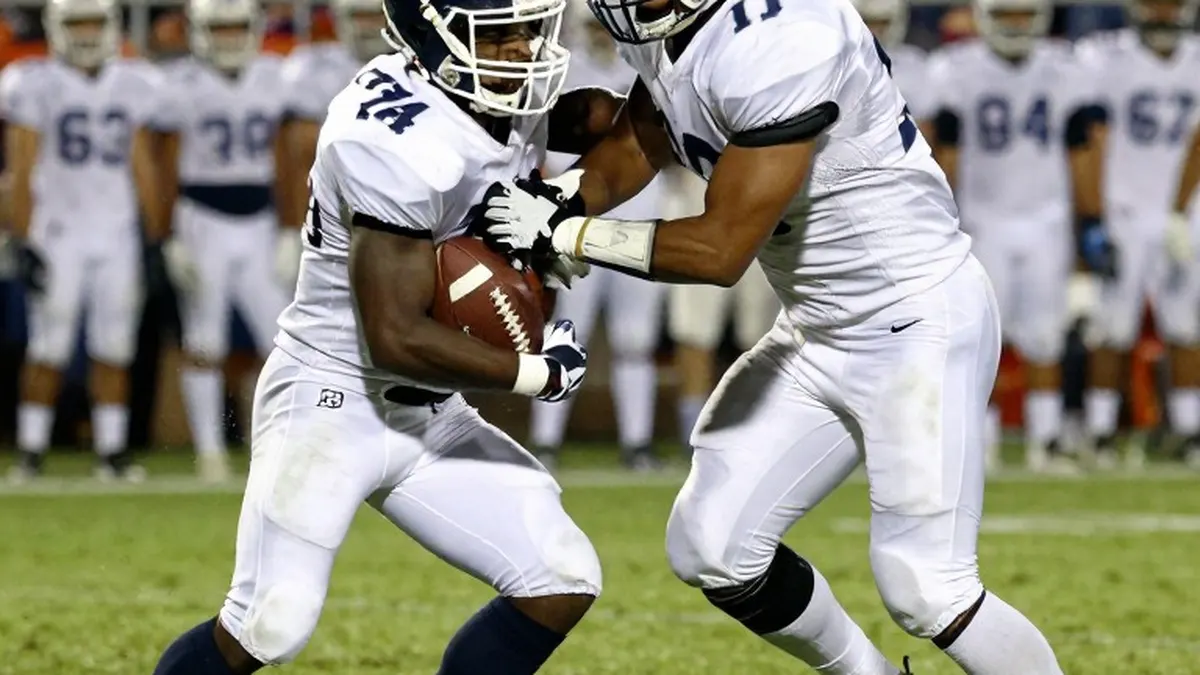
Offenses know the counter: carry the ball high and tight, one point in the crook of the elbow, the other between chin and opposite shoulder, wrist above elbow, no air between ball and body. But it defies instinct; humans do not sprint with pinned arms or fall without using their hands.
Tiki Barber is the model case. The former Giants running back fumbled 35 times in one four-year span before Tom Coughlin arrived in 2004 with a message Barber recalled to ESPN: 'Tiki, you're a great player, but if you keep fumbling you're not going to play.' Barber and running backs coach Jerald Ingram made high and tight a lifestyle, from the treadmill to the cafeteria, with teammates told to rake at the ball anytime. Barber went from one fumble every 27 carries from 2000 to 2003 to one every 112 from 2004 to 2006.
Former All-Pro Jamal Lewis, who fumbled 22 times in his first three full seasons, adopted the same approach after his 2,000-yard season with Baltimore in 2003. 'You've got to realize you've got the baby in your hands,' Lewis told ESPN. 'It's really just understanding that this is not a natural running style.'
Nearly every defense has a punch specialist: Baltimore's Marlon Humphrey, Atlanta safety Jessie Bates III and San Francisco linebacker Fred Warner, who led the league with four forced fumbles through the season's first seven games. Buffalo simulates them with scout team defenders wearing those players' numbers and punching liberally.
Titans cornerbacks coach Tony Oden preaches punching with the eyes: 'You punch the air behind the ball because that's the sweet spot.' The risk is real: San Francisco linebacker Dre Greenlaw was recently fined $12,537 for a punch that struck Atlanta receiver Drake London in the helmet. The broader numbers tell another story. Teams fumbled just 536 times in 2025, the fewest since the 1970 AFL-NFL merger and the first season under one per game, even though, per ESPN Research, running backs fumbled more per carry through eight weeks this season than in any since 2016. The non-quarterback rate fell from one per 21 run plays in 1975 to one per 33 in 2005 to one per 51 rush attempts in 2025. 'Every year it's more and more emphasis on getting the ball out,' Titans running back Tony Pollard said. 'A lot of guys, they rather get the ball out than secure the tackle.'