Australia is well known for its spiders, from the dangerous Sydney funnel-web to the common huntsman. It also has a geological feature shaped like one, and a new satellite image shows it from space.
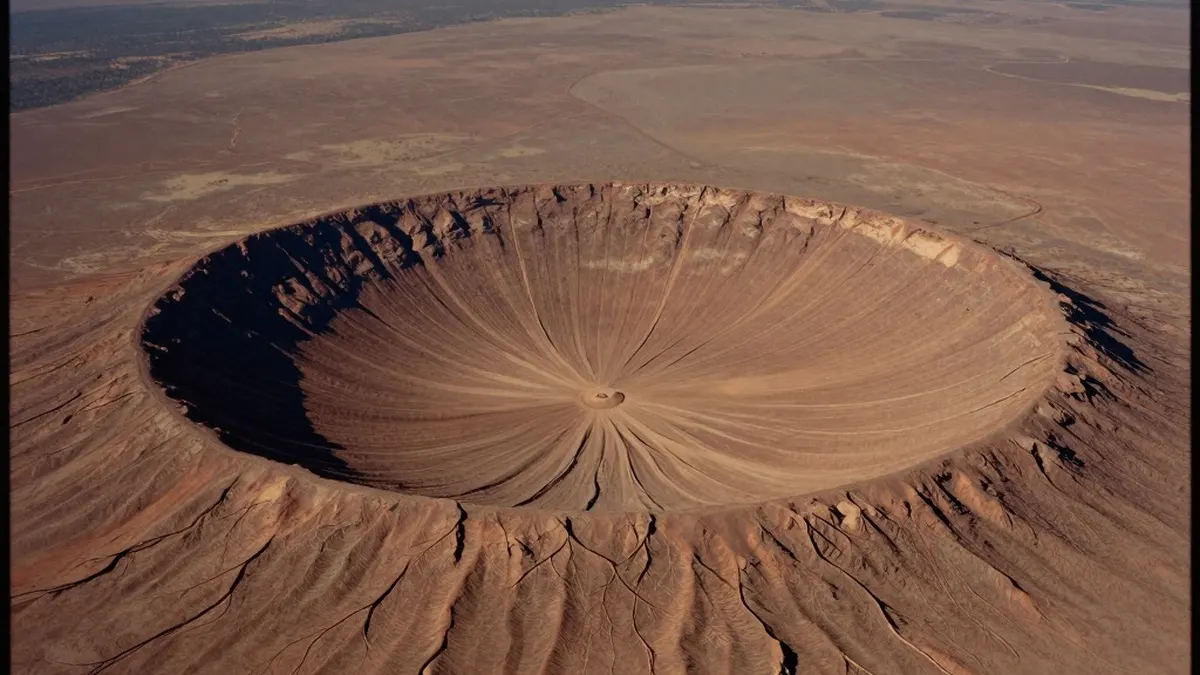
The formation, known as Spider Crater, sits in the vast wilderness of Western Australia. It most likely formed after a meteor struck the area hundreds of millions of years ago. According to NASA, geologists believe the spider-like pattern at the center of the crater was produced when the floor rebounded after the initial impact.
In the time since the strike, erosion has kept shaping the structure into the form seen today. The pattern includes features that resemble legs, which is how the crater earned its nickname.
The full impact structure measures 8 by 7 miles (13 by 11 kilometers). The central spider-shaped portion is smaller, spanning 2.5 miles (4 kilometers).
The image was captured by the Operational Land Imager, or OLI, aboard the Landsat 9 satellite. The Earth-observing spacecraft launched in 2021 and is a joint effort between NASA and the U.S. Geological Survey.
Landsat 9 is the ninth satellite in a series that began with the launch of Landsat 1 in 1972. Roughly every week, it provides observations covering a range of subjects, including deforestation, water quality and crop growth.
The Landsat series has played a key role in the modern understanding of how the planet changes over time. Whether the subject is the effects of climate change or shifts in agriculture, views from orbit offer more than striking pictures of Earth. They also gather critical data.