Shoppers across the United States transitioned from Thanksgiving feasts to Black Friday sales with characteristic speed, navigating weather conditions that had previously disrupted holiday events in major cities. Although digital commerce has grown significantly and many brands now offer steep discounts weeks before the holiday peak, Black Friday continues to generate the highest volume of foot traffic in physical retail locations.
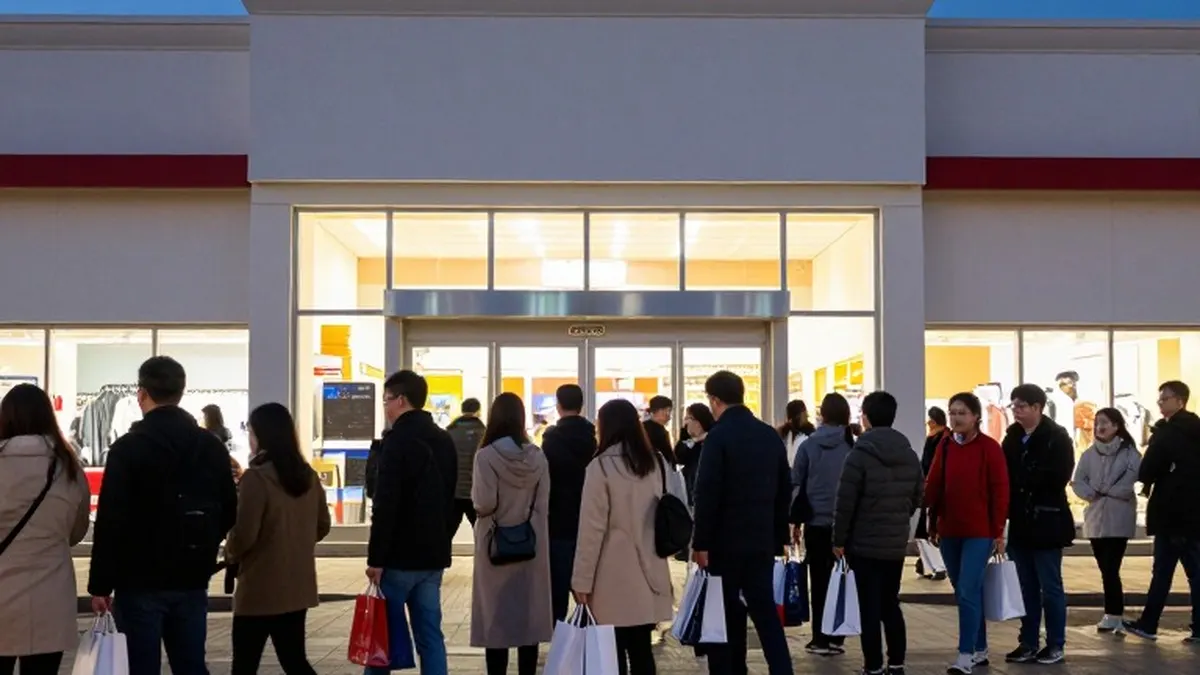
In New York City, a line formed outside the Macy’s Herald Square store in Manhattan before sunrise. When the doors opened at 6 a.m., a crowd entered the shop to explore the available promotions. This scene highlighted the enduring preference among dedicated consumers for the traditional in-store experience, even as the retail landscape shifts toward earlier and more distributed online shopping events.
Nita Lawrence, who was visiting from Miami with two nieces, expressed disappointment that the store’s annual Thanksgiving Day parade had been postponed to Saturday due to high wind warnings. However, the group found comfort in the shopping opportunities available that morning. They browsed handbags discounted by 25% to 40% and sneakers reduced by 20% to 50%. Lawrence noted that while she shops on Black Friday annually, the size of this specific location made the visit feel special before her group departed for the airport.
Retailers view the period surrounding Black Friday as critical for driving year-end sales. While online purchases capture a larger share of holiday spending each year, physical stores still account for the majority of the total, according to U.S. Census data. This year’s shopping season occurs amid an economic environment where voters are frustrated by high inflation and gasoline prices, which are influenced by the ongoing U.S. war with Iran.
Economists are closely monitoring retail spending from Thanksgiving through the following Monday to gauge consumer financial stability and commercial prospects for the coming year. A positive sign for retailers is that consumer confidence has risen this month as U.S. gasoline prices continue to decline. Data from Adobe Digital Insights shows that consumers spent a record $7.1 billion online on Thanksgiving, a 10.4% increase over the previous year, driven largely by gaming and electronics. The company forecasts that online shoppers will spend a record $12.9 billion on Black Friday, representing a 9.2% increase.
Anna Butler, a retired schoolteacher from Atlanta, purchased six pairs of jeans at the flagship Macy’s after traveling from a nearby hotel with friends. She described feeling financially secure due to her retirement and Social Security benefits, stating that while the economy is not ideal, she remains comfortable. Similarly, Frank Cardino, a real estate attorney from Lindenhurst, New York, accompanied his wife and daughters as they tried on shoes and apparel. Cardino joked about his role as the credit card holder and noted that his family would miss the rescheduled parade.
The National Retail Federation expects sales growth of 4.1% in stores and online for November and December, with higher prices accounting for about half of that increase. The group forecasts total U.S. holiday spending of $1.01 trillion. Analysts note that the evolution of Black Friday into a multiweek event has encouraged shoppers to purchase everyday items like shampoo and T-shirts alongside holiday gifts.
Salesforce predicted that the deepest discounts between the previous Tuesday and Cyber Monday would be found in clothing, home goods, and health and beauty categories. Caila Schwartz, a retail insights leader at Salesforce, explained that shoppers are buying both gifts and necessary items, which drives overall spending. Online sales of household cleaning products and basic clothing were 33% and 27% higher, respectively, from November 1 to 22 compared to the October average.
Industry analysts report that U.S. retailers have generally maintained stable prices rather than implementing broad increases, offering solid discounts that have encouraged earlier shopping. Salesforce data indicates that November discounts before Black Friday were 8% larger than those from the previous year. These early promotions pushed the average selling prices of physical merchandise 1% below last November’s levels. However, Vivek Pandya, director of digital insights at Adobe, suggested that retailers are likely reserving their best prices for Thanksgiving and Black Friday. Electronics discounts peaked at 29% on Thanksgiving, and TV discounts on Black Friday were expected to average 23%, compared to 11% during the first 22 days of the month. Additionally, AI-powered shopping saw a significant surge, with traffic to U.S. retail sites more than doubling on Thanksgiving compared to the previous year.