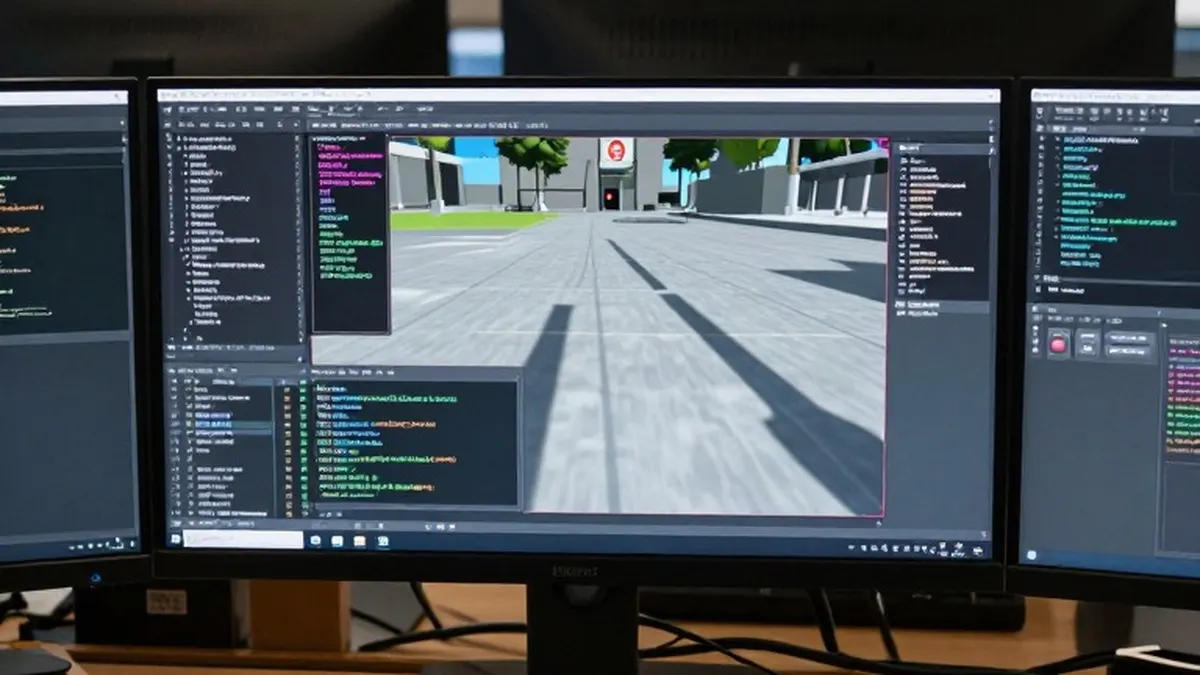
The ongoing discourse surrounding the integration of artificial intelligence in video game creation has escalated into a prominent controversy within the independent development sector. This week, the debate reached a peak following a public admission by House House, the studio behind the co-operative puzzle game Big Walk, which revealed that it used AI tools to resolve a specific technical issue.
While discussions about AI in game development have persisted for several years, this specific conflict had been developing privately among the judges and jury members of the Independent Games Festival Awards for months. The issue moved into the public spotlight on Monday when nineteen members of the jury, which consists of more than fifty individuals, released a joint statement. In this declaration, the group outlined a collective decision to decline voting for any submitted title that utilizes generative AI in any form.
The jurors cited a noticeable rise in the volume of game submissions that employ generative AI tools. They highlighted the potential ecological, economic, psychological, and labor-related harms associated with these technologies. The group argued that the use of such tools is not yet an established standard in the industry and urged the festival to implement a robust anti-AI policy for future years. This proposed policy would disallow any games containing AI-generated content from entering the competition.
Although the initial jury statement did not identify specific titles, Big Walk quickly became a focal point of the discussion by Tuesday morning. In response to the growing attention, House House issued a statement to the publication Aftermath and subsequently updated the game's frequently asked questions page. The developers acknowledged that large language models were used sparingly during the late stages of development to assist with complex technical challenges and bugs.
The studio explained that the AI assistance represented a very small fraction of the game's total code, estimating it to be well under 0.1 percent. The need for this help arose from a persistent bug in the Unity engine that caused shadows of infinite length in certain scenarios, which negatively impacted the game's performance. After consulting with a Unity engineer who believed a fix was impossible, the team turned to an LLM chatbot for suggestions.
The chatbot proposed a potential solution that the developers had to extensively modify before it could be implemented. The final result was a block of ten lines of code that resolved the issue. Despite the developers' explanation, some community members have suggested that the bug could have been fixed through significant manual effort without the need for AI intervention.
This incident has reignited the broader conversation about transparency in indie game development. Players and industry professionals are now scrutinizing how studios disclose their use of modern development tools. The situation highlights the tension between leveraging new technology to overcome technical hurdles and maintaining the perceived purity of independent creation.
The jury's decision to abstain from voting for AI-assisted games signals a potential shift in how awards bodies evaluate innovation and craft in the industry. As the festival approaches, other developers may find themselves facing similar questions about their workflows and the extent to which they have relied on generative tools during production.
The controversy is not limited to the technical aspects of the code but also touches on the values and expectations of the gaming community. For many fans, the indie label carries connotations of small teams and hands-on development, making the use of AI a sensitive topic. The Big Walk situation serves as a case study for how even minimal AI usage can spark significant debate when not disclosed early.
As the industry continues to navigate these changes, the outcomes of the Independent Games Festival Awards will be closely watched. The decisions made by the jury and the subsequent reactions from developers and players will likely shape future norms regarding AI disclosure and usage in the independent gaming space.