A record number of wildfires has burned more than 9 million acres across the United States this year, and the damage extends far beyond charred trees and scorched vegetation. New studies indicate that contamination of the streams and rivers that supply drinking water to much of the country can persist for more than a decade.
The findings about how long contamination lasts are especially troubling as climate change and increasingly strong El Niño weather events, which intensify drought conditions, drive larger and more frequent fires. So far in 2026, 68,179 blazes have burned more than 9.5 million acres (3.8 million hectares).
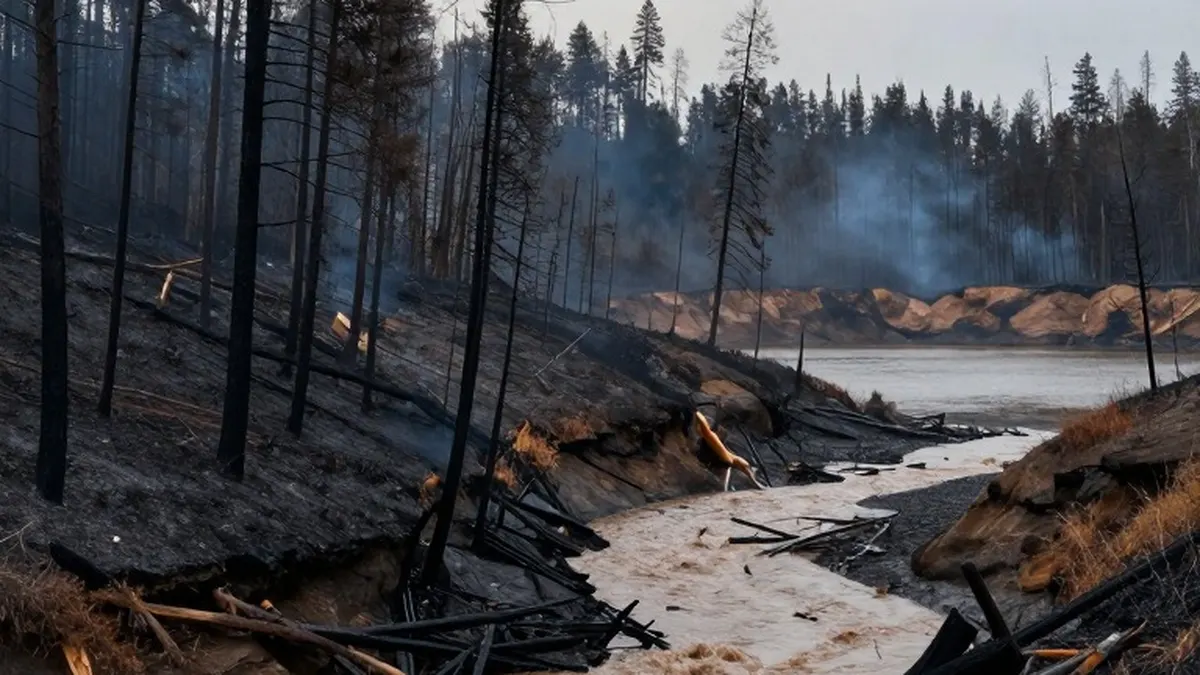
Once a fire sweeps through hillsides and forests, rain washes ash and organic matter into the streams that feed water treatment plants for towns and cities. Communities are trying to adapt, but recovery can take years and often depends on stopgap measures.
Residents of Las Vegas, New Mexico, went without water for months after the Hermit's Peak/Calf Canyon wildfire contaminated the Gallinas River in 2022. In the four years since, the city has distributed bottled water and hauled in tanks from nearby towns while raising money for a new treatment plant. Karen Pettine, who has owned the Hillcrest Restaurant for 50 years, said the crisis forced repeated closures, sometimes for a week at a time. "It's hard to run a restaurant without good water," she said, describing semi-truckloads of bottled water and pickups limited to four cases at a time. Mayor David Romero said climate change has made what used to be reliable less predictable, calling it "a scary situation that we're all going to encounter."
Wildfires are a natural part of forest ecosystems, but their growing severity has left watersheds, the areas that capture, filter and regulate water flow, vulnerable, said Amanda Hohner, an assistant professor at Montana State University who specializes in wildfires and water quality. Forested watersheds serve nearly two-thirds of US municipalities, according to Carli Brucker, lead author of a University of Colorado Boulder study comparing hundreds of burned basins with unburned areas. That research found impacts can last up to eight years.
Treatment plants drawing from streams and rivers are built for high quality water that trees and soil naturally filter, Brucker said, but fires cause spikes in heavy metals and dissolved organic matter that the plants cannot handle. Utilities may have to shut off intakes and turn to other sources, which are not always available. Reservoirs can act as a "sedimentation basin" where particles settle, said Kyle Shimabuku, an assistant professor of civil engineering at Gonzaga University, but sediments from burned vegetation carry nutrients like nitrogen and phosphorus that can fuel algal blooms in still water, sickening people and killing fish.
Chlorine treatment is also affected, said Garrett McKay, an assistant professor of civil and environmental engineering at Texas A&M. Disinfectants react with dissolved organic matter left by fires to form "disinfection byproducts," which the Environmental Protection Agency regulates because they can cause illnesses, including cancer. Because plants cannot remove those byproducts, they must strip out the organic matter before disinfecting, which can delay water supplies.
Colorado communities have faced similar threats. After a 2020 wildfire burned around No Name and Grizzly creeks, the primary sources for Glenwood Springs, the Colorado Water Conservation Board authorized an emergency loan of $8 million within two months to improve the treatment system. The same year, ash and sediment from the Cameron Peak fire forced Fort Collins to close its river intake and draw from Horsetooth Reservoir, which was safe because it is fed by a different watershed.
Las Vegas, New Mexico, was hit harder. After the 2022 fire damaged the Gallinas River watershed, a massive rainstorm swept ash and sludge into the river and reservoirs, shutting down the treatment plant. A 2024 flood carried more burn debris into the town's two reservoirs, leaving only a few days of safe water and prompting trucked shipments of 2.2 million gallons (8.3 million liters) from Santa Fe and Santa Rosa. Another blow came in February 2025, when burn scar debris, bad weather and equipment failure caused a pressure drop, a monthlong boil-water advisory and more shipments. "The February event was probably the scariest," Romero said.
State and federal governments have allocated $148 million to rebuild the town's treatment plant and support alternatives such as drilling wells and reusing water. Groundbreaking on the first phase of the new plant is set for Nov. 18, the mayor said. "We know with climate change and what we experienced in the past, the Gallinas River is something we can't depend on forever."