Blade Runner 2099 arrives as a deliberate departure from the fast-paced norms of modern streaming content. The new Amazon series adopts a slow and methodical approach that mirrors the pacing of its cinematic predecessors. This structure allows the show to delve deeply into moral ambiguity, creating an experience that feels both faithful to the original films and distinctively new. While the production successfully expands the universe in inventive ways, its length occasionally works against its own narrative momentum.
Set fifty years after the events of Blade Runner 2049, the series presents a significantly altered future. In this timeline, a war between humans and replicants has completely flipped the historical power dynamic. Replicants, who were once second-class citizens, now hold authority over society. Humans have been cataloged and relegated to manual labor, while the titular blade runners have become a replicant detective force tasked with hunting down human dissidents.
The central storyline follows two partners with conflicting motivations. Michelle Yeoh portrays Olwen, a replicant detective with only one week left to live. She spends her final days searching for her missing former partner. Joining her is Cora, played by Hunter Schafer, a human fugitive who poses as a replicant to secure freedom for herself and her ill brother. Their intersecting quests drive the plot across a retrofuturistic Los Angeles.
The role reversal allows the show to explore the definition of humanity from fresh perspectives. The ambiguity between humans and replicants becomes more complex when the traditional hierarchy is inverted. Humans, despite having longer lifespans and childhoods, are depicted as emotional husks forced into subservience. This emotional bluntness enables Cora to maintain her disguise, as replicants are perceived as beings who lack empathy and other human vulnerabilities.
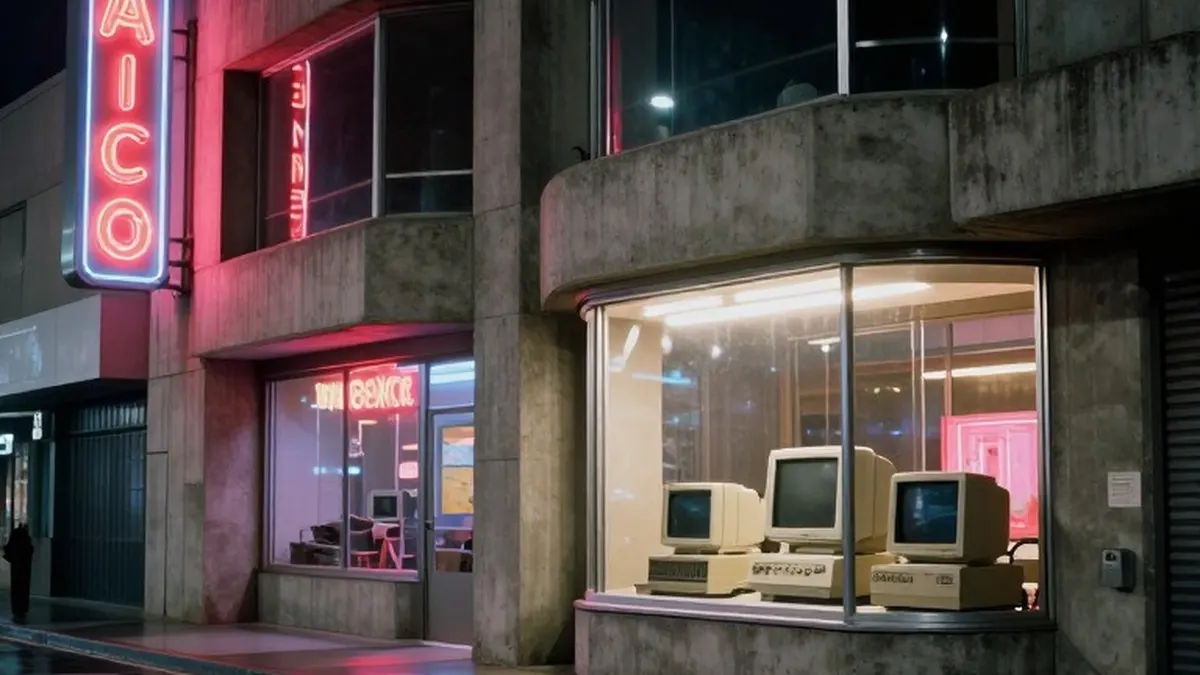
The visual design of the series is a major highlight, capturing the scuffed cyberpunk aesthetic of the films through brutalist architecture and chunky technology. The production features detailed world-building elements, such as parlors where replicants experience alternate lives via realistic bodysuits and underground clubs where humans can relax away from surveillance. The visual tone is complemented by the characters' distinct styling, particularly their cool jackets, which fit the established blade runner archetype.
Despite its strong premise and visuals, the series struggles with pacing in the middle episodes. The slow-burn structure, which is effective for a feature film, can feel excessive across eight television episodes. Several storylines and characters appear underdeveloped, including a deranged replicant played by Amy Lennox who feels flat despite promising potential. The show also incorporates more action sequences than the films, but these moments often feel tonally inconsistent with the rest of the narrative.
Recurring tense sequences, such as the Voight-Kampff test, are repeated frequently enough to dilute their impact. These confrontations, where characters stare each other down in a Western-like standoff, lose some of their tension through overuse. Additionally, a central MacGuffin with existential ramifications pulls both detectives into its orbit, adding a layer of philosophical weight to the action.
The series concludes with a definitive finale, which is a welcome contrast to franchises that often stretch their run for excessive periods. The ending opens up new questions about the nature of reality and identity, mirroring the open-ended conclusion of the original film. These lingering queries may never be fully answered, leaving viewers to interpret the implications themselves.
Blade Runner 2099 serves as a brief but significant return to a beloved sci-fi universe. While it stretches its material thin at times, it remains an inventive twist on the classic story. The series is available for streaming on Amazon Prime Video starting November 25, 2026.