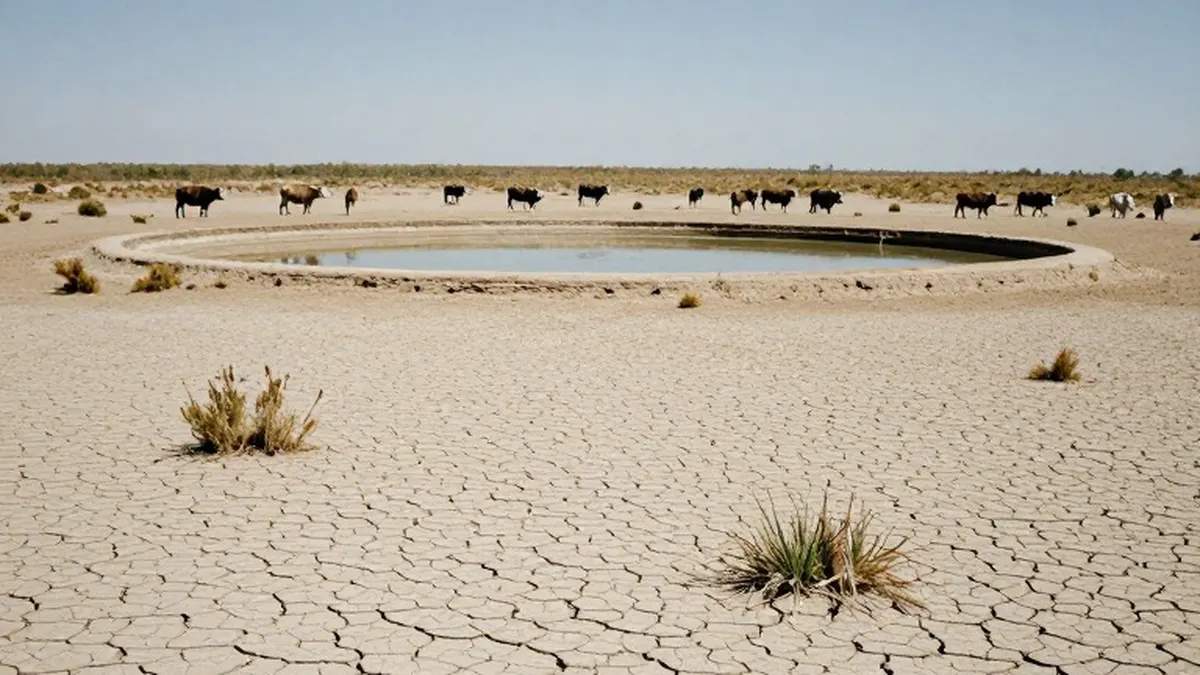
Bolivia has declared a nationwide state of emergency to make resources available for its response to El Nino, as the country confronts drought and the threat of flooding. President Rodrigo Paz signed the decree on Saturday, calling for additional rescue teams to be deployed in areas hit hard by both types of extreme weather.
Paz warned that El Nino would have “very severe impacts in terms of drought and floods”. He also said Bolivia needed “the cooperation of all institutions”, underscoring the need for a coordinated response as the government prepares for the weather phenomenon’s effects across the country.
A government report released during the week put the number of families affected by drought at 78,000. The dry conditions extend across six of Bolivia’s nine departments and have caused the loss of more than 75,000 cattle. Those figures show the scale of the drought already facing the country as authorities mobilise resources under the emergency declaration.
Flooding presents another danger for Bolivia, where floods in the Santa Cruz region killed dozens of people in December 2025. Elsewhere in the region, Chile’s capital, Santiago, registered its wettest October on record, while wildfires in Peru killed at least 12 people during the same month.
El Nino is a naturally occurring part of the global climate cycle that returns approximately every two to seven years. It involves warming in the Pacific Ocean, which alters wind, atmospheric pressure and rainfall patterns around the world. These changes often produce extreme weather, although their effects differ from one geographic area to another.
The strength of El Nino also varies between cycles. The current cycle could become the strongest ever recorded and is expected to reach its peak at the end of 2026. Its consequences, however, could persist well into 2027, extending beyond the period when the phenomenon itself is at its most intense.
Scientists predict that El Nino could cause more than 450,000 deaths worldwide, with the poorest countries suffering the greatest effects. In early September, the World Meteorological Organization put the likelihood of El Nino continuing through February 2027 at nearly 100 percent, indicating a prolonged period of disruption to weather patterns.