Brazil's Liberal Party has acknowledged the result of Sunday's presidential runoff and recognized the victory of incumbent President Luiz Inácio Lula da Silva. Its candidate, Flávio Bolsonaro, has still not formally conceded defeat.
Party president Valdemar Costa Neto said in a statement on Monday that the Liberal Party accepts the outcome but believes "questions raised about the vote" still need to be clarified.
The party's statement came as U.S. President Donald Trump cast doubt on the election. "I didn't take sides, but it looked like another rigged election," Trump told reporters on Monday. He offered no evidence of fraud.
Flávio Bolsonaro first said he would seek to annul the results, pointing to alleged irregularities such as a last-minute extension of voting hours. On Sunday, the Supreme Court ordered polling stations to stay open until 7 p.m., two hours longer than planned, after an appeal by Lula's campaign that cited public transportation disruptions. Bolsonaro's campaign had also asked for an extension because of heavy rain in southern Brazil.
In a video posted on Monday, Bolsonaro changed course and said he would try to have Lula's win disqualified over alleged abuses of political and economic power. "The law must apply to everyone," he said, adding that the competition "must be fair and equal, which did not happen." He gave no evidence for the claim.
Bolsonaro also said the Federal Police ordered him to hand over his passports after he visited his father, former President Jair Bolsonaro, in Brasília. The elder Bolsonaro, a former far-right president, is under house arrest after being sentenced to 27 years in prison for his role in the 2022 coup attempt against Lula. The younger Bolsonaro said he was told on the street to surrender the documents and is barred from leaving the country. He said the order stemmed from remarks by his brother Eduardo, who lives in the United States, suggesting he should leave Brazil if he lost. Supreme Court Justice Alexandre de Moraes issued the order in connection with a separate investigation.
Lula won just over 51% of valid votes, about 64.2 million, against more than 48%, or nearly 59.8 million, for Bolsonaro. The result was a major comeback for Lula, who had trailed his challenger in the first round, and it slowed a run of right-wing electoral wins in Latin America. Gains in major cities including Rio de Janeiro and São Paulo, along with backing from younger, older and working-class voters, helped him. He added more than 10 million votes compared with the first round.
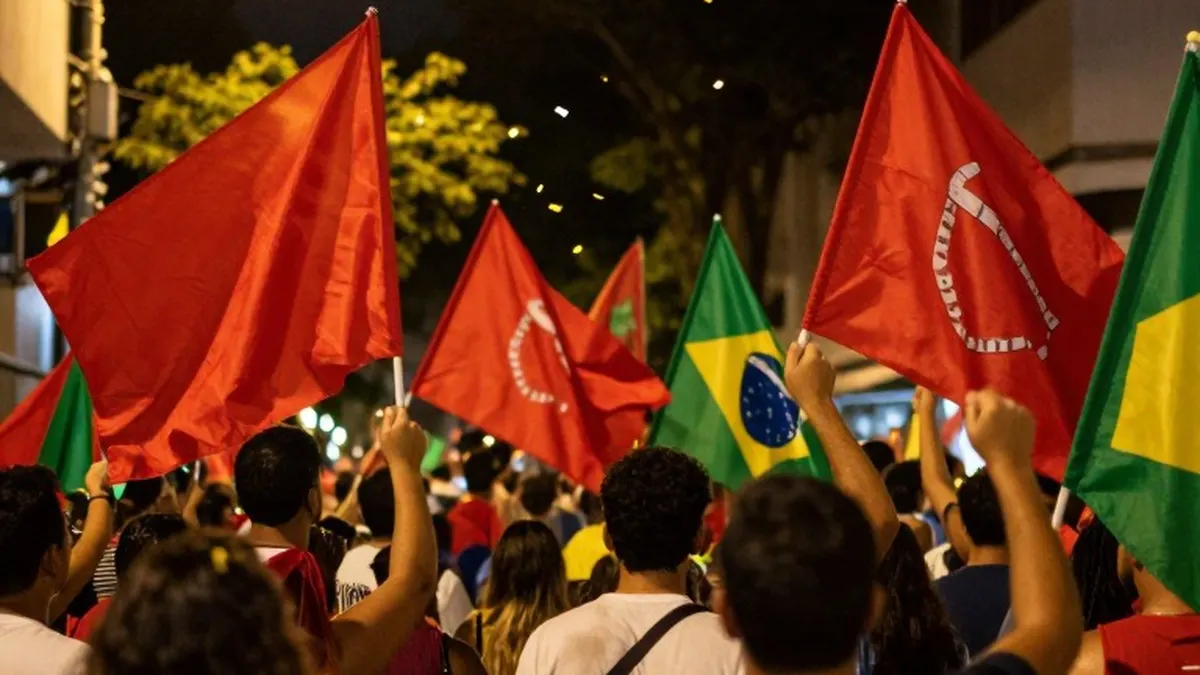
In his victory speech in São Paulo, Lula thanked young Brazilians for taking to the streets "to defend democracy in the country." Among first-time voters was 17-year-old Brisa Pereira in a Brasília suburb, who said Lula's path from poor factory worker to president had inspired her. "It's not the '90s anymore. We have rights, and Donald Trump can't speak for all of America," she said.
Political analyst Thiago Vidal of the consultancy Prospectiva called the result a nationwide and systemic victory that gives Lula a mandate, though he warned that the next four years will be difficult. The Liberal Party made significant gains in Congress, leaving Lula facing a conservative opposition and a deeply divided electorate.
Vidal also credited a shift toward digital campaigning. Lula, who had leaned on traditional media, embraced social media in the final weeks, a push directed in large part by congressman André Janones of Minas Gerais. Janones used Instagram and WhatsApp to reach younger voters, and his WhatsApp channel, "Lula's Army," drew more than 10 million followers.