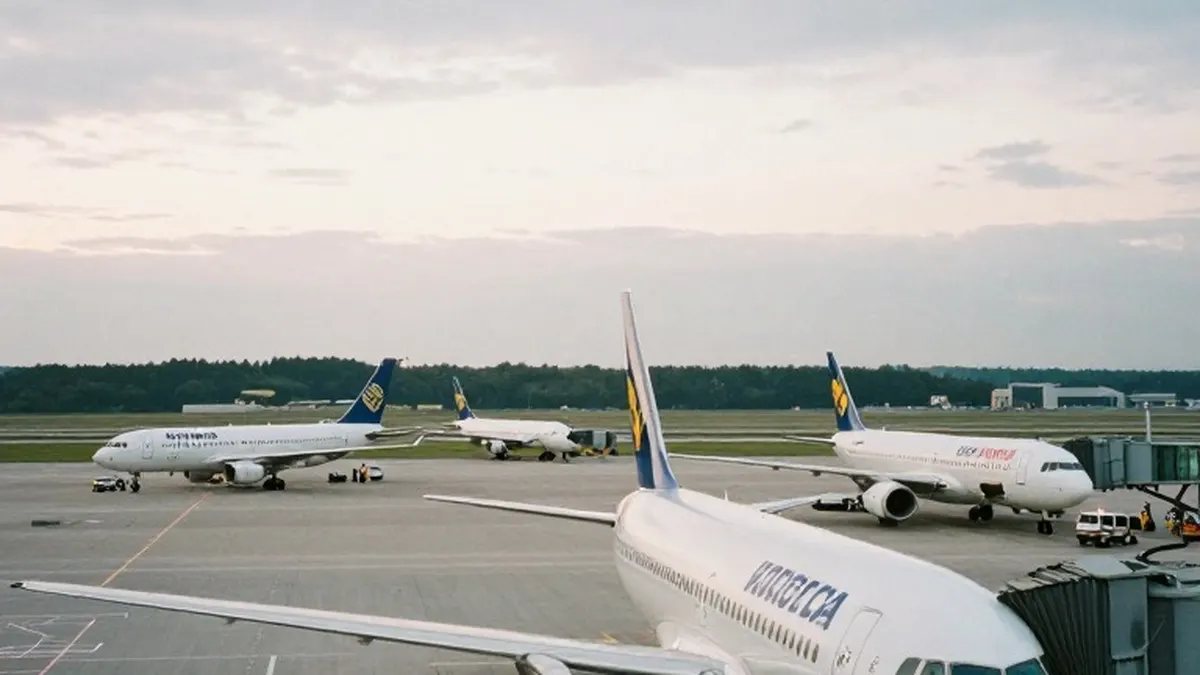
Aircraft traveling across Europe were forced to make unplanned landings on Thursday morning due to a new series of bomb threats. This incident marks the second significant disruption to air travel in the region during the current week. Security teams at various airports conducted thorough checks, but no incendiary devices were discovered in any of the affected locations.
Czech police announced on the social media platform X that four planes destined for Prague received bomb threats. While authorities assessed the credibility of these specific threats as low, they stated they were not underestimating the situation. All necessary security measures were activated with minimal impact on passenger experience and general airport operations. Police confirmed that all aircraft would undergo pyrotechnic inspections after landing.
Bulgarian officials reported that three aircraft made emergency landings due to similar threats. According to Interior Minister information shared by broadcaster bTV, planes arriving from Copenhagen and Madrid landed in Sofia. A third aircraft, which had departed from London, landed in Plovdiv, as reported by local media outlets.
In Poland, LOT Airlines stated that a flight from Warsaw to Brussels landed safely at its destination after receiving a security warning. A spokesperson for the airline explained that the flight crew was notified of the potential threat and conducted an onboard inspection according to established procedures. No suspicious items were found during this initial check.
The aircraft subsequently landed at Brussels Airport, where security services carried out an additional, more detailed inspection of the plane. Meanwhile, Aer Lingus stated that flight EI402 from Dublin to Rome landed safely at Evreux airport, located 100 km west of Paris. The diversion was carried out as a security precaution, the Irish airline said in a statement.
A Finnair plane departing from Helsinki was safely escorted to its scheduled landing in Rome by the Italian air force, according to a source close to the matter. These incidents add to the growing list of disruptions affecting European air travel, which had already been impacted earlier in the week.
On Tuesday, at least seven flights and a cruise ship received bomb threats, causing widespread disruption at airports across Europe. Despite the scale of the incident, no explosive devices were found in any of the targeted vessels or aircraft.
The exact entity responsible for the threats remains unclear. No single country has officially attributed blame for the recent series of incidents. The timing of these threats coincides with European officials blaming both Russia and Iran for what they describe as hybrid attacks and acts of sabotage. Both Moscow and Tehran have denied conducting such campaigns.
Drone incursions have periodically caused flight delays and cancellations in Europe. Additionally, this week saw unidentified hackers shut down refrigerators in supermarkets across several countries on the continent, leaving food spoiled. Some experts suggest that the hoax bomb threats could be part of a similar pattern of low cost, deniable disruption efforts aimed at causing confusion and logistical challenges.