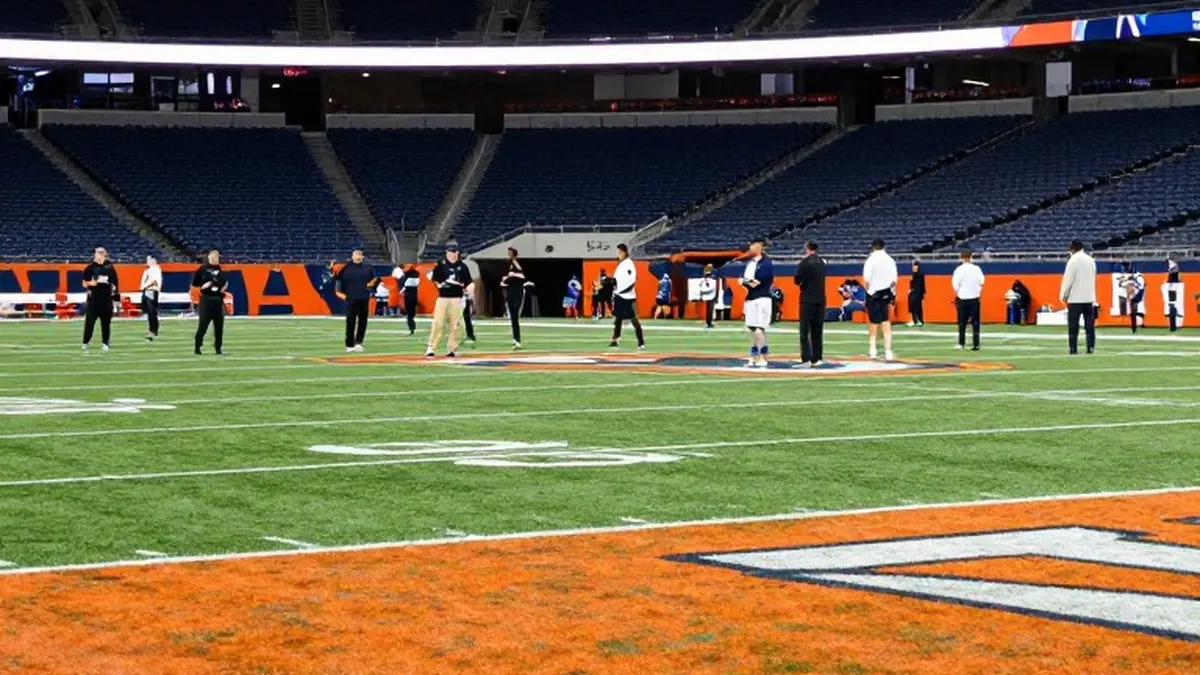
Oklahoma head coach Brent Venables continues to face pressure in his fifth season, yet his position appears secure for the time being. The Sooners are currently fighting to secure bowl eligibility, a challenge that has raised questions about the long-term viability of their coaching staff. Despite the recent struggles, leadership within the university has moved to silence speculation that Venables is in immediate danger of being replaced.
Rick Nagel, the chair of the Oklahoma Board of Regents, addressed the ongoing debate regarding Venables' standing. Nagel noted that the board usually refrains from commenting on athletic department matters, but he felt it necessary to clarify the current situation. He stated that Venables is not on the hot seat, emphasizing that there is no such thing as a hot seat given the recent contract extension. This statement aims to provide a sense of stability to the program during a turbulent period.
However, pointing to a lucrative contract as the primary reason for job security is often viewed as a mixed signal by football analysts. While a large buyout can serve as a deterrent against a sudden coaching change, it is not an absolute barrier if the decision-makers are willing to pay the penalty. The Sooners currently sit with a 5-4 record and have no guaranteed wins remaining on their schedule. To achieve bowl eligibility, the team must win at least one of their final three games against Ole Miss, Texas A&M, and Missouri.
This season continues a pattern that has defined Venables' tenure at Oklahoma, characterized by alternating levels of success. The program has seen a consistent swing between six-win and ten-win seasons since his arrival. In 2022, the team finished with a 6-7 record, followed by a 10-3 season in 2023. This cycle repeated with a 6-7 finish in 2024 and a 10-3 campaign in 2025. The current 5-4 record in 2026 suggests the pattern may continue, leaving the program in a state of uncertainty.
The decision to extend Venables' contract came shortly after a College Football Playoff appearance, a move that has since faced criticism. Through his first four seasons, Venables compiled a 32-20 record, with an 11-11 mark in SEC play and no postseason victories. Critics argue that these statistics do not necessarily justify an eight-figure salary and a buyout clause that was initially valued at $51.6 million, which decreases by $10 million each year.
The Sooners' offensive unit has been the primary area of concern. While Venables has a proven track record in building defensive units, his offenses have ranged from average to poor. This year, the offensive performance has been particularly lackluster, prompting a shift in play-calling duties. First-year tight ends coach Jason Witten is now responsible for calling the plays, a move intended to revitalize the struggling attack.
The offseason will be a pivotal moment for the Venables era. The coaching staff brought in quarterbacks John Mateer and Ben Arbuckle from Washington State before the 2025 season, hoping to elevate the offense. However, the plan did not yield the desired results, as Mateer displayed limitations in the passing game and the coaching staff failed to design schemes that mitigated those weaknesses. The upcoming recruiting and hiring cycle must address these gaps decisively.
Promoting Witten to a permanent offensive coordinator role is unlikely, regardless of how the rest of the season unfolds. Entrusting the offense to a coach who has only called plays in four games would be a significant risk. Instead, Venables is expected to search for a new offensive coordinator who can bring a fresh perspective and a proven track record. Oklahoma remains an attractive destination for such candidates, particularly given the strength of its defensive program.
The new offensive coordinator should be granted the autonomy to select a quarterback who best fits their specific system. This task may be complicated by a projected high-cost transfer market for quarterbacks this winter. If the university was willing to invest heavily in Venables, it is logical that they should also provide the necessary resources to rectify the offensive issues. Success in 2027 will depend on the program's ability to build a cohesive offensive unit that complements its strong defense.