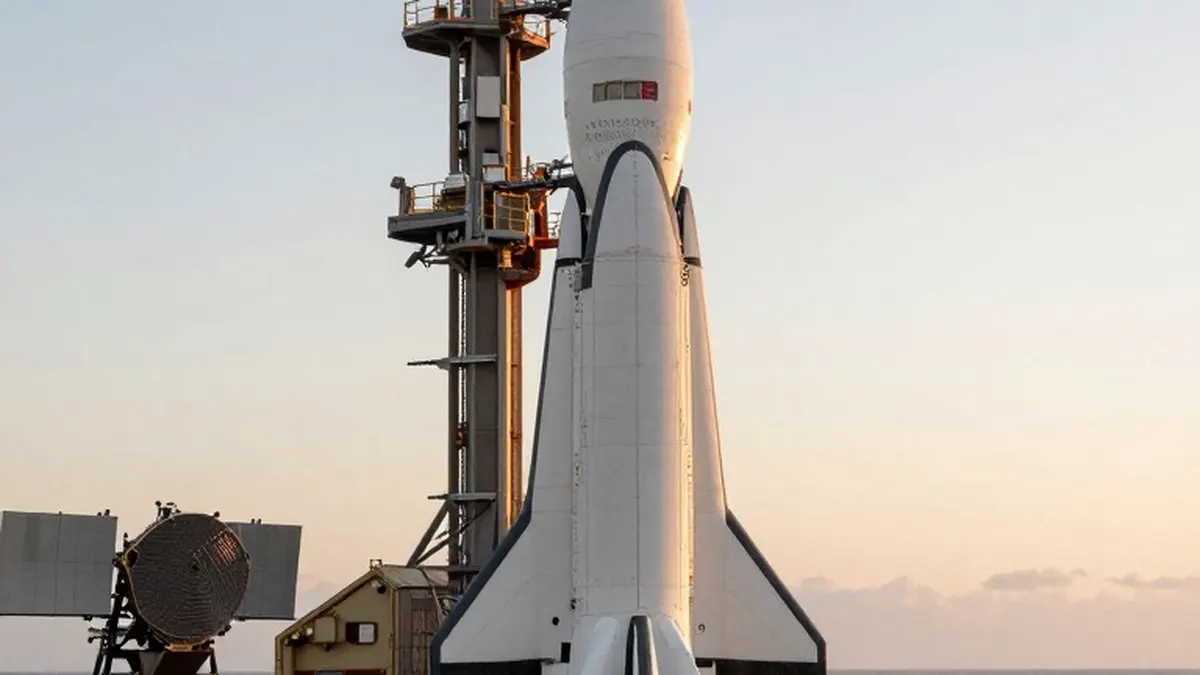
Abel Avellan, the founder and chief executive of telecommunications company AST SpaceMobile, used an hour-long event on Thursday to lay out his vision for developing a large rocket capable of carrying the company's Bluebird satellites into orbit.
Throughout the presentation, Avellan returned repeatedly to one theme: AST intends to build what he called a simple rocket. He paraphrased SpaceX founder Elon Musk several times, invoking the maxim that "the best part is no part."
Avellan said AST has already procured engines for its proposed rocket, which the company calls Blacklift. He argued that engine development accounts for 80 percent of a typical rocket's development cycle, implying that securing engines removes most of the difficulty from the effort.
"Of course rocket engineers are going to get mad with me, but you can simplify it as a big tank feeding engines," he said of the rocket. On the question of building those tanks, he was emphatic, saying the company knows how to make them and knows how to make them in composite materials.
The confident framing amounts to a substantial bet that rocket development, a field that has humbled many well-funded newcomers, can be reduced to problems AST already knows how to solve. Avellan's remarks suggested he sees little mystery left once the engines are in hand and the tanks are a known quantity.
The push into launch is being driven by necessity rather than ambition. AST SpaceMobile has had success building very large satellites, its Bluebirds, which are designed to provide direct-to-cell service from an orbit about 550 kilometers above Earth.
The company now faces a commercial launch crunch. It is struggling to get its satellites on orbit at present and expects the shortage of available launches to persist into the future, putting pressure on its ability to meet demand.
"We're not doing this thing because we like rockets," Avellan said during the presentation. "We're not doing this thing because we want to be in the launch business. We want this because we have so much demand of our satellites, and as you have seen it, we cannot get enough launches."