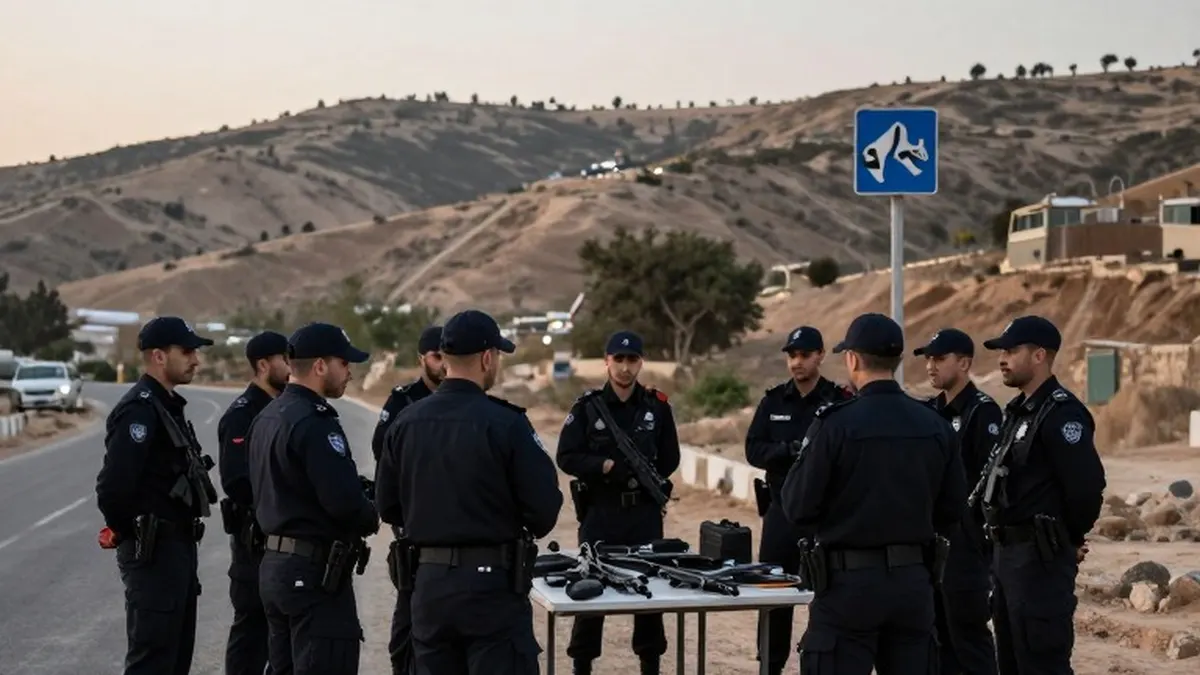
Syria’s new government has intensified its efforts to dismantle Hezbollah-linked networks since the collapse of the Assad regime in December 2024. The latest action involves a coordinated raid by the General Intelligence Service and Internal Security Forces, which officials say thwarted a plot against the Homs refinery. Authorities arrested members of a cell affiliated with the Lebanese militia and seized explosive devices that had been prepared for the attack.
This recent operation is part of a broader pattern of security raids conducted by Syrian forces over the past year. Syrian state media confirmed that the cell members were arrested and that the explosives intended for the refinery were secured. The move underscores the new administration's view of Hezbollah as a primary security threat, a stance rooted in the militia's long-standing support for the former Assad regime.
Historically, Hezbollah intervened in Syria’s civil war in 2013 to support Bashar al-Assad, with significant fighting taking place around al-Qusayr near the Lebanese border. During that period, Syria also served as a vital land route for Iranian weapons shipments destined for Hezbollah. Under President Ahmad al-Sharaa, security forces have prioritized dismantling these established networks, seizing weapons, and preventing the militia from reestablishing a foothold within Syrian territory.
The campaign has included a series of arrests, operations against smuggling routes, and occasional clashes along the Lebanese border. In February 2025, the Public Security Department reported apprehending groups in the al-Qutayfah area of the Damascus countryside. These individuals were engaged in smuggling and selling weapons to Hezbollah. The statement highlighted the government's focus on disrupting the flow of arms into the country.
A subsequent operation in March 2025 targeted Hezbollah-linked cells in the Sayyida Zaynab area of Damascus Countryside Governorate. Led by the Ministry of Interior and the Damascus Countryside Security Directorate, the mission aimed to stop groups planning criminal activities. State news agency SANA reported that the operation successfully targeted these specific cells, further tightening the security net around the capital region.
In September 2025, authorities announced the arrest of a Hezbollah-linked cell in the Sasa and Kanaker areas. The group was allegedly trained in Lebanon. During the raid, security forces seized a significant cache of military hardware, including 19 Grad rockets, anti-tank missiles, and their corresponding launchers. Reports from Al-Monitor at the time noted the scale of the weaponry recovered during this specific incident.
Another notable raid occurred in February in the Mezzeh district, located near a major military airport in Damascus. The Syrian government stated that it had dismantled a cell responsible for firing rockets at the airfield. Officials indicated that the weapons used in the attack originated with Hezbollah, highlighting the militia's continued ability to project force into the heart of the capital.
Further operations took place in May, where coordinated arrests were made in multiple provinces. Syrian authorities announced that an alleged Hezbollah cell was planning assassinations of senior officials. Investigators found weapons, explosives, and surveillance equipment in connection with the group. In July, shipments of missiles, anti-tank weapons, and drones were seized, with reports suggesting the cargo was destined for Hezbollah.
The latest arrests in the Homs area represent the most recent chapter in this ongoing struggle. These incidents collectively illustrate how the end of the Assad era has disrupted Hezbollah’s former operational infrastructure and weapons corridors. While the pressure from the Syrian government makes it more difficult for the militia to operate, recurring arrests suggest that the threat remains active. It is possible that for every cell arrested, others continue to use Syrian territory for smuggling, but the new leadership appears determined to maintain this high level of security enforcement.