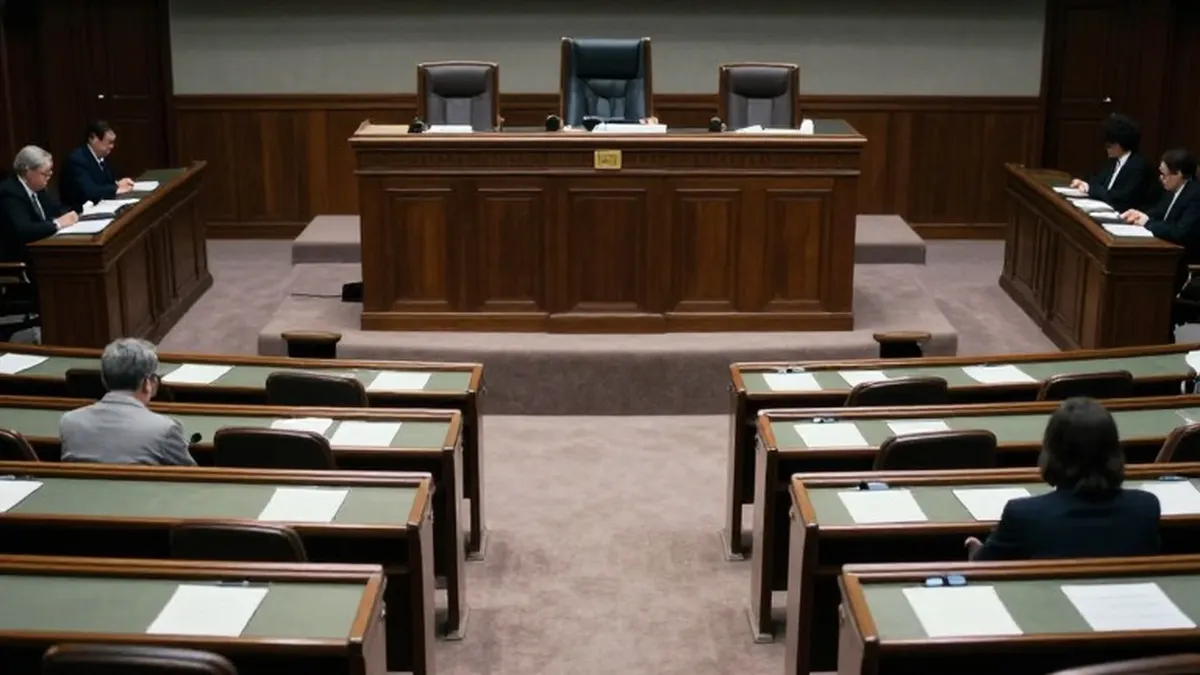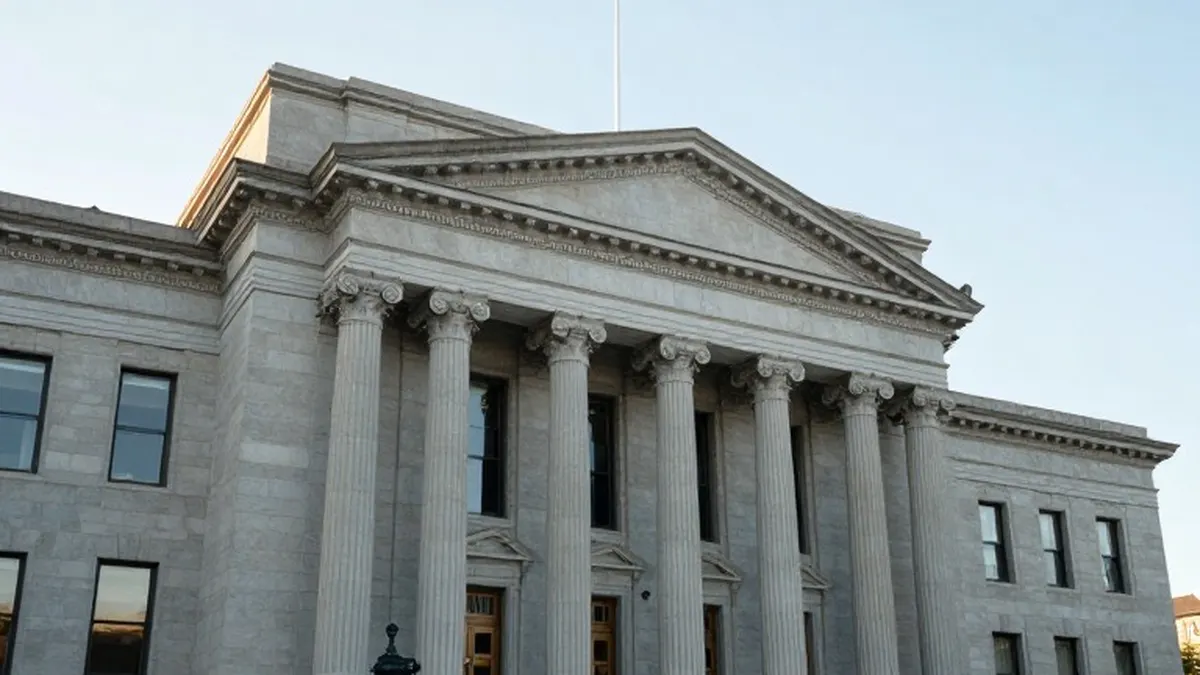
The Supreme Court of Canada has issued a landmark ruling that largely upholds a controversial Quebec law prohibiting public sector employees from displaying religious symbols. The legislation, commonly referred to as Bill 21, restricts the wearing of items such as the hijab, the cross, and other visible religious markers by workers in key areas of the public service.
The law was enacted in 2019 by the Quebec government, which utilized a specific provision of the Canadian constitution known as the notwithstanding clause. This legal mechanism allows a provincial or federal government to override certain fundamental rights, including freedom of religion, for a period of five years. The decision reached on Friday is considered one of the most closely watched in the nation's history, with implications extending beyond Quebec to the rest of the country.
Bill 21 faced legal challenges from various groups, including Muslim, Sikh, and Catholic female teachers. These challengers argued that the prohibition violated their fundamental rights by excluding them from key areas of public life. Civil liberty organizations in Quebec have also criticized the measure, stating that it disproportionately affects Muslim women who wear the hijab and other women who display visible religious attire.
The Supreme Court was tasked with answering several complex constitutional questions. These included determining the overall constitutionality of Bill 21, assessing whether Quebec's invocation of the notwithstanding clause was appropriate, and exploring whether there are inherent limits to the use of that clause. The court confirmed the general validity of the law but identified a specific area where it infringes upon democratic rights.
In a notable finding, the justices ruled that the law is problematic when applied to Quebec's elected officials. By banning these individuals from wearing face coverings for religious reasons, the court found that the statute interferes with democratic rights. This distinction highlights a tension between maintaining secularism in the workforce and respecting the personal choices of those elected to represent the public.
The court also addressed the broader power of the judiciary in relation to the notwithstanding clause. It was ruled that Canadian courts retain the authority to declare whether a law aligns with the Canadian Charter of Rights and Freedoms, even when a government has invoked the notwithstanding clause. However, in this specific case, the court opted not to exercise that power to strike down the law entirely.
While the majority of the seven justices concluded that the law is largely valid, the decision was not unanimous. Some members of the bench dissented on specific points of the judgment. Justices Andromache Karakatsanis, Michelle O'Bonsawin, and Nicholas Kasirer wrote that the notwithstanding clause cannot be used to authorize laws that are incompatible with the fundamental character of Canada as a free and democratic country.
These dissenting justices specifically argued that the law infringes upon the Charter's guarantees of freedom of religion, freedom of expression, and the right to equality. Their perspective suggests that while the clause provides a significant tool for legislatures, it should not be used to override core democratic principles without careful consideration.
The Quebec government has maintained that Bill 21 is necessary to uphold the province's state secularism, a concept often referred to as laicite. Officials argue that this secular framework is a core component of Quebec's distinct identity and culture. The ruling now provides a definitive legal framework for how these symbols are managed in the province's public sector, resolving a debate that has divided the province for several years.
The impact of this decision will be felt across the public service in Quebec, where employees must now navigate the specific boundaries set by the Supreme Court. While the ban remains in force for most public workers, the nuanced ruling regarding elected officials and the power of the courts to review Charter compliance offers important precedents for future legal challenges involving the notwithstanding clause.