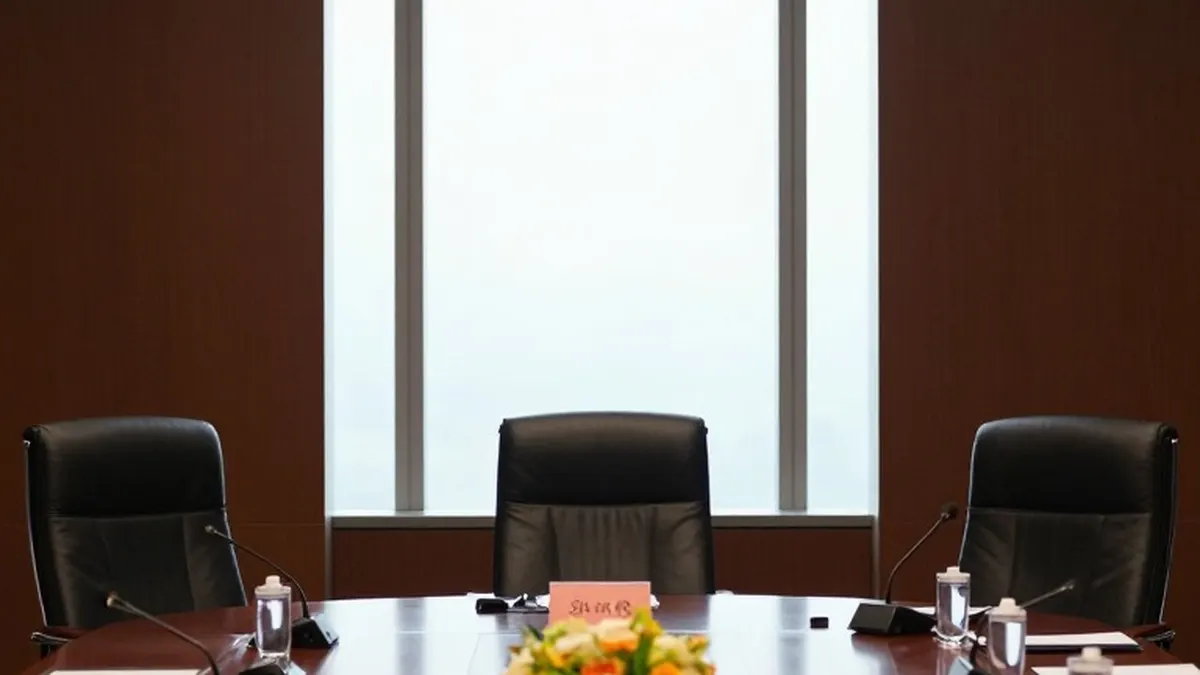
Chinese President Xi Jinping will host U.S. President Donald Trump and Russian President Vladimir Putin in Shenzhen on Thursday for their first meeting as a group, China's Foreign Ministry confirmed Monday. The gathering will take place alongside the APEC meeting, bringing the three leaders together as Washington and Moscow signal different priorities for the discussions.
Beijing's announcement followed confirmations from Moscow and the White House. The Wall Street Journal reported last month that Putin had suggested the meeting as a way to pursue an end to the four-year war in Ukraine. Although the three-way format is unprecedented, the leaders have extensive experience meeting separately. Xi has met Trump three times since October last year and Putin more than 40 times since becoming China's president in 2013. Trump and Putin's previous encounters include the Russian leader's August 2025 visit to Alaska.
Trump has left Washington for a four-day Asian trip that also includes the Philippines. For Xi, convening the meeting could itself bring political rewards, according to Peter Alexander, Shanghai-based managing director at Z-Ben Advisors. Alexander said bringing the American and Russian presidents to the table would deliver much of that benefit before substantive discussions begin.
Agreement on what to discuss appears to be the principal remaining obstacle, said Neo Wang, chief China strategist at Evercore ISI. White House spokeswoman Olivia Wales told reporters that Trump would address reducing nuclear weapons and the dangers he associates with their proliferation. He also plans to raise the U.S.-Israeli war against Iran, but is not expected to introduce Russia's war in Ukraine.
Moscow has presented a different emphasis. Russian presidential aide Yuri Ushakov said last week that the Shenzhen meeting would carry forward diplomatic efforts toward a negotiated Ukraine settlement, according to state-controlled outlet Russia Today. Putin met U.S. envoys Jared Kushner and Steve Witkoff in Moscow last week and said Europe needed to determine whether it wanted peace or war. That encounter followed the conclusion of another round of Ukraine talks in Abu Dhabi a day earlier.
China's Monday statement did not identify topics for the summit. Wang said Beijing's close strategic relationship with Moscow could give Xi a reason to participate in support of Putin. However, he considered a joint statement addressing Ukrainian territory, security arrangements or sanctions on Russia unlikely because it would expose China to greater political scrutiny and accountability.
Trade is another likely subject, with a U.S.-China truce due to expire in January. Analysts broadly anticipate an extension despite indications of increasing friction between the countries. Carlos Casanova, senior economist for Asia at UBP, said the leaders could also explore whether they can establish a more lasting framework to rebalance bilateral trade.
The U.S. trade deficit with China remains substantial. Chinese exports to the United States have posted double-digit growth for most of this year compared with last year's low base. Casanova said reducing the deficit would be central to Washington's push for a more balanced trading relationship.