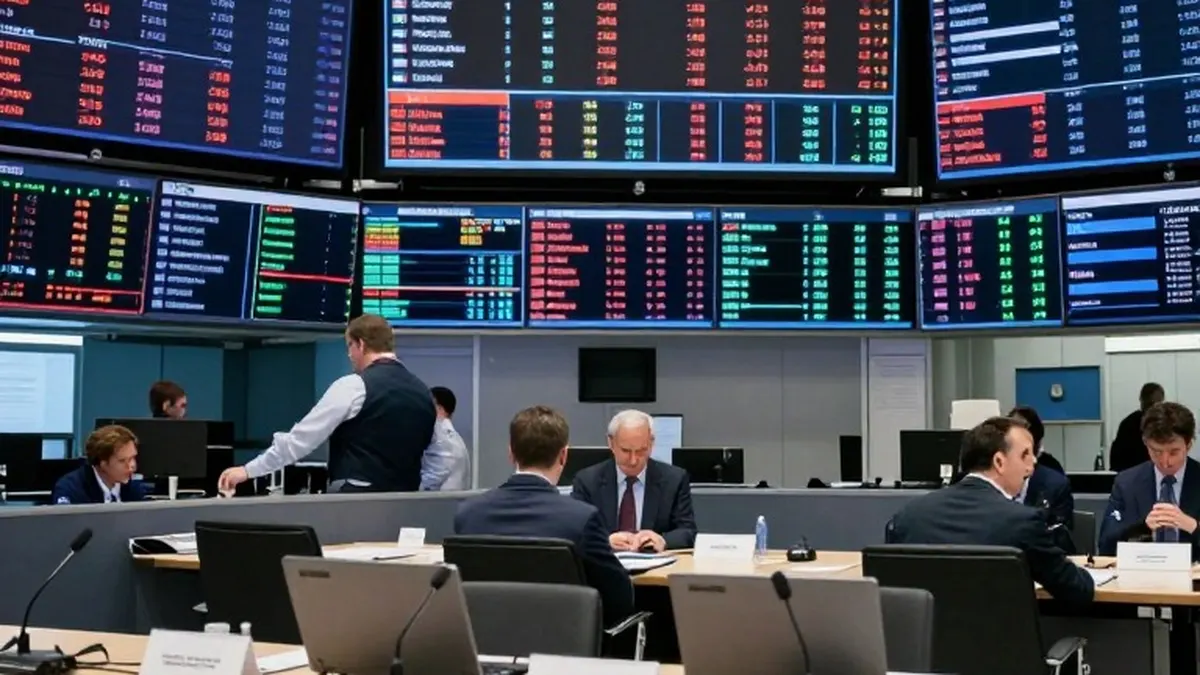
Chinese Ambassador to Israel Xiao Junzheng has dismissed recent allegations that Beijing provides military assistance to Iran as baseless. His comments followed claims by former senior Israeli security officials that China has helped Tehran develop its missile and nuclear capabilities. Xiao made these remarks while speaking to The Jerusalem Post at the annual conference of the SIGNAL Group on Israel’s China and Indo Pacific policy, which took place at the Tel Aviv Stock Exchange on Thursday.
The ambassador defended the bilateral relationship, noting that similar accusations had surfaced at the previous year’s conference. He stated that China maintains normal relations with Iran within the framework of international law, similar to the approach taken by European nations. Xiao emphasized that under Chinese internal export control laws, the country does not sell weapons to any party involved in an armed conflict and strictly regulates the export of dual-use items.
Despite the envoy’s defense, former national security adviser Maj.-Gen. (res.) Yaakov Amidror raised concerns about the depth of Chinese involvement. Amidror, who served under Prime Minister Benjamin Netanyahu, said he was previously more optimistic about relations with China but has become less so after observing Tehran’s interactions with Beijing. He alleged that after Israeli strikes damaged Iran’s missile production infrastructure, Iran turned to China to restore its manufacturing capabilities.
Amidror claimed that Iranian forces could not resume missile production without Chinese help. He noted that while Israeli attacks destroyed part of Iran’s capability to manufacture missiles capable of reaching Israel, Tehran subsequently purchased the ability to reproduce that technology from China. Although he did not know if the assistance came from China’s civilian or military sector, he suggested the support was critical for Iran’s recovery.
Xiao responded to these specific claims by suggesting that if there was evidence of lethal weapons being transported to Iran that threatened Israel’s security, the Israeli government would inform Beijing. He maintained that China’s export policies are robust and that the relationship with Tehran is conducted through standard international channels.
These comments arrive amid growing scrutiny of Chinese ties to Iran. A September report by Reuters, citing five sources, indicated that Iran used a barter-like arrangement involving oil revenues to purchase billions of dollars worth of Chinese goods, including alleged military equipment. The sources said this arrangement was used for multimillion dollar air defense contracts. At the time, China’s Foreign Ministry stated it was not familiar with the specific arrangement, while Reuters noted it could not independently verify the military transactions.
A subsequent Reuters investigation found that a network of over 5,000 Iranian Defense Ministry linked agencies facilitated imports of at least two billion dollars in equipment, explosives, and other military related goods since January 2025. The imported materials included rocket fuel ingredients, industrial machinery, and heavy duty vehicles suitable for missile and drone production. China, Russia, and Germany were named as origins for these goods, though experts noted some materials had civilian uses and the report did not establish direct authorization by Beijing.
Former Mossad director Efraim Halevy also addressed the topic at the conference, focusing on historical assistance to Iran’s nuclear program. He recounted a 1993 visit by former Prime Minister Yitzhak Rabin to Beijing, describing it as a necessary mission to demand that China stop providing scientific support to Iran in the nuclear field. Halevy said Rabin, accompanied by then Mossad director Shabtai Shavit, presented detailed intelligence to Chinese President Jiang Zemin, who flatly denied and rejected the claims.
Halevy added that following talks with the United States, China appeared to take steps to halt its nuclear assistance. However, he asserted that a building in Isfahan, Iran, still contains equipment providing UF6 scientific support for high-level uranium processing. He claimed this building has a plaque on its outer wall, written in Farsi and Chinese, thanking China for its contribution. The Jerusalem Post could not independently verify the existence of this plaque.