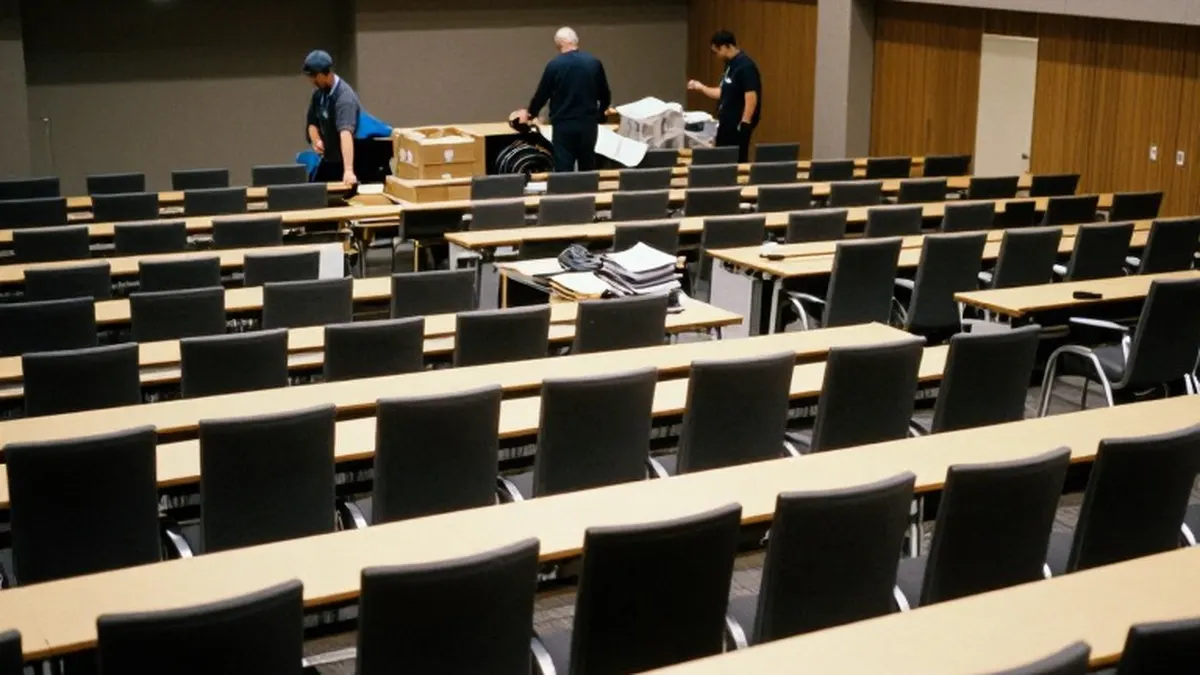
Negotiators at the United Nations climate summit in Turkey extended their two week session by an additional day on Saturday as they strive to finalize an agreement on global warming. The annual event, known as COP31, was scheduled to conclude on Friday but has entered what observers are calling a bleak overtime. Work crews were already packing up the venue in the Mediterranean coastal city of Antalya while delegates continued to grapple with the terms of the final document.
The decision to add an extra day of talks followed strong criticism from activists and several nations regarding a draft agreement that failed to explicitly mention fossil fuels. Critics argue that the final text must outline concrete plans to drastically reduce the use of coal, oil, and gas to prevent the most catastrophic effects of climate change. Experts have long emphasized that urgent and significant emission cuts are necessary to limit rising temperatures.
The urgency of the summit was heightened by a recent announcement from the United Nations stating that the world is likely to exceed the 2015 Paris Agreement goal of keeping warming to 1.5 degrees Celsius above pre-industrial levels. This threshold is widely considered a critical limit before climate impacts become increasingly difficult to manage.
Teresa Anderson, the global lead on climate justice at ActionAid International, noted the uncertainty surrounding the process. She stated that no one knows what is happening behind closed doors or what the ultimate outcome of COP31 will be. Inside the venue, the atmosphere was markedly quieter than usual. In the pavilions, where countries typically showcase their policies, workers were packing up electronics and hallways stood largely empty with only a few security guards present.
Rachel Cleetus of the Union of Concerned Scientists described the situation as a bleak overtime, citing dwindling food and water supplies and a lack of visible progress since the earlier drafts were released. She is currently at the venue in Antalya, where the sense of stagnation is palpable among participants.
Earlier in the summit, the nonprofit Climate Action Tracker warned that progress on slowing global warming has stalled for the past five years. This lack of progress comes at a time when climate related disasters, including severe heat waves in Europe and flooding in Nepal, are becoming more deadly. Vulnerable nations, particularly small island states facing rising seas, have argued that wealthy countries must contribute more to United Nations funds to help them recover and adapt.
The United States, which is a major polluter and the world's largest economy, did not participate directly in this year's talks. In a dramatic display of frustration on Friday, a protester interrupted official proceedings by climbing onto a table. Wearing a red noose and a vest with the slogan "you are killing the future," the individual shouted demands for fossil fuel removal and criticized the lack of funding for the Global South, a term referring to developing countries.
The interruption paused the remarks of Murat Kurum, Turkey's Minister of Environment and COP31 co-president, who asked the room to maintain peace before continuing. Harjeet Singh, a strategic adviser to the Fossil Fuel Treaty Initiative who has attended 18 climate summits, observed that while the venue is nearly empty, key negotiators and civil society members remain focused on the next version of the text.
Singh noted that many disagreements remain unresolved and that it is unclear how long the extended talks will continue. The next climate summit is scheduled to take place in Addis Ababa, Ethiopia, in November 2027.