Recent developments at the APEC summit in Shenzhen highlight a significant shift in the artificial intelligence landscape. While the event drew global leaders, local tech observers noted that the focus has moved beyond software to the physical hardware required to run advanced models. This transition is evident in both the rapid improvement of humanoid robots and the evolving capabilities of consumer smartphones.
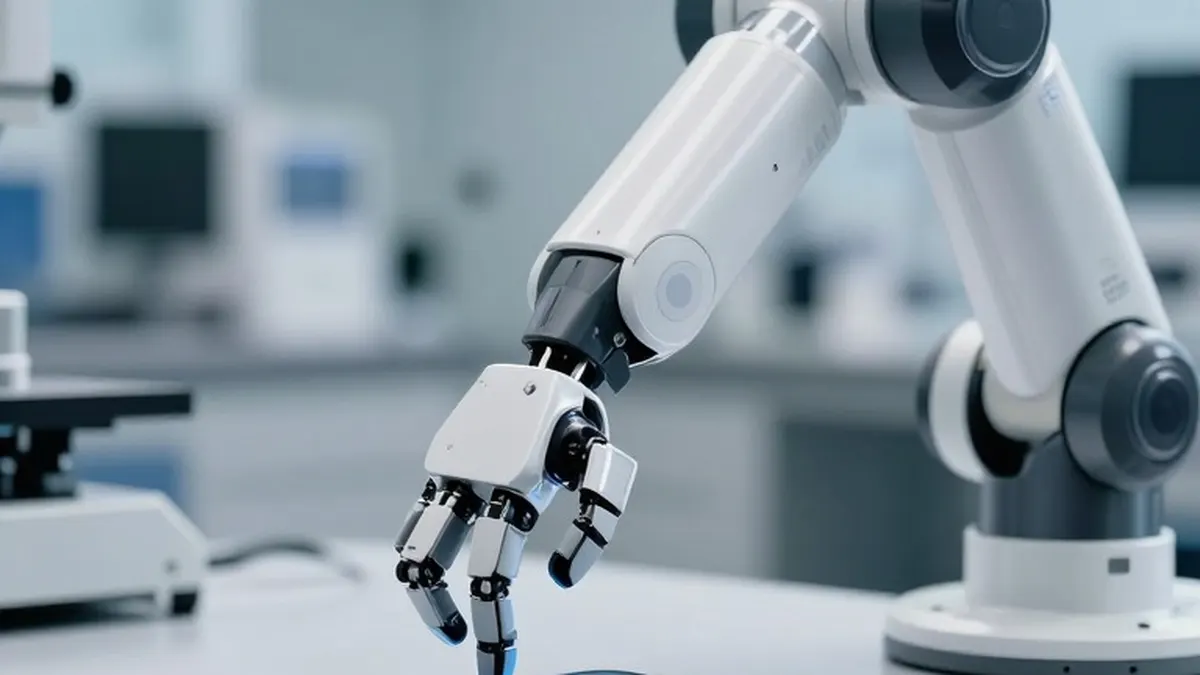
LimX, a robotics company based in Shenzhen, demonstrated notable progress in its humanoid capabilities. A LimX robot recently showed the ability to quickly locate and move household items to pre-set locations, even after a human displaced them. This performance marked a clear improvement over earlier demos this summer, where the robot exhibited stilted movements and struggled to adapt to rapid task changes.
During conversations at the APEC CEO Summit, LimX CFO Jesse Liu noted a growing demand for specialized robot chips. These chips are designed to run large language models locally on the device rather than relying on cloud computing. Liu explained that chipmakers are optimistic because they anticipate robotics original equipment manufacturers will integrate more storage, reasoning, and inference infrastructure directly into the robot body.
Liu suggested that production volumes for these robots are expected to scale from hundreds to tens of thousands of units, approaching automotive-level quantities. He pointed to suppliers such as Horizon Robotics as key players in this sector. LimX is currently working with business partners in more than 30 markets, including Switzerland, where its robots serve as inspectors in rural power plants.
The advancement of new AI models, such as GPT-6 Astra, has improved both reasoning and robot control. This places a greater burden on hardware manufacturers to create practical applications. The key to powering AI in the physical world lies in on-device chips and more powerful batteries, meaning that Nvidia's most expensive cutting-edge chips will not be the sole drivers of generative AI.
In the consumer electronics sector, Thomas Bai, an AI product expert at smartphone company Honor, stated that AI is not yet a top-three selling point for mass-market smartphone users. However, he expects that as chips become more capable, super agent technology will improve its ability to complete tasks autonomously and anticipate user needs, such as ordering coffee.
Counterpoint Research forecast on November 19 that edge AI revenue in the retail industry will surge sixfold by 2032. Approximately half of this revenue is projected to come from retail robots that clean floors and check inventory, often utilizing smaller AI models running on locally embedded chips.
Battery capacity remains a critical challenge for these AI applications. Honor's X70 Android smartphone, launched last summer, features an 8,300 milliampere-hour battery in a device weighing just under 200 grams. This compares to the 5,000 milliampere-hour battery in the 214-gram Samsung Galaxy S26 Ultra and the approximately 5,400 milliampere-hour battery in the 249-gram Apple iPhone 18 Pro Max. LimX's Oli humanoid robot contains a 9,500 milliampere-hour battery, providing about 1.5 hours of operation.
Despite these advancements, the industry remains sensitive to memory chip shortages. Shiwen Ma, an analyst at Shenzhen-based Counterpoint, noted that while smartphone penetration with generative AI features is higher in China at 55 percent compared to 38 percent overseas, these features are not yet essential for most users. Rising memory chip costs make it difficult for manufacturers to bring AI-powered devices to the mass market at competitive prices.
Dylan Jeng, CFO of EcarX, an automotive tech company backed by Geely, expects the memory price surge to persist through 2027 and into the first half of 2028. The chipmaker that can effectively narrow the gap for on-device AI needs may soon find its moment in the market.