Actor Colin Farrell has shared a personal account of his long-standing friendship with Emma Fogarty, highlighting the bond that inspired their new documentary, The Slightest Touch. Farrell first met Fogarty nearly sixteen years ago at a dinner event designed to raise awareness for epidermolysis bullosa, a rare genetic condition that causes the skin to blister and open under minimal touch or friction. At the time of their meeting, Fogarty’s body was covered in open wounds ranging from 60 to 80 percent, a result of the punishing nature of the disorder she was born with.
Fogarty’s early life was marked by medical uncertainty. Doctors told her parents, Pat and Malachy, that she would likely not survive her first week of life. However, the medical team failed to account for the fortitude of both the infant and her parents. Today, at the age of 42, Fogarty is recognized as Ireland’s longest-surviving person living with epidermolysis bullosa. Despite the constant pain and the fear of cancer, a condition that affects many with EB, she has survived two instances of the disease and continues to live a life defined by joy, love, and meaningful connections.
The catalyst for their collaborative project began with a casual suggestion from Farrell. A few years ago, he mentioned to Fogarty that they should run a marathon together, offering to push her wheelchair if she wished. A year later, Fogarty replied to that half-hearted offer, asking if he remembered the conversation. She had dreamed of him pushing her for the final four kilometers of the Dublin City Marathon to mark her 40th birthday. Each kilometer in that final stretch was intended to represent a decade of her life that she had refused to let the condition dictate.
The pair decided to document the experience to create a more special adventure and to raise broader awareness about epidermolysis bullosa. The resulting documentary, The Slightest Touch, aims to offer solidarity to those living with the pain of the condition, including the families whose care is often essential and heartbreaking. With the support of Fogarty’s parents, her sister Catherine, and director Rachel Fleit, the project evolved from a shared dream between two friends into a broader movement of resistance and spirit.
During the promotion of the film, Farrell has been asked what makes his friendship with Fogarty so unique. He describes the relationship as easy and deep, noting that Fogarty has shared her trials, triumphs, and fears with him over the years. He views this openness as a great gift, emphasizing that the friendship is reciprocal. Farrell notes that Fogarty has been a source of support for him as well, particularly during times of personal loss.
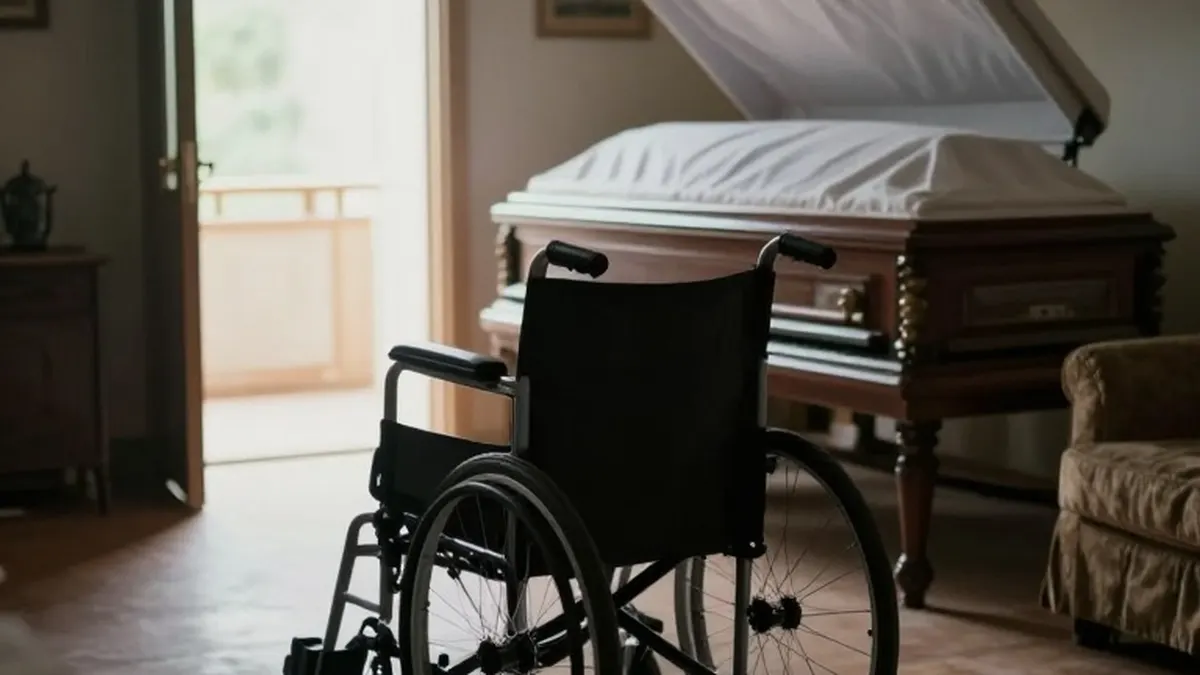
One specific moment highlighted by Farrell occurred during the wake of his father. While his siblings sat beside the open casket in his father’s former home, grappling with the profound grief and the physical change in their father’s appearance, Farrell was tapped on the shoulder. He was told that a friend was at the front door. He went to find Fogarty, who was arriving in her wheelchair accompanied by her parents, Pat and Malachy.
Fogarty had not announced her visit in advance. Farrell describes the moment as breaking him in a way that love can, only to put him back together stronger. She did not come to offer advice or platitudes about loss, but simply to be present. Her company acknowledged their grief without attempting to assuage it, demonstrating the true nature of their bond.
Farrell concludes by expressing his hope that he can offer Fogarty the same measure of love and support that she has consistently provided to him. The documentary serves as a testament to their enduring connection and the strength found in mutual support in the face of adversity.