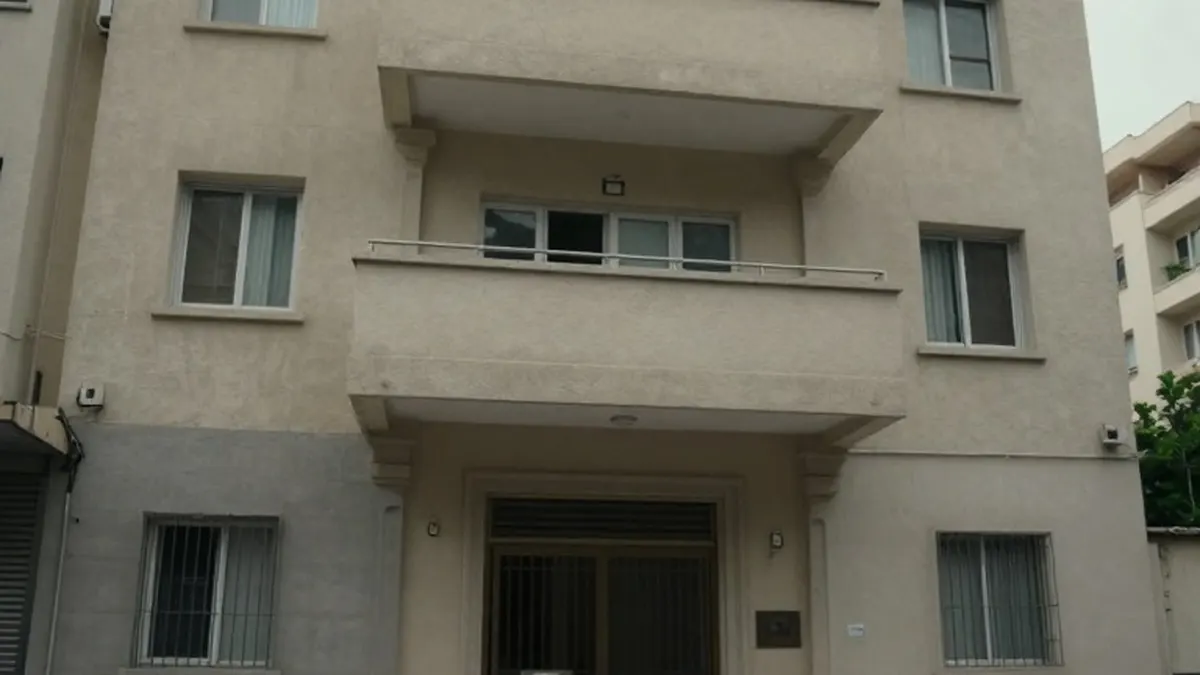
Lebanese authorities are investigating the killing of former Iraqi parliamentarian Ahmed al-Alwani, whose body was discovered in a Beirut apartment on November 10. A prominent Sunni politician from Anbar province, al-Alwani was known for opposing former Iraqi Prime Minister Nouri al-Maliki and factions backed by Iran. His death has prompted calls for answers from officials in both countries.
Family members and tribal representatives attended a memorial in Ramadi, Anbar’s capital, on November 11. Speaking to Rudaw, his cousin Ammar al-Alwani accused Lebanese Hezbollah of involvement and alleged that the group had hacked the computer system at Beirut’s Rafik Hariri Airport. Rudaw said it could not independently verify those allegations. No evidence establishing Hezbollah’s involvement has been made public.
Iraqi Parliament Speaker Haibat al-Halbousi urged the Iraqi and Lebanese governments to establish what happened and pursue accountability through the law. He said Iraqi officials would closely monitor the case. Anbar Governor Omar Mishaan Dabous also mourned al-Alwani, linking his death to the suffering he had experienced during his lengthy imprisonment. Their responses reflected his political significance in Anbar.
Lebanese Prime Minister Nawaf Salam said the state had an obligation to protect everyone within its territory and pledged that the investigation would follow the law. Authorities have appointed a judge to oversee the inquiry. Lebanon’s state-run National News Agency reported that investigators were seeking to establish the circumstances of the crime and how it happened.
Lebanese media reports suggested al-Alwani may have been strangled. Rudaw reported that one of two suspects had been arrested, but the identities of those involved and the motive remained unclear. Iraq’s ambassador to Lebanon, Mohammed Reza al-Husseini, said Baghdad was waiting for the Lebanese security agencies’ final report before officially announcing details of the crime.
Questions also surround al-Alwani’s trip to Lebanon. According to Rudaw, his media office said he flew from Erbil to Beirut on November 5. The office released flight information and surveillance footage from the building where he was found. It said recordings showed suspects leaving at 11:57 p.m., while stressing that the footage did not establish when the killing occurred. Determining that remained the responsibility of forensic specialists and criminal investigators.
A separate account circulating in Iraqi media and reported by Rudaw, attributed to al-Alwani’s wife, said a female Sunni political figure had urged him to travel immediately to Beirut. According to that account, he arranged an urgent ticket through a friend and later spoke to his family by video call before his phone was switched off. Those claims have not been independently verified.
Al-Alwani rose to prominence during the Sunni protest movement in Anbar in 2012 and 2013, when demonstrators challenged Maliki’s government over accusations of marginalization and the concentration of power in Baghdad. Security forces raided his Ramadi home in December 2013 following clashes, killing his brother and several others and arresting him. He received a death sentence in November 2014, and his detention drew campaigns for his release from the Inter-Parliamentary Union and other organizations.
Following more than a decade in detention, advocacy efforts and tribal mediation, al-Alwani was acquitted and formally freed on April 23, 2025. He subsequently moved to Erbil and continued criticizing the former Iraqi government. His killing has renewed concern among supporters about armed factions’ influence in Iraq and Lebanon, but responsibility and motive remain unresolved, and accusations against Hezbollah remain unverified.