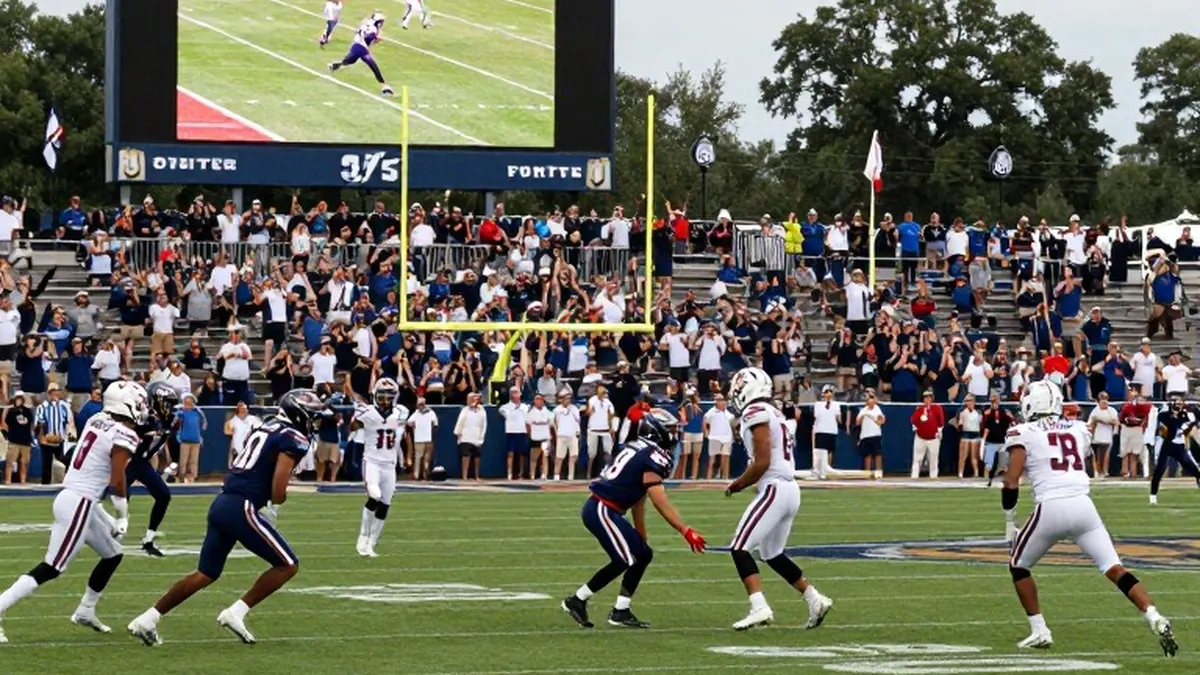
The 2007 college football season is widely regarded as the benchmark for chaos in the sport, a year when a top two ranking in the AP poll often felt like a curse rather than a reward. During that legendary campaign, a team ranked in the top two lost in five consecutive weeks, an all-time record. Across the entire season, either the number one or number two team in the country lost eleven times, a level of instability that defined the era.
For the nineteen years following that 2007 season, the top of the college football world enjoyed a period of relative stability. This consistency led many observers to believe that such dramatic volatility might never return. However, the current 2026 season is challenging that notion, with the only apparent certainty being the unpredictability at the top of the rankings.
October 2026 is shaping up to be historic in its own right. Five losses by AP top two teams in a single month tie the record for the most in any month since November 2007. October 2007 had seen four such losses. Furthermore, it is the first time since November 2007 that both the number one and number two teams finished a month with a losing record of four wins and five losses.
As the calendar turns to November, six different teams have held the number one or number two ranking and suffered a defeat. This marks the most top two losses before November since 1984, with only the 1981 season having more, at seven. Five of these losses in the current season have occurred in the last four weeks. If another top two team loses this weekend, the 2007 record for consecutive weeks with a top two loss will be tied.
The potential for further upsets is high in Week 10. Number one Miami and number two Georgia are both traveling to face top twelve opponents. Miami will visit number four Notre Dame, while Georgia will face number twelve Ole Miss. These matchups create a significant chance for the top of the polls to be shaken up again heading into Week 11.
Both leading teams have shown vulnerability in recent weeks. The Miami Hurricanes have had to secure late escapes against unranked opponents, while the Georgia Bulldogs suffered a stunning loss to Auburn after claiming the number one ranking. This lack of a clearly dominant top tier has created a void in the rankings that no single team seems able to fill for long.
The 2007 season was memorable not just for the number of losses, but for the variety of teams that briefly held top two spots. While traditional powers like LSU, Ohio State, and USC were involved, programs such as Missouri, Kansas, South Florida, Boston College, and West Virginia also grabbed the spotlight. The 2026 season has not yet reached that level of diversity, with Ohio State, Georgia, Notre Dame, and Texas accounting for five of the top two losses so far.
However, the current landscape is not far from that chaotic diversity. Undefeated top five teams Utah and UCLA are in position to rise if Miami or Georgia falls. Kentucky and Wake Forest, ranked number eight and number 14 respectively, could also contend for top spots if the season continues to surprise. The emergence of Indiana as a powerhouse adds another layer to this shifting dynamic.
A key factor in the current chaos is the frequency of upsets by unranked teams. In 2007, eight of the eleven top two losses came against unranked opponents, creating a sense that anything could happen each week. In 2026, four of the six top two losses have also come against unranked teams. This suggests that the talent gap between the elite and the middle tier is smaller than it has been in years.
The era following 2007 was dominated by Nick Saban and Alabama, which led to talent consolidating on a few rosters. Today, while top conferences still attract talent, it is harder for programs to be deep with elite players because athletes can easily find immediate playing time and pay elsewhere. This parity, exemplified by the backup quarterback crisis across the sport, has produced the most exciting and unpredictable season in nearly two decades. With a full month of football remaining, the College Football Playoff committee faces a landscape where nothing feels like a certainty.