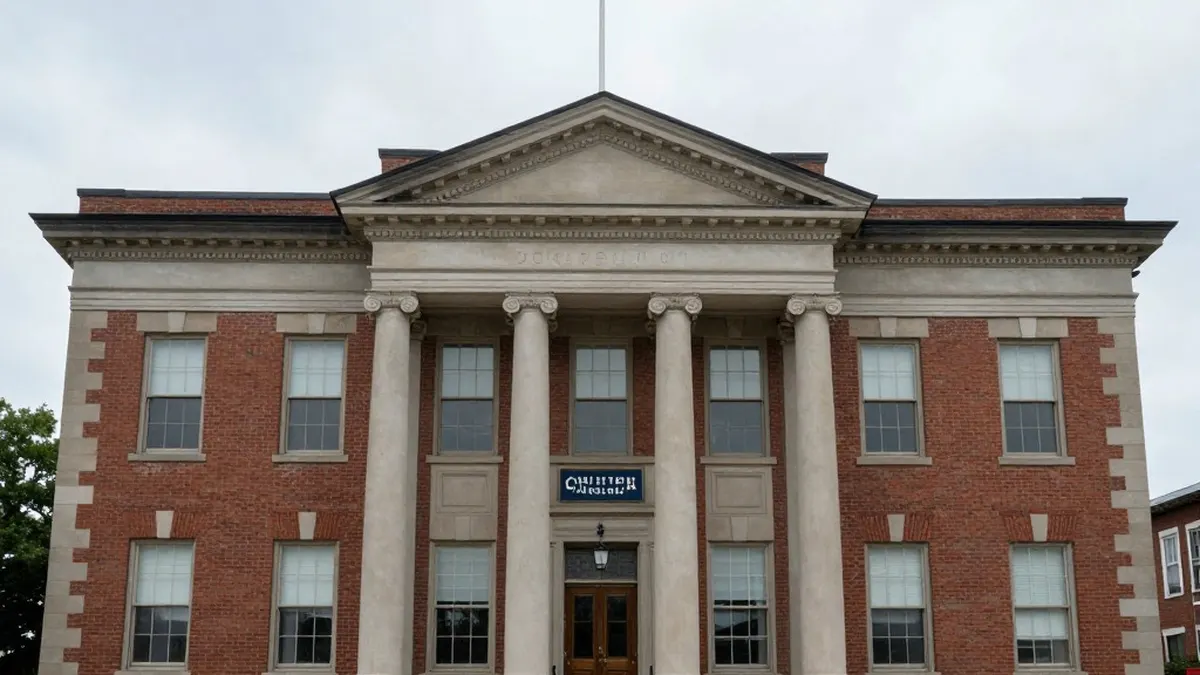
The third day of the murder trial for Deandre Booker, a 33-year-old man accused of killing his ex-girlfriend Ashley Elkins, focused on the extensive search efforts and physical evidence recovered from his Roseville apartment. The proceedings took place in the Macomb County Circuit Court on Wednesday. Prosecutors maintain that Booker killed Elkins, a mother of two who was last seen alive in January 2025, inside the residence before disposing of her remains in a nearby dumpster.
Investigators testified about the discovery of several key items within the apartment, including a firearm, yellow rubber gloves typically used for cleaning, and what appeared to be dried blood. These findings are central to the state's case as it seeks to establish the sequence of events leading to Elkins' death.
The defense team, led by attorney Robbie Lang, directed significant attention to damage found at the property, specifically a broken front door and a shattered window in the lobby. Lang suggested to the jury that this damage might have been caused by members of Elkins' family as they searched for their missing relative before police arrived. He questioned a Roseville police officer about the timing of the break-in, asking if the officer believed the Elkins family was responsible. The officer responded that while it was possible, they could not say for certain who caused the damage or when it occurred.
Officer Zachary Bennefield of the Roseville Police Department recounted the initial response to the scene. Police were called to the apartment on January 4, just days after Elkins was reported missing. Dispatch had provided information suggesting a break-in may have occurred. Bennefield stated that officers conducted a protective sweep to ensure no unauthorized persons, including the Elkins family, were still inside the dwelling. He clarified that the officers' primary objective at that stage was safety rather than evidence collection.
During his testimony, Bennefield described specific observations made inside the bathroom. He noted the presence of a large bottle of Clorox cleaning solvent. Another officer, identified as Officer Nabozi, pointed out red or dried blood visible on the tiles and in the grout of the bathtub area. This detail adds to the narrative of a potential cleaning effort following the alleged crime.
Michigan State Police Detective Sergeant Jacob Escott provided testimony regarding the use of canines in the search. He described bringing in multiple dogs, including a cadaver detection dog, to assist investigators. Escott explained that the dog exhibited a behavioral change in a small hallway between the bathroom and bedroom, indicating an odor on the floor. The dog ultimately gave a final indication for the scent of human remains at the bottom of a door.
Escott also testified that the cadaver dog alerted investigators to one of the dumpsters at the apartment complex. This location is where prosecutors allege Booker disposed of Elkins' body. When the detective looked inside the dumpster, he observed what appeared to be human tissue and blood. Police also testified about an unsuccessful search for remains at a nearby landfill.
Two forensic experts took the stand to discuss yellow residue found on the recovered gun and on a fired bullet located in the bathtub drain. The state is using this evidence to link the firearm to Elkins' potential manner of death. Despite the detailed testimony, Booker remained absent from the courtroom for the third consecutive day, staying at the jail instead.
The trial is scheduled to continue on Thursday morning at 10 a.m. with additional witness testimony. The case continues to draw attention to the details of the apartment search and the physical evidence that prosecutors hope will secure a verdict.