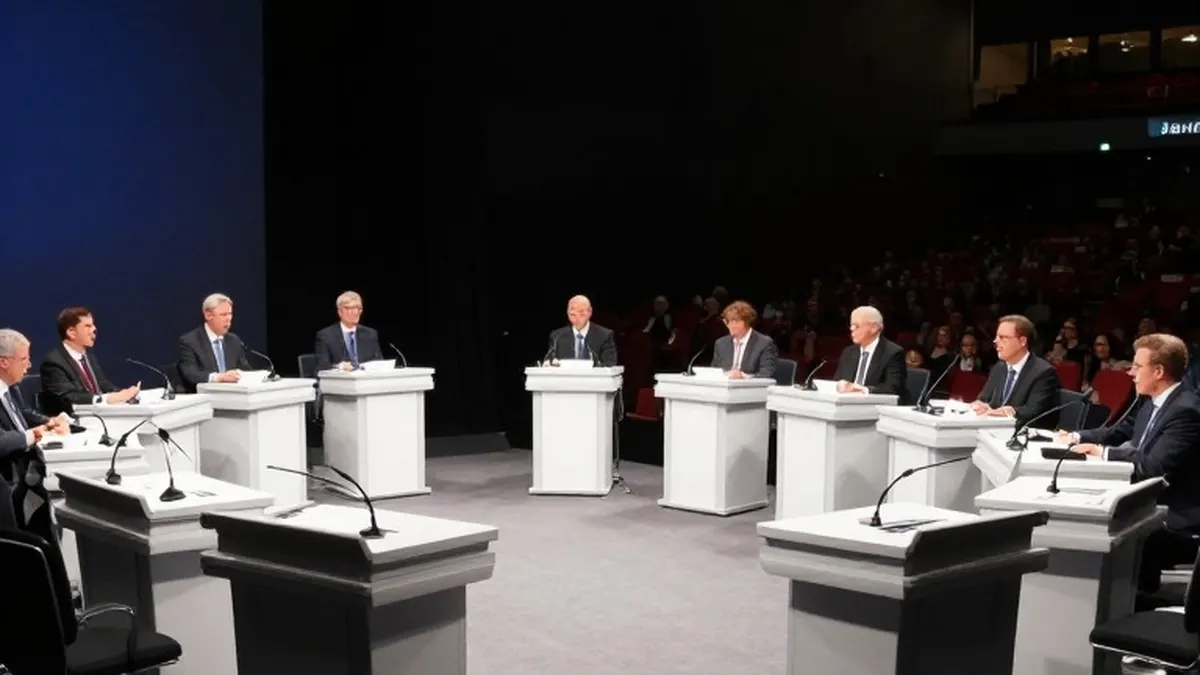
The Democratic National Committee announced on Monday a comprehensive framework for the 2028 presidential primary, which includes twelve debates scheduled to begin in June 2027 and continue into early 2028. This announcement comes as the party prepares for a wide open race, with no formally declared candidates yet, although several prominent Democrats have expressed interest in seeking the White House. The debate series is designed to narrow the field as the primary season progresses.
DNC Chair Ken Martin stated that a maximum of twenty candidates will be allowed to participate in the debates. If a large number of candidates meet the qualification criteria, the party plans to split the events over two nights, with participants for each session selected randomly. Martin indicated that specific dates and media partners will be revealed in the future. The schedule consists of five debates in 2027 and seven in 2028, mirroring the structure used during the 2020 presidential cycle.
A central component of the new framework is a pledge requiring candidates to publicly denounce super PACs and dark money flowing into their campaigns. This initiative aligns with Martin’s long standing focus on ending dark money in politics. While the party acknowledges it cannot stop outside groups from spending, candidates who benefit from such expenditures must disavow that support. This rule builds on the opposition to outside spending that became a major theme during the 2020 primary, particularly for candidates like former Senator Bernie Sanders and current Senator Elizabeth Warren.
The debate schedule coincides with a period of renewed strength for the party. Democrats recently secured their largest House majority since 1992 and won fifty six Senate seats, including victories in traditionally red states such as Mississippi, Iowa, and South Carolina. South Carolina is set to hold the first Democratic primary in 2028, following the DNC’s decision to alter the primary calendar by moving the decisive Iowa caucuses out of the early window.
Beyond spending pledges, the framework introduces significant neutrality provisions to prevent accusations of favoritism. These rules are a response to criticisms from the 2016 cycle, where party officials were accused of tilting the field toward Hillary Clinton over Bernie Sanders. The new regulations aim to ensure a fair process, a concern that was less prominent in 2024 when former President Joe Biden faced no serious challengers before dropping out of the race.
Under the new rules, presidential campaigns are prohibited from entering joint fundraising agreements with Democratic Party committees during the primary. Additionally, campaigns cannot authorize coordinated spending by state or local Democratic parties on their behalf. This contrasts with the 2015 cycle, when Hillary Clinton’s campaign entered into such an agreement with the DNC long before securing the nomination. These measures are intended to limit the influence of party apparatus and maintain neutrality.
The DNC has established a complaint and review process that allows campaigns to raise alleged violations ahead of debate qualification periods. This mechanism may lead to recurring disputes over compliance as the race intensifies. Candidates are required to disavow super PAC or nonprofit support only once, even if the group’s spending continues. This approach suggests that the primary effect of the new rules will be increased scrutiny rather than a drastic reduction in the total amount of outside money.
DNC officials argue that these changes are necessary to limit dark money influence and maintain party fairness during a competitive primary. The effort is supported by a coalition of influential Democrats, including Representatives Greg Casar and Jason Crow, Senators Andy Kim, Bernie Sanders, and Elizabeth Warren, as well as former DNC Chair Jaime Harrison. As the party prepares for a potentially crowded field, these structural changes aim to address long standing concerns about the role of outside money and internal party dynamics.
The announcement sets the stage for a primary season that will be closely watched for how candidates navigate the new spending and neutrality requirements. With the first primary scheduled in South Carolina, the party is positioning itself for a robust contest that it hopes will be defined by candidate policy positions rather than behind the scenes maneuvering. The twelve debate format ensures that a wide range of voices will be heard as the field narrows toward the general election.
As the 2028 race begins to take shape, the DNC’s moves reflect a desire to learn from past cycles while adapting to the current political landscape. The combination of a structured debate schedule and stricter rules on coordination and outside spending represents a significant shift in how the party manages its internal competition. These decisions will likely influence how potential candidates plan their early campaign strategies and messaging in the coming months.