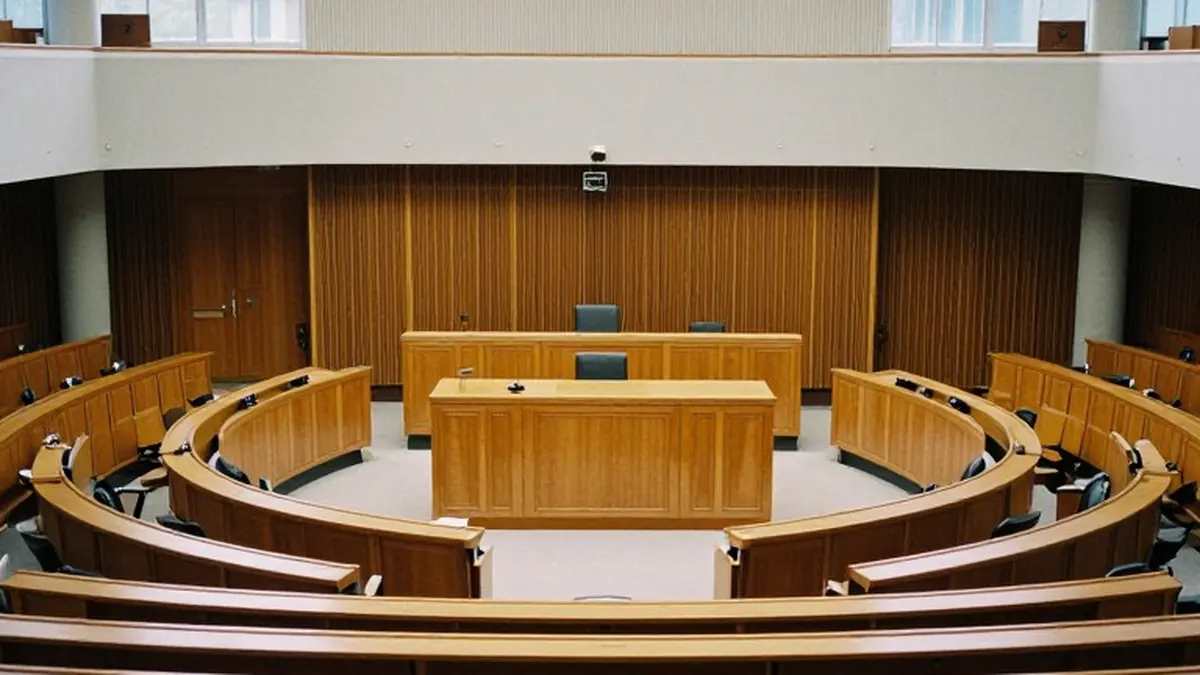
The Danish parliament completed the ratification process on Thursday for a new security agreement involving the United States and Greenland. The measure, which was adopted by a unanimous vote, is designed to strengthen defense capabilities in the Arctic and North Atlantic regions. This legislative action resolves a period of diplomatic friction that had arisen from the US administration's expressed interest in controlling the Arctic island.
In the 179-seat Folketing, all 109 members present voted in favor of the text. The approval followed the second reading of the document and proceeded without any formal debate or opposition. No members cast votes against the measure or chose to abstain, signaling broad political consensus within the chamber regarding the terms of the deal.
The agreement was originally signed in September by representatives from the United States, Denmark, and Greenland. This tripartite accord was drafted to address growing tensions after US President Donald Trump repeatedly threatened to take control of the territory. Greenland is a self-governing part of Denmark and is home to a population of 57,000 people, with significant mineral resources that have drawn international interest.
Greenland’s own parliament had also moved to approve the framework earlier in the month. In early November, local legislators passed the agreement with 16 votes in favor and seven abstentions. This step was necessary to secure the consent of the autonomous territory before the Danish legislature could finalize the international commitment.
Unlike some other international treaties, this security deal does not require a vote by the US Senate. It is classified as an executive agreement, which means the process is simpler on the American side. Following the vote in Copenhagen, the agreement will officially enter into force once the Danish Ministry of Foreign Affairs sends a diplomatic note to the United States confirming that all domestic procedures have been completed.
The new pact, which was signed in New York on September 22, supplements a longstanding military accord from 1951 regarding the US presence in Greenland. The updated terms allow the United States to construct two additional military bases on the island. This expansion of infrastructure is intended to solidify the strategic position of the US in the region.
A key provision of the agreement restricts strategic sectors to partners within the European Union and NATO. By blocking countries outside these alliances from investing in critical industries, the deal aims to prevent Russia or China from gaining significant influence over Greenland. This move is seen as a defensive measure to protect the territory’s economic and geopolitical future from external powers.
Although Greenland is an autonomous territory within Denmark, the security deal is designed to remain valid even if the island achieves full independence in the future. This long-term outlook provides stability for US planning while respecting the potential for Greenland’s sovereignty. The agreement thus bridges the gap between current administrative structures and future political possibilities.
Since returning to the presidency in January 2025, President Trump has frequently argued that the US needs to control Greenland for strategic reasons. These remarks caused concern among Denmark and other NATO allies who worried about the implications for the alliance. The ratification of this deal serves as a formal resolution to those concerns by establishing a clear framework for cooperation rather than unilateral control.
The strategic importance of Greenland is underscored by its geographic location. The shortest flight path between Europe and North America passes over the island, which already hosts the northernmost US military base. By securing a stronger foothold, the United States aims to maintain its advantage in this critical corridor while Denmark and Greenland benefit from enhanced security guarantees.