Photographs circulating in Iranian local media have raised the possibility that United States forces used graphite bombs, often called blackout bombs, against infrastructure in Iran in recent days. These weapons are built to disrupt electricity supplies by causing short circuits rather than physically destroying power facilities.
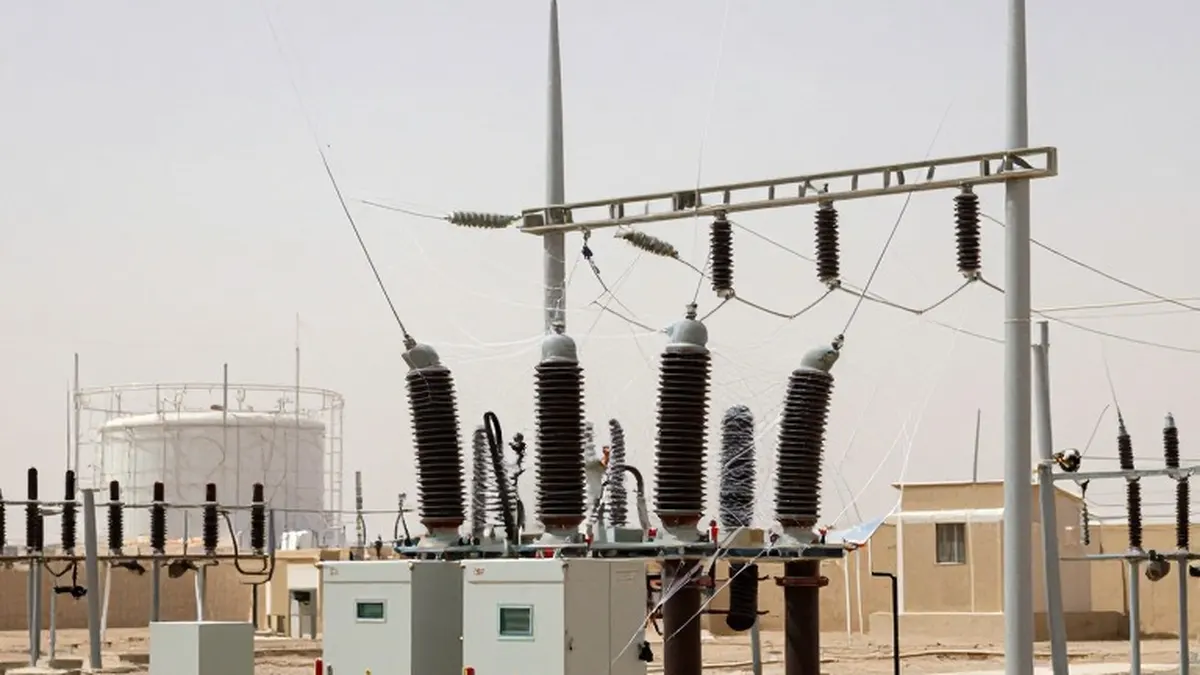
On November 16, Iranian local outlets published images of what they described as suspicious material drifting above a gas facility in Omidiyeh and an electricity dispatch station in Lali, two towns in Khuzestan province in southwestern Iran. The pictures appear to show thin, spiderweb-like fibres spread across the sites.
FRANCE 24 found no trace of the photographs being published before November 16. Because the images are framed in close-up, however, the broadcaster could not independently verify where or when they were taken.
The reports spread mainly through Iranian local websites and independent military forums rather than official channels. Iranian state media and outlets close to the Islamic Revolutionary Guard Corps have so far not covered the incidents. That the accounts originated outside official channels may lend them some credibility, given that some Iranian authorities have spread false information about the conflict, but this alone does not confirm that the incidents occurred.
The material resembles the graphite filaments dispersed by the American BLU-114/B munition, which was documented during the 1999 conflict involving Serbia, when graphite bomb attacks reportedly left more than 70 percent of the country without electricity. Its use during the 2003 Iraq War has also been reported. According to a technical study, the specialised munition releases submunitions that scatter large quantities of chemically treated carbon graphite filaments, causing short circuits in electrical equipment such as transformers and switching stations.
The impact of the suspected graphite bombs on Iranian infrastructure remains unknown, with no damage assessment made public so far. Even so, Iran's national electricity company, Tavanir, has produced an instructional video for its employees explaining how to respond to such an attack. The video advises workers to shut down the power grid and wear industrial-grade masks, protective goggles and gloves, and demonstrates how to remove graphite filaments using a specific chemical solution before safely burning the collected material.
Farzin Nadimi, a defence and security analyst and senior fellow at the Washington Institute, said the material visible in the images is consistent with the characteristics of BLU-114/B graphite bombs. 'I would say it is not entirely surprising. These bombs are standard-issue weapons in the US military and have been used in several conflicts, including the war in Yugoslavia,' he said. 'However, this is the first time we have seen what appears to be evidence of their use in Iran.'
Nadimi offered two possible explanations for the photographs. They could be linked to the operation to rescue the pilot of an F-15 shot down in Isfahan province in April 2026, during which there was a massive power outage in the region. Alternatively, if the images show new incidents, the targets are likely to have been strategically important facilities such as radar installations. He noted that the command centre for air defence systems in southern Iran is located in Omidiyeh, while almost everything in Lali is a military installation or connected to military infrastructure, with multiple important radar and missile sites near the town.
Since the start of the war launched by the United States and Israel against Iran on February 28, 2026, US President Donald Trump has repeatedly threatened to destroy Iranian infrastructure, including power stations and bridges. In response, Iranian officials, among them Revolutionary Guard commanders and members of parliament, have threatened to target infrastructure in Arab countries in the Persian Gulf region from which US attacks are launched.