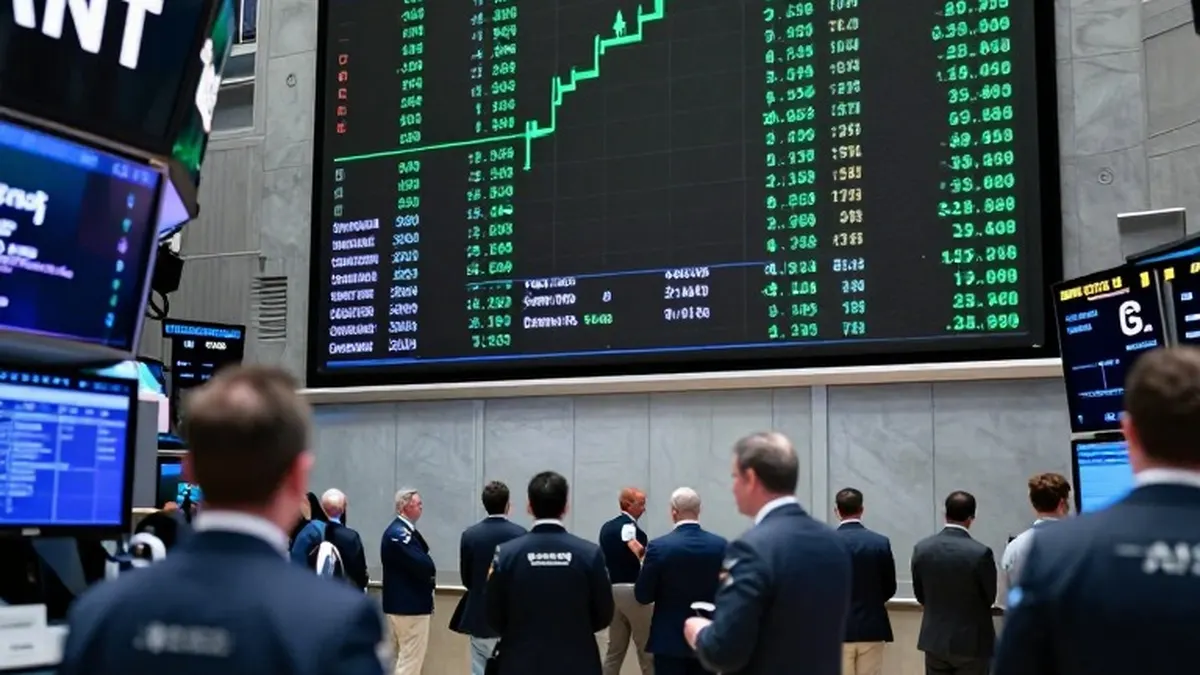
US President Donald Trump purchased as much as $265,000 worth of Nvidia stock and sold approximately $15,000 of the shares in September, according to his most recent financial disclosure. These transactions occurred while questions circulated regarding what the president knew about reported connections between Nvidia former CEO Jensen Huang and a woman accused of spying for China.
The revelation of the president's investment in one of the world's most valuable companies arrives at a critical time. The current administration is actively weighing policies that could significantly impact Nvidia's future, particularly those governing the export of its advanced chips.
Nvidia has faced increased scrutiny following news reports that Huang maintained a romantic relationship with a woman who is accused of passing information to Beijing. The September trades were part of hundreds of transactions the president made during that month. The disclosure was signed by Trump on November 1 and made public by the US Office of Government Ethics on Thursday.
Prior to this, Reuters reported that Trump bought as much as $1.6 million in Nvidia shares and sold up to $1 million of the stock in August. The White House did not immediately respond to requests for comment on the new disclosures. However, in October, White House spokesperson Davis Ingle stated that third-party financial institutions independently manage the president's portfolio. Ingle noted that these institutions replicate recognized indexes, such as the Schwab 1000, and asserted that there are no conflicts of interest.
Nvidia holds the position of the world's leading manufacturer of advanced AI chips. These products are widely used in the development of cutting-edge AI systems and are central to US efforts to maintain a technological edge over China. For years, Washington has sought to limit China’s access to Nvidia’s most advanced hardware, driven by concerns that Beijing could use the chips to build superior weapons or AI tools.
Despite these restrictions, Nvidia executives, including Huang, have argued for broader access for Chinese markets. Chinese companies and researchers have repeatedly found ways to navigate around US export restrictions. On Monday, the Trump administration announced it would further limit China’s access to advanced AI chips by restricting shipments to Southeast Asian countries. Chinese firms have utilized these nations as a route to access the computing power needed to train AI models.
The New York Times reported that Trump was briefed in 2025 on Huang's relationship with the woman and on intelligence suggesting she was providing information to the Chinese government. According to the report, the president chose not to act on this information at the time. Trump has since said he was amazed by the allegations against Huang, who is considered one of the president's closest allies in Silicon Valley. Reuters has not independently confirmed that the woman is a spy.