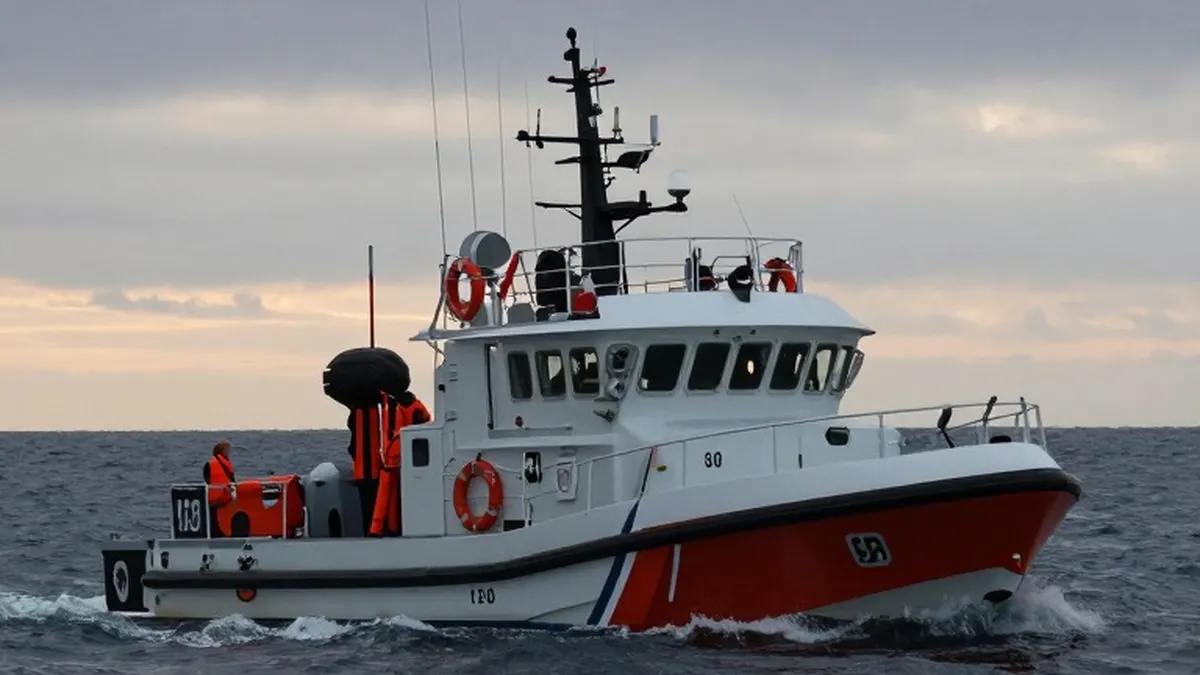
Greek authorities pulled 13 bodies from a migrant boat discovered sailing south of Crete early Monday, the coast guard said, and one of 18 survivors rescued from the vessel later died at a health center on the island, bringing the toll from that boat to 14.
Officials said they had no immediate details on the identities or nationalities of those aboard, or on what caused the deaths.
In a second incident off Crete, eight bodies were recovered from another boat, according to a report from French news agency AFP. Authorities said Sunday that roughly 28 survivors from that vessel, all Sudanese nationals, were picked up by a nearby boat before being moved to a police vessel and brought to Crete.
The coast guard said maritime police launched an emergency rescue late Saturday after one of the boats sent out an alarm signal, with strong winds complicating conditions at sea. Two Sudanese citizens, one of them aged 16, were arrested after survivors identified them as suspected people smugglers.
Separately on Monday morning, more than 180 people were found on three additional boats crossing the Mediterranean from North Africa toward Crete, the coast guard said, part of a steady flow of vessels traveling from Libya to Greece that has become one of the main migrant routes into Europe. Three more boats, carrying about 47, 40 and 100 people respectively, were also spotted south of Crete by aircraft or drones operated by Frontex, the European Union's border agency. Those aboard were expected to be taken to Crete.
Greece remains one of the principal entry points into the 27-nation EU for people fleeing conflict and poverty in the Middle East, Africa and Asia. In recent months thousands have attempted the dangerous sea journey from North Africa, most often from Libya to Crete, while others take the shorter but similarly risky route from the Turkish coast to Greek islands in the Aegean Sea, frequently aboard unseaworthy inflatable dinghies. Last month, 12 people, including an infant, died when two boats traveling from Turkey toward Lesbos and Samos capsized.
Frontex said in October that the eastern Mediterranean was the busiest route for migrants trying to enter the EU, even as irregular crossings into the bloc fell by a third so far this year. The agency recorded about 31,800 crossings in the first three quarters of 2026, down 15% from the same period last year, with the Libya to Crete corridor the busiest section, ahead of the eastern Aegean islands and the land border with Turkey.
Off West Africa, the death toll from a migrant boat that capsized off Senegal climbed to 39 on Monday after more bodies were found, the country's emergency services said. The vessel had departed Saint-Louis in northern Senegal bound for the Spanish coast and overturned on Sunday near the town of Kébémer, north of Dakar.
Senegal's Interior Ministry had said Sunday that at least 21 people died and that rescuers were searching for possible survivors. It did not say how many people were on the boat, though several passengers are still believed missing. Only one passenger was rescued alive.
The boat was traveling a well-worn migration route used by thousands of young Senegalese seeking better economic prospects, crossing roughly 800 miles of the Atlantic in uncovered wooden canoes to reach Europe as the country grapples with high unemployment, poverty and an economic crisis. President Bassirou Diomaye Faye offered condolences and pledged to crack down on the networks behind the dangerous crossings.