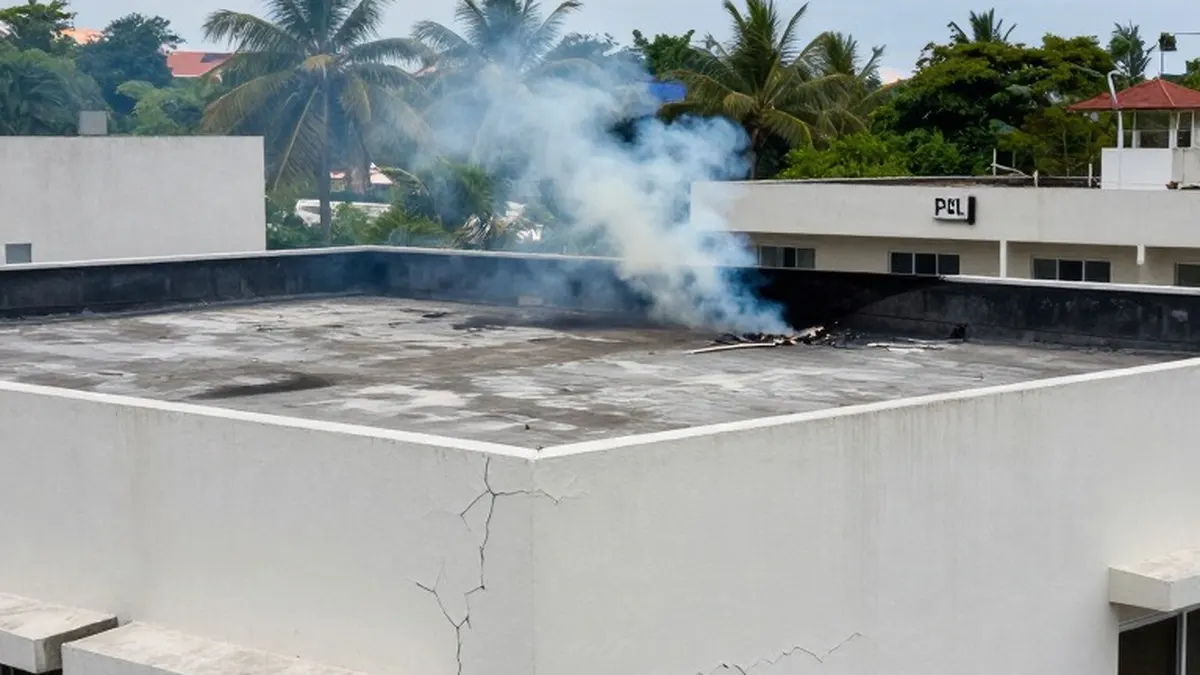
A drone attack targeting a police facility in the northern Colombian city of Cucuta has resulted in injuries to at least three civilians, including an infant. The strike, which occurred on Monday, also caused damage to approximately sixty nearby residences. Authorities have not yet publicly identified the group responsible for the assault on the base belonging to the Norte de Santander police.
Residents living in the vicinity of the base provided details about the impact of the explosion. Orlando Roa, a local resident, spoke to media outlets regarding his family, stating that his eighteen-month-old grandson was among the injured. The child is currently receiving medical treatment at a hospital near the site of the attack.
This incident takes place against a backdrop of an intensified military offensive led by President Abelardo de la Espriella. The far-right leader has increased operations against rebel factions and drug cartels, a strategy that has already led to the capture of several mid-level commanders by the military. In response to this pressure, various armed groups have escalated their use of small drones, rockets constructed from gas canisters, and roadside explosives to target police stations and military outposts.
De la Espriella, who assumed office in August, has made significant shifts in the country's diplomatic and security posture. He has cancelled peace negotiations with rebel groups that were previously underway under the administration of his predecessor, the leftist leader Gustavo Petro. This decision marks a new phase in Colombia's long-standing internal conflict.
The city of Cucuta is strategically located near the border with Venezuela and serves as a critical hub for trade. The area is also a focal point for criminal organizations that profit from drug trafficking and other forms of smuggling. Several rebel groups, including the National Liberation Army and the FARC-EMC, maintain a presence in the nearby Catatumbo region, contributing to the local security dynamics.
The current violence follows the 2016 peace agreement between the Colombian government and the FARC, which facilitated the demobilization of over 14,000 fighters. Despite this historic accord, some border areas have experienced a resurgence in violence. Smaller armed groups are attempting to occupy territory previously controlled by the FARC, a situation exacerbated by the government's slower provision of security forces and basic services in these remote zones.
The attacks in Cucuta were not isolated events on that day. Another police station in the Cesar region was also targeted by drones on Monday, resulting in the injury of one police officer. Both incidents are currently under investigation by local officials to determine the specific perpetrators and the extent of the coordination between the strikes.
Earlier in the week, a separate attack in the Cesar region demonstrated the continued threat posed by aerial assaults. On Saturday, a military base in the same region was hit by drones and rockets. That incident resulted in the death of one soldier and injuries to twelve others, further illustrating the vulnerability of security forces to these modern tactics.