Patrice Vermette, the production designer for the upcoming sci-fi epic Dune: Part Three, has described the final installment of the franchise as a major spectacle. In a recent conversation, Vermette compared the film's impact to a fireworks display, noting that the production team held back their best elements for the finale to maximize the emotional payoff for audiences.
The film, directed by Denis Villeneuve, is scheduled to open in theaters on December 18. It features Timothee Chalamet returning as Paul Atreides and continues the narrative seventeen years after the events of the previous entry. The story is adapted from Frank Herbert's novel Dune Messiah and explores the political and personal consequences of Paul's rule as emperor.
Vermette, who was recently honored with Variety's Creative Impact Award at the SCAD Savannah Film Festival, emphasized that his primary directive from Villeneuve was to avoid repeating sets from earlier films. This approach drove the team to constantly challenge themselves to create distinct visual environments within the same established world.
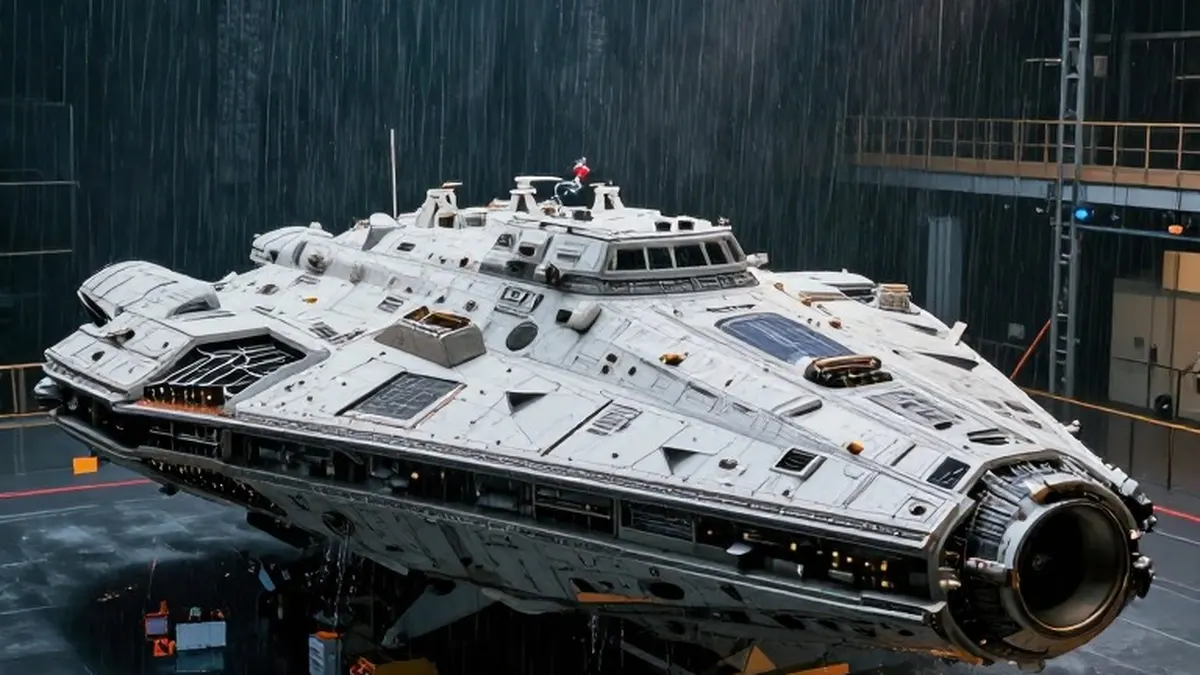
One of the most significant technical achievements in the film is the opening sequence, which Vermette described as a crazy idea. The scene features a massive battle involving ships attacking a planet covered in black sand. To realize this vision, the production constructed a single spaceship that weighed 55 tons. This set piece was designed to be viewed from all angles, requiring a complex logistical setup.
The team buried the massive set underground and simulated rain for the entire duration of the scene. They utilized spider rigs and touch spinners to maneuver the ship, which was lifted by a crane every two days during daylight hours. A dedicated pump system was necessary to remove the large volumes of water used in the effects. Vermette stated that the effort was worth the result, as it allowed for a seamless 360 degree view of the vessel's interior and exterior.
Vermette's long-standing collaboration with Villeneuve began in the early 2000s when they worked on commercials together. Although they shared a circle of friends, their schedules did not align for a feature film until 2013. Vermette recalled that a text message from Villeneuve changed his career trajectory, leading to their first collaboration on the film Enemy, which was Villeneuve's first English language movie.
The partnership extended to the original Dune film, where Villeneuve's deep connection to the source material was evident. Vermette noted that Villeneuve had been storyboarding the adaptation since he was 15 years old. This history informed their approach to Dune: Part Three, ensuring that every object and environment served a narrative purpose and remained grounded in reality despite the fantasy setting.
Bringing the planet Giedi Prime to life required drawing inspiration from industrial septic tanks to capture the dark aesthetic of the Harkonnen homeworld. The team also constructed the Atreides Castle and the Imperial Nexus Laboratory on Arrakis. Working closely with cinematographer Greig Fraser, the crew executed complex lighting setups that avoided cheating with artificial sunlight, proving that ambitious ideas can be realized through persistence.
The production process was highly collaborative, involving close communication between department heads to solve logistical challenges. This teamwork allowed the team to adapt to constraints, such as material shortages, by turning limitations into symbolic elements of the story. Vermette emphasized that the success of the project relied on a shared vision and a commitment to making each element distinct.
As the film approaches its release, the focus remains on the seamless integration of practical effects and narrative design. Vermette's work on Dune: Part Three exemplifies the high level of craftsmanship required in modern blockbuster filmmaking, where technical precision and artistic vision must align to create a compelling cinematic experience.