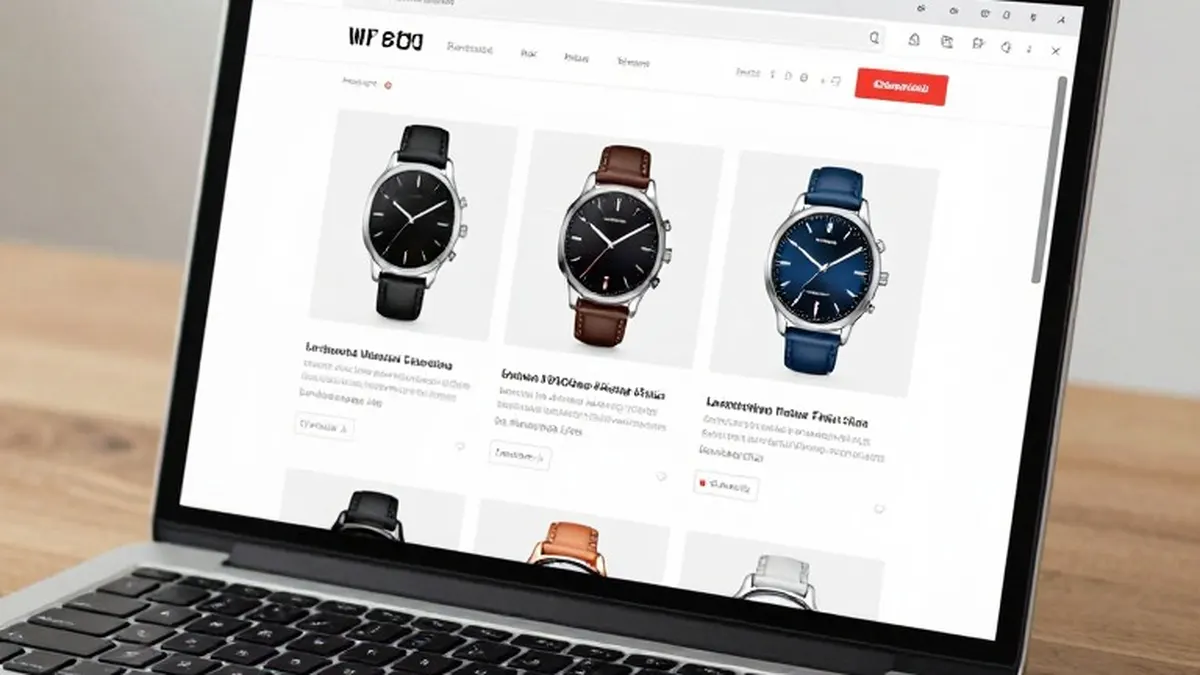
eBay appears to have implemented new restrictions that prevent third-party artificial intelligence agents from freely browsing its marketplace. This development marks the latest obstacle in the expanding race to integrate AI agents into everyday consumer activities. The block specifically affects tools such as Meta’s Muse, which previously allowed users to curate personalized shopping experiences by scanning listings across various platforms.
According to a reader account shared with The Verge, a user had relied on Muse for several weeks to generate daily digests of watches available for sale on eBay. These digests included links to specific listings, pricing information, shipping details, and notes regarding the condition or style of the items. However, over the recent weekend, the agent reported being blocked from the site and could no longer retrieve standard listing data. The Verge confirmed this limitation by replicating the experience with other search requests, noting that in some instances, Muse redirected users to external websites that mirrored eBay inventory.
The situation underscores a significant tension in the tech industry. While Silicon Valley companies frequently promote AI agents as tools that can enhance the human shopping experience by finding deals and booking services, many retailers are actively blocking these automated visitors. This disparity raises questions about the practical utility of AI agents in e-commerce, given that the digital storefronts they are designed to navigate often treat them as unwanted traffic.
eBay had previously updated its user agreement to prohibit specific types of automated tools, such as buy-for-me agents and large language model driven bots, from placing orders without human review. Until now, however, agents were generally permitted to browse the site and pull listing information for users. Sybille St. Arromand, an eBay spokesperson, stated that AI is becoming increasingly embedded in the platform’s discovery, personalization, and selling processes. While she declined to confirm if new limits were recently imposed on agents, she explained that eBay takes a selective approach to third-party access.
St. Arromand noted that the company has restricted agent access in cases involving unauthorized scraping or data training. She added that ongoing discussions are underway with potential partners to evaluate how third-party agents might help new customers discover eBay’s inventory, with the goal of preserving the trusted experience expected by buyers and sellers. Meta has not yet provided a comment on the matter.
The approach to third-party AI agents varies significantly among major retailers. Amazon, for instance, is known for blocking external agents entirely from browsing or shopping on its site. Target has implemented restrictions that result in inconsistent access, where agents may succeed in some instances but be blocked in others. In contrast, Shopify has adopted a more open stance, allowing shoppers to configure their agents to purchase items from its catalog of one billion listings.
The integration of AI agents into e-commerce has the potential to fundamentally change how people shop online. This shift is complex because most retail websites are designed with human users in mind, accounting for human limitations rather than the rapid, high-volume actions of bot swarms. In October, The Verge reported that a user could employ Muse to hold product listings hostage on The RealReal, a secondhand designer consignment site, by having an agent continuously add items to a cart. Following that report, The RealReal updated its bot detection systems.
Despite the hype surrounding agentic commerce, actual usage remains limited. Uber reported that it fulfilled only four rides via third-party agents in the third quarter and approximately 500 Uber Eats orders during the week of Halloween. DoorDash similarly stated that it handled only several hundred orders placed through third-party agents, a small fraction compared to its total of 993 million orders reported in the same quarter.