Democrat Abdul el-Sayed has won the United States Senate race in Michigan, defeating Republican Mike Rogers and keeping the open seat in Democratic hands.
El-Sayed, a former Wayne County health director, emerged from an expensive and bruising Democratic primary in which he narrowly defeated Haley Stevens. The general election grew more turbulent in its closing days when Stevens broke with her party on Sunday to endorse Rogers, criticizing what she described as the El-Sayed campaign's "hate".
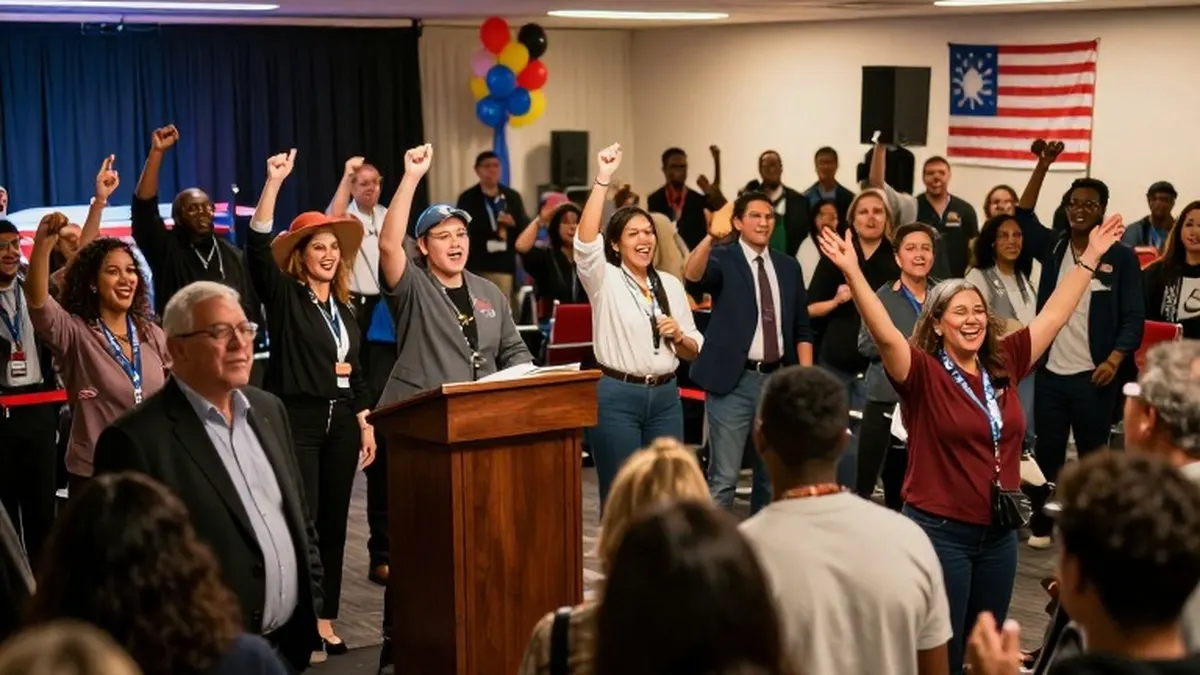
Speaking to cheering supporters on election night, El-Sayed addressed the personal nature of the campaign waged against him. "To all the parents who struggled to explain why the president openly mocks someone for their name or how they pray, let them know tomorrow that the bad guys lost," he said.
He also took aim at President Donald Trump and Vice President JD Vance, both of whom directed Islamophobic and racially charged rhetoric at him throughout the race. Addressing the president directly, he said: "Donald, I know you struggled with my name. So after JD swears me in in January, you can just go on to call me Senator."
On policy, El-Sayed repeated the core themes that defined his campaign: affordability, getting money out of politics, passing Medicare for All, and ending funding for foreign wars. "It shouldn't be this hard to pay your taxes and know that that money is going to be spent on you and your kids, instead of dropping bombs on somebody else and their kids," he said.
The seat became available when two-term Democratic Senator Gary Peters retired, creating a rare opening in a state where no Republican has won a Senate race since 1994. The contest became a focal point in the national fight for Senate control, drawing well over $100 million in advertising since the August 4 primary.
"We showed that in a battle between the money and the many that the many can win," El-Sayed told supporters.
Unlike many of the Democrats' hard fought victories on Tuesday, El-Sayed's win does not meaningfully shift the balance of power in the Senate, since both of Michigan's seats were already held by the party. Still, his politics, seen as more left wing and radical than most of the Democratic caucus, have drawn attention throughout the campaign.
In his victory speech, he reiterated the message that buoyed his run, including "taking on the corporations and the billionaires". That rhetoric is emblematic of a rising wave of populist Democrats who are breaking with the party's traditional lines on issues such as American support for Israel, socialism, and corporate money in politics.