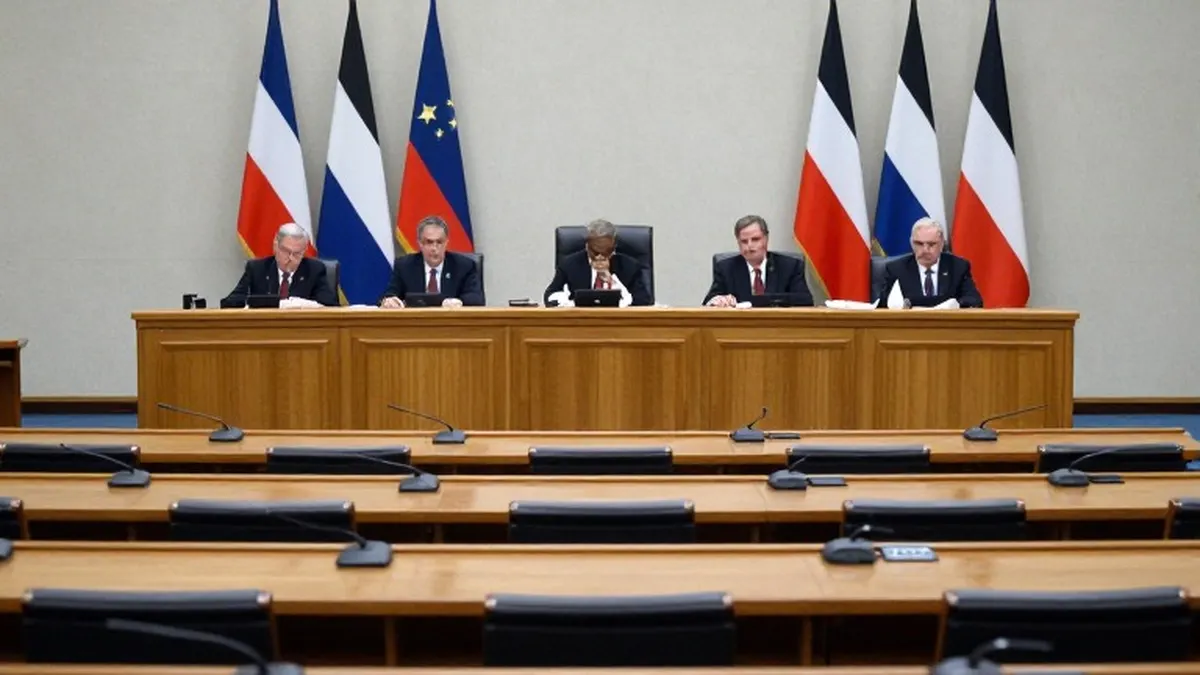
The Central Elections Committee announced on Tuesday evening that the Shin Bet investigation into allegations of vote-buying in the Arab community has not found evidence of bribes paid on a scale that would affect the results of last month’s election. The statement, authorized by CEC Chairman and Deputy Supreme Court President Noam Sohlberg, was issued with the consent of Shin Bet chief David Zini. Zini had updated Sohlberg on the investigation details the previous night.
Prime Minister Benjamin Netanyahu and other coalition members had previously claimed that the October 27 election was stolen by Arab parties. They cited allegations of bribery, intimidation, and forgery following a record turnout in the Arab sector, which helped deprive the premier’s bloc of a parliamentary majority. However, many of these key allegations have reportedly collapsed in recent weeks, shifting focus to the role of the Prime Minister’s Office in providing police with fraud information on the eve of the vote.
The CEC stated that while the investigation continues, the focus is now shifting to security-related issues such as subversion and foreign influence. These matters are described as not being at the core of the electoral process. Sohlberg had ordered the Shin Bet to investigate potential foreign interference two days after the election, following intelligence provided to the committee. Last week, Sohlberg noted that information on foreign interference had not yet yielded evidence of wrongdoing.
Deputy Commissioner Boaz Blatt, head of the Israel Police Investigations and Intelligence Division, defended his conduct in handling the allegations. Speaking in closed-door remarks aired by Channel 12, Blatt said he would act in the same manner even knowing the information originated from the Prime Minister’s Office. He described receiving the data hours before the election and passing it to the field, where it later faced judicial scrutiny. A court eventually determined there was no case against the suspects.
The controversy centers on the warrantless arrest of three Ra’am activists on election day morning. Police claimed to have recovered envelopes containing tens of thousands of shekels in cash, a claim Netanyahu used to urge supporters to vote. According to a recent investigative report, the arrests were based on information supplied by former PMO employee Daniel Greenberg via Netanyahu’s chief of staff, Ido Norden, a day before the vote. Blatt acknowledged that the sourcing from the PMO did not look good publicly but argued that police were racing against time and could not ignore breaking information.
Police Commissioner Daniel Levy ordered an internal review of the force’s conduct, though he was asked by the Attorney General and State Attorney to shelve the probe pending further discussions. Greenberg maintained in a Tuesday interview that he did nothing wrong and is not a Likud operative. He confirmed attending a meeting with Netanyahu and Norden in the Druze town of Yarka twelve days before the vote, where he predicted the Arab parties would win many seats. Greenberg described the meeting as private and stated he was discussing the election, though he initially hesitated to name the other attendees.
Former President Reuven Rivlin recently phoned Dr. Saef Abu Reash, one of the three Bedouin men arrested on election day, to offer an apology. Abu Reash was held for six days despite an empty raid on his home, before being released unconditionally by the Beersheba Magistrate’s Court, which criticized the investigators’ conduct. Rivlin, who served as president from 2014 to 2021, called the arrest a jarring affront to the state. He praised Abu Reash as an impressive self-made man and apologized on behalf of everyone he knows in the country.
In their conversation, Rivlin described Israel’s roughly 2.1 million Arab citizens as an essential bridge to the Middle East, including Palestinians, Saudis, and Emiratis. Abu Reash expressed hope for bringing about peace together. Rivlin, a longtime Likud member who has sharply criticized the party’s direction under Netanyahu since leaving office, said his support was meant to strengthen the doctor. Abu Reash thanked Rivlin for his heartwarming words, noting that the support gave him the strength to move forward.
The three suspects in the vote-buying case have all been released from custody, and the case appears likely to close without charges. The ongoing developments highlight the complex interplay between the executive branch, law enforcement, and the judiciary in the aftermath of the contentious October election.