Ethnic minority people in areas covered by South Wales police are four times more likely than white people to be selected for certain police facial recognition scans, according to official data that has prompted warnings of racial bias.
Internal figures released by the force show that 24% of people chosen for facial recognition checks were from ethnic minorities, although the group makes up only 7% of the area's population. Even when set against arrest data, in which 11% of people arrested in the police area are from ethnic minorities, the scan figures appear disproportionate. The data covers a full year of use in 2025 and was obtained under the Freedom of Information Act and shared with the Guardian.
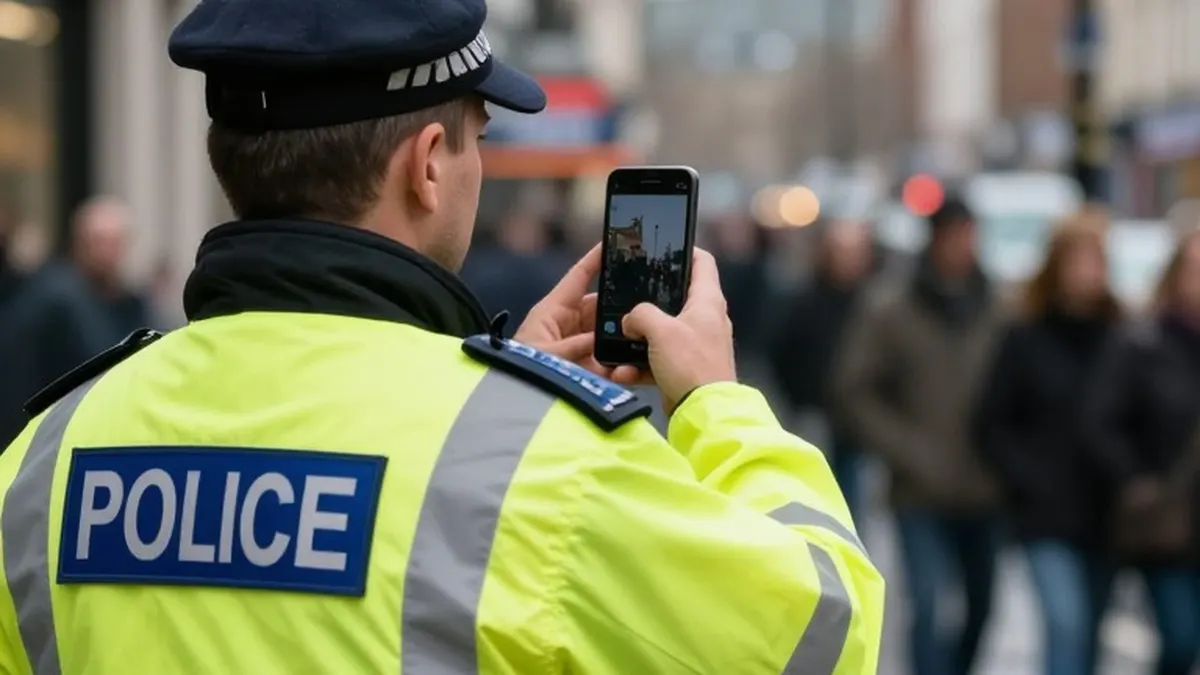
The force, which polices Cardiff and Swansea, has pioneered AI-enabled facial recognition. The figures concern officer-initiated facial recognition, in which officers capture a person's face with a smartphone and run the image through an algorithm called Neoface to match it against custody mugshots and other face databases. South Wales is one of the first UK constabularies to use the system routinely; a similar one is being trialled by the Metropolitan police in London and has been tested in Liverpool.
Most scans are made because people are suspected of crimes, but the technology is also intended to identify wanted criminals, missing people, and those found unconscious, uncommunicative or dead. In 2025 officers initiated scans of 257 adults and 14 children, including two under-10s. The next most common reasons after suspected crime involved people believed to pose a risk of harm to themselves or others. Where a scan produced a match, 48% of cases led to an arrest and a third ended with no further action.
Civil liberties campaigners called the ethnicity figures alarming. "This data shows that intrusive biometric tools are being used to disproportionately target minority communities," said Jake Hurfurt, head of research and investigations at Big Brother Watch, which obtained the figures. Aliya Mohammed, chief executive of Cardiff-based Race Equality First, said the figures raised "serious concerns about racial disproportionality". "Facial recognition is not neutral because it uses AI," she said. "If existing biases influence who is stopped and scanned, technology can reinforce and even amplify inequality."
Last week the police watchdog warned that innocent people, especially from ethnic minorities, remained at risk of wrongful arrest if police treated inaccurate retrospective facial recognition data as evidence. Alvi Choudhury, 26, was arrested in February for a burglary in a city he had never visited after face-scanning software confused him with another person of south Asian heritage on a custody database. "The police are under pressure to solve crimes and they are over-reliant on these AI tools," he said. "They shouldn't be arresting people based on the AI tools alone." He said he remained worried the systems were not trained on enough ethnic minority faces.
Supporters of the technology, including the home secretary, Shabana Mahmood, see facial recognition as the biggest breakthrough for catching criminals since fingerprints and DNA matching. Other versions include live facial recognition cameras directed from marked vans and cameras fixed to lamp-posts, such as a pilot in Croydon between October 2025 and March 2026 that led to 173 arrests, including of rape, kidnap and sexual assault suspects.
A South Wales police spokesperson said: "We recognise the figures raise concerns about disproportionality. The number of OIFR searches remains relatively small, and the use of the technology is in its infancy." The force said each deployment was based on the individual circumstances officers were dealing with and was subject to supervisory and force-wide scrutiny, adding that it would review its approach through governance processes that include independent advisory groups and external scrutiny panels.
Earlier this month the Home Office announced a new facial recognition watchdog with the power to stop police forces using the technology if they fail to follow the rules, along with new laws in the police reform bill requiring the use of face scans to be intelligence-led and proportionate. The Home Office said operational use was a matter for the police but must comply with equality, human rights and data protection laws, and must be necessary, proportionate and fair.