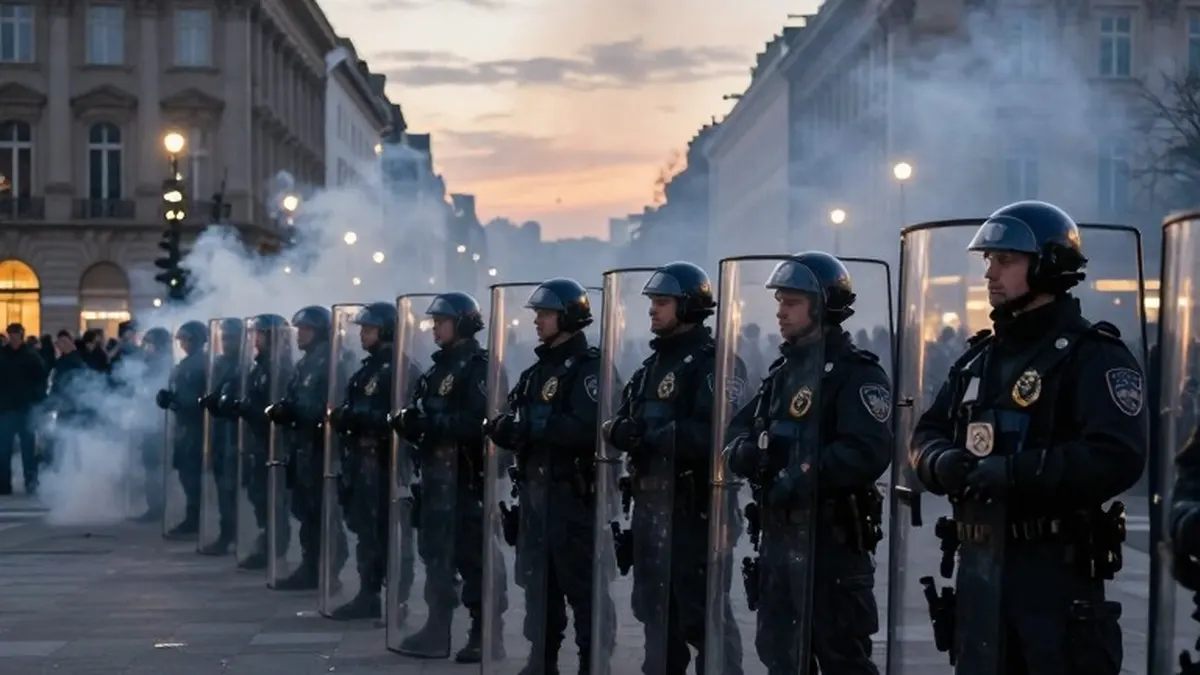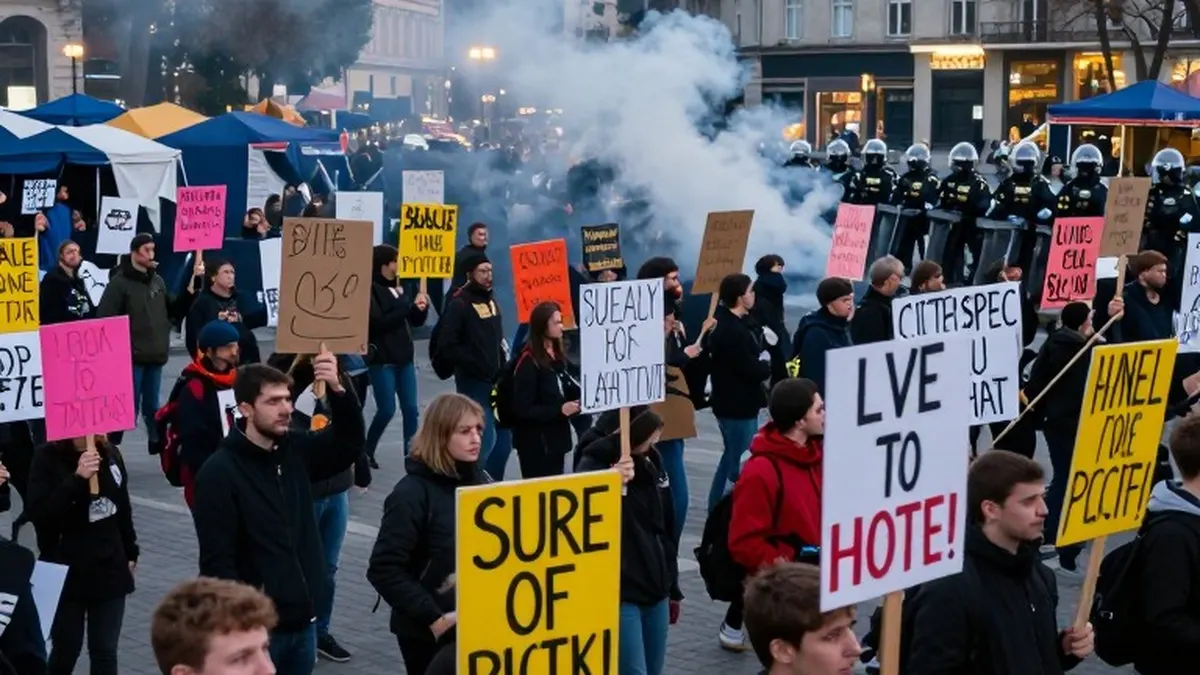
Streets from Milan to Marseille to Madrid have filled with colourful and passionate demonstrations in recent weeks. Many began peacefully, but a large number ended with violence and looting. There have been allegations that radical left-wing groups deliberately sparked riots, along with reports of heavy-handed policing.
The scale is wide. Thousands rallied in Rome and Florence, and hundreds of thousands marched across France. A tent encampment has occupied a central square in Madrid since late September, while tens of thousands of mostly young people marched in Lisbon earlier this month. In Brussels, police used tear gas and water cannon after young men in black, their faces covered, threw rocks and firecrackers. In Albania, protesters alleging corruption are demanding that Prime Minister Edi Rama, 13 years in power, step down.
What sets this wave apart, according to BBC reporting, is that the protests are happening at the same time in many countries and most participants are young, some of them very young. Over half of those detained in Barcelona scuffles last weekend were under 18, and minors were among those held in Milan, according to Italy's LaPresse news agency.
Students have demonstrated in France, Belgium, Ireland, Spain, Portugal, Italy, Greece, Serbia and Albania. Many events are organised through TikTok or Instagram, which Belgium's interior minister has called the "TikTokisation" of protests. France, where the wave began in late September over staff shortages and run-down school buildings, is seen as a catalyst. In Barcelona, students were urged to march under the hashtag #InstitutsIndignats, echoing the French slogan Lycées Indignés. A 17-year-old Greek pupil, Yiannis Papanikolaou, told AFP: "I think something might change, because of what France is doing, France will spur Greece."
The grievances reach well beyond schools. Young people voice worries about the environment, about AI taking jobs, and about a cost of living that could keep them from finishing their studies or finding a home big enough for a family. In Lisbon, 26-year-old PhD student Carolina Cruz told Reuters she may lose her home as her rental contract nears its end. Riccardo, 22, a protester in Milan, told AFP the aim was at least to get people "talking about these issues again." Not all angry young people are on the left: supporters at a launch event for French nationalist Marine Le Pen's presidential campaign cited immigration, street safety and living costs.
Mark Leonard of the European Council on Foreign Relations describes crises layered on one another, from the 2007-8 financial crisis to the 2015 migrant crisis, Covid, inflation after Russia's 2022 invasion of Ukraine, and now the war in the Gulf. Nathalie Tocci, a politics professor at Johns Hopkins University, said young people are "truly engaged", just in a more grassroots way, and noted that Serbia's student-led movement recently helped defeat long-standing leader Aleksandar Vučić in parliamentary elections.
Intelligence services in France and Belgium have described much of the looting as opportunistic, mixed with "mindless violence" and some disorder orchestrated by ultra-left youth. French media have asked whether an informal alliance formed between ultra-left activists and young people from disadvantaged suburbs. Centrist and right-wing French politicians, including President Emmanuel Macron, blame radical left groups and delinquents, while Belgium's Vlaams Belang party called the riots "imported". Belgium's interior minister has pointed to ultra-left groups.
Governments have made thousands of arrests, and Italy and France have promised a "you break it, you pay for it" approach. Italian Prime Minister Giorgia Meloni is making parents of minors liable for damage, including deducting welfare support. More mass demonstrations are planned in France and Italy in the coming days.
Major elections are approaching in all the big EU countries, and Le Pen is polling far ahead of rivals in France. Nationalist parties are also doing well in Spain, Italy, Germany and Poland. Grégoire Roos of Chatham House says the "social contract" between citizens and states has eroded, and the current protest wave looks set to continue.