A US Federal Aviation Administration official was supervising the site that allegedly set off Friday's outage, which forced flights across the United States to land and paralyzed the country's air traffic for almost five hours, The Washington Post reported on Wednesday.
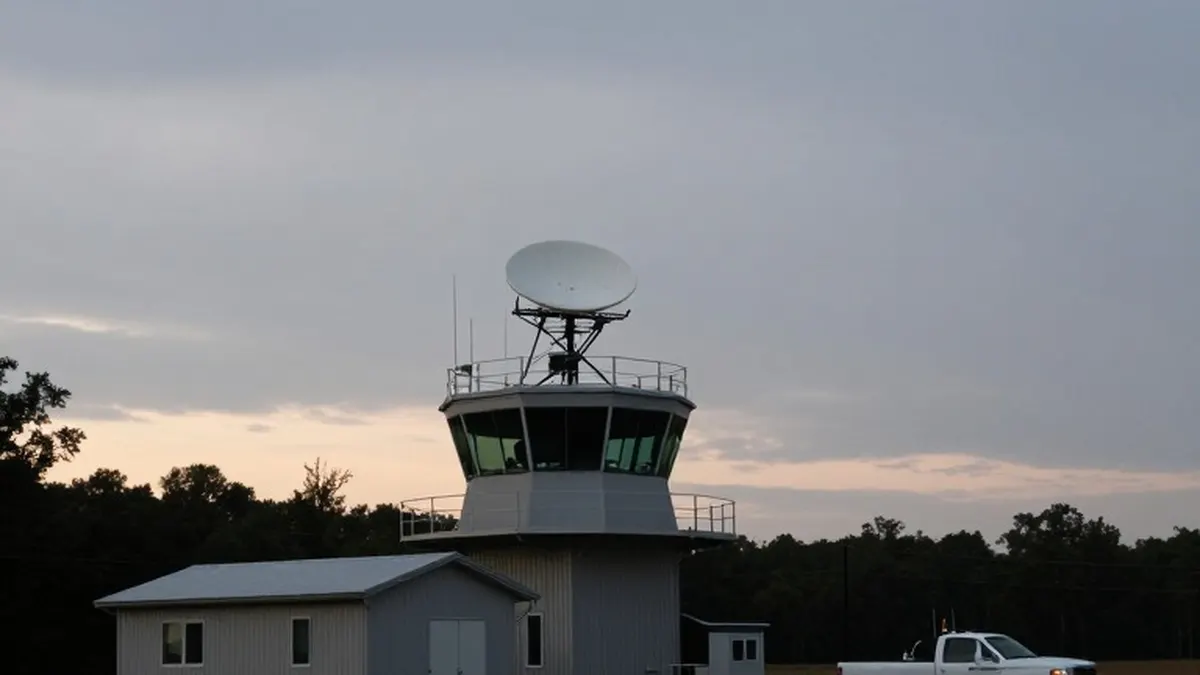
According to the report, the FAA official was on site overseeing work carried out by L3Harris to replace old copper cables with new fiberglass cables at a remote location in El Dorado, Arkansas.
The revelation follows claims by US Transportation Secretary Sean Duffy that the outage may have resulted from "incompetence" on the part of L3Harris or from a faulty router. "We're working to determine whether we had incompetence, meaning whether it was user error or installer error from L3Harris, or whether they installed a faulty router. We haven't determined what the fault was," Duffy said at a press conference.
The Washington Post's source, who spoke on condition of anonymity to discuss sensitive matters they were not authorized to talk about, described Duffy's statements as "inflammatory" and "insulting." "We're working really hard to get to a root cause. Right now, everyone is jumping to conclusions," the person told the newspaper.
According to The Washington Post, the FAA's official response consisted of remarks Duffy made on Tuesday, when he said he expected L3Harris to "hire better minds." Other companies are also being evaluated to help with the remainder of the contract.
Duffy said on Saturday that the nationwide flight halt stemmed from a communication error, when a router sent more than 1,000 connection attempts every four to five seconds, overloading the network and causing static in the communications. "What that did was give us issues with our communication with airplanes, and it also caused some disruption with our radar," he said.
L3Harris has stopped using the Juniper routers implicated in the incident, while the FAA still operates 68 of them in the United States, The Washington Post reported. "Based on what we know and have been told by others, our equipment was working as configured," said Adam Bauer, a spokesman for HPE, the company that makes the Juniper circuit-to-packet devices.
Duffy also called for additional funding to modernize the network, saying $50 billion is needed to upgrade air traffic control systems, up from the $30 billion he had sought earlier. "This is an emergency," he said.
Homeland Security Secretary Markwayne Mullin said on Saturday there was "zero evidence" so far that the outage resulted from a cyberattack or a rogue AI system, though investigators had not ruled out either possibility.