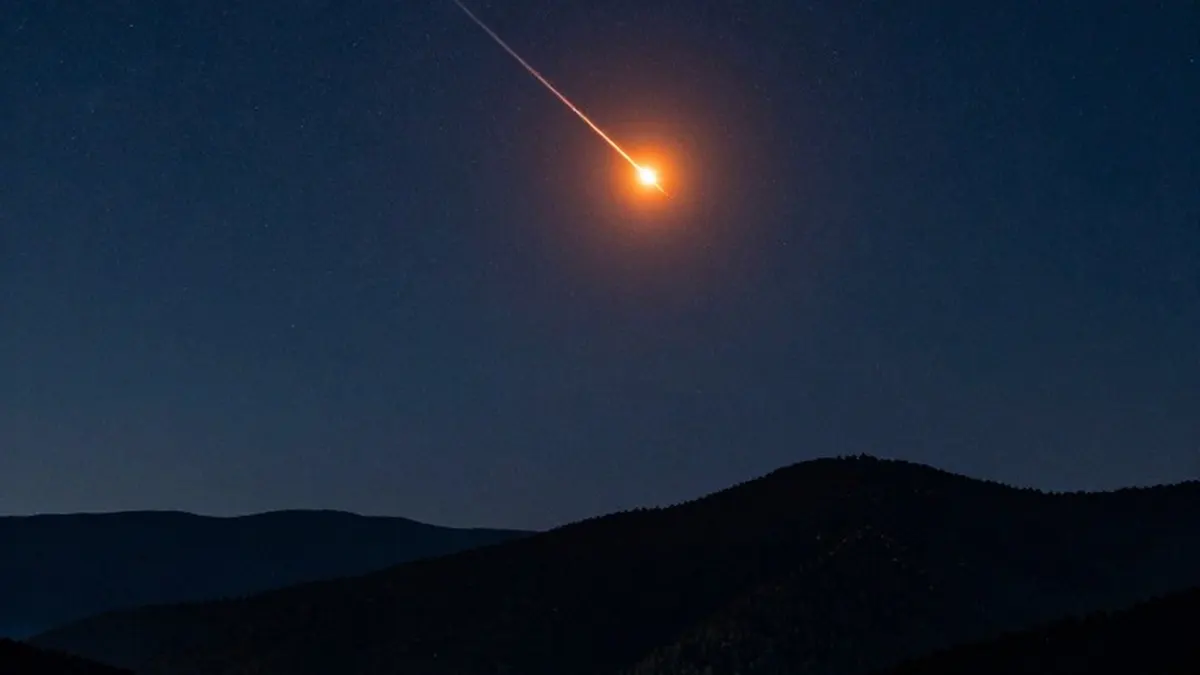
A meteor racing through the atmosphere at 47,000 mph put on a brief but striking show over parts of North Carolina and Tennessee on Thursday night, according to NASA.
The fireball first appeared about 50 miles above Robbinsville, a town in western North Carolina. People across the region posted numerous photos of the streaking object on social media, and NASA's network of specialized imaging systems, known as sky cameras, also recorded the event from stations positioned throughout the area.
Those cameras followed the meteor as it headed west into southern Tennessee. The object finally faded from view roughly 25 miles above East Ridge, a city near Chattanooga. NASA said only about 10 seconds elapsed between the fireball's first appearance and its disappearance.
To piece together what happened, the agency analyzed footage from several of its cameras, including one at the Tellus Science Museum in Cartersville, Georgia, and others located in Huntsville, Alabama, and Tullahoma, Tennessee, as well as an additional camera positioned near the Tennessee-North Carolina border.
Based on that analysis, NASA concluded the object was a small fragment of an asteroid. It measured just two inches in diameter and weighed six ounces, a modest size given how brightly it burned in the night sky.
Meteors, often referred to as shooting stars, are the visible trails left by asteroid fragments that plunge into Earth's atmosphere, according to NASA. When a meteor is unusually bright, astronomers classify it as a fireball, a label earned because such objects shine starkly enough to be visible across a wide area.
The asteroid fragment seen last week was on the smaller end of the scale for such events. NASA noted that some fireballs can measure three feet across or larger.
The agency also ruled out one possible origin for the meteor. It said the object was not associated with the Taurid meteor shower, which is currently active.