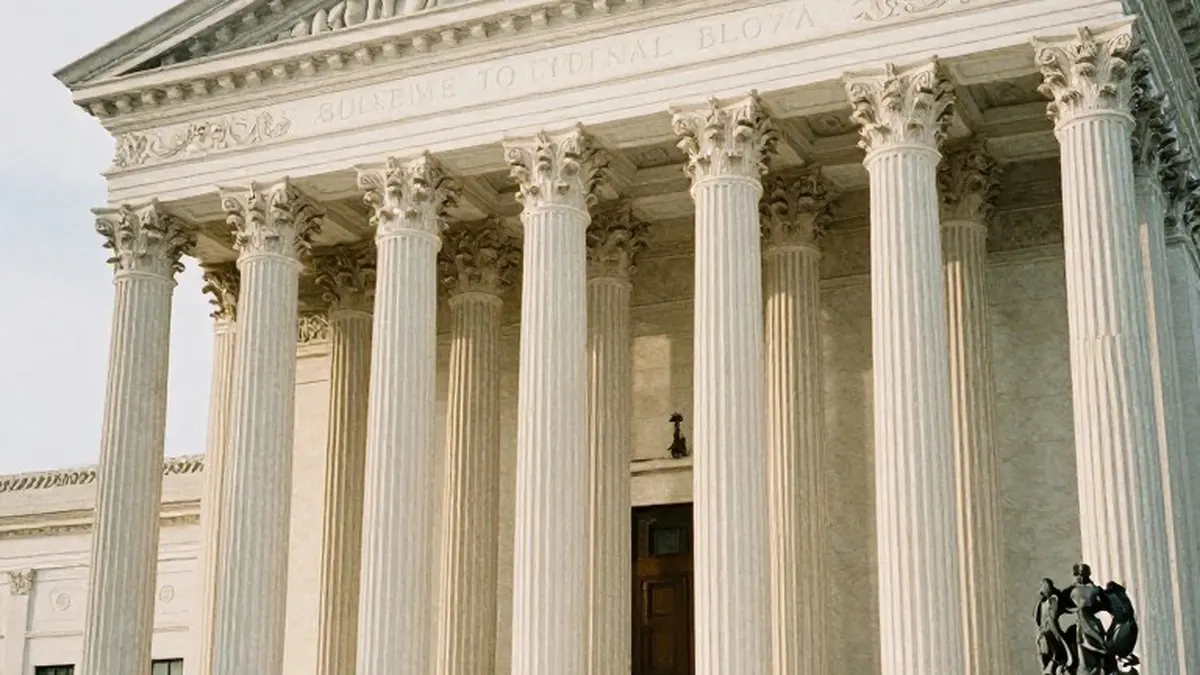
As the United States marks 250 years of independence this year, three conservative Supreme Court justices are issuing a unified call for Americans to deepen their understanding of the nation's history. Justices Brett Kavanaugh, Neil Gorsuch, and Amy Coney Barrett have argued that preserving the country's founding freedoms for future generations relies heavily on civic education and active participation in the government.
The justices expressed these views in a series of interviews filmed by the Federalist Society, which were released ahead of the organization's 2026 National Lawyers Convention. The event, themed around 250 years of American exceptionalism, brings together figures from the conservative legal movement to discuss pressing issues. While united in their general emphasis on civic knowledge, each justice approached the topic with a distinct perspective.
Justice Neil Gorsuch adopted a distinctly religious tone in his remarks. He noted that the rights granted by the Constitution and the ideals in the Declaration of Independence are often taken for granted. Gorsuch described these rights as being similar to the air we breathe, appearing natural to modern Americans but not existing in 1776. He emphasized that the concept of inherent rights comes from God rather than the government.
Gorsuch, who was appointed to the court by President Donald Trump in 2017 after the death of Justice Antonin Scalia, stressed the importance of studying history to maintain the American way of life. He stated that the Constitution and Declaration have survived because each generation chooses to uphold them. Citing Daniel Webster, Gorsuch remarked that it took six thousand years to develop such a system of government and warned that it should not be expected to happen easily or again.
Justice Brett Kavanaugh also highlighted the critical role of education. He argued that the education system is fundamental to preserving and improving the republic over the next 250 years. Kavanaugh advocated for teaching American history, the values of the country, and the mechanisms by which the nation has been preserved and improved, such as the constitutional amendment process. He encouraged constant learning and participation in the system of government for all citizens, not just the youth.
Justice Amy Coney Barrett focused her comments on the Declaration of Independence and its potential to inspire civic participation. She emphasized that Americans are active participants in the national project rather than passive observers. Barrett pointed to the final line of the Declaration, where signatories pledged their lives, fortunes, and sacred honor to the success of the American enterprise. She noted that the signatories made good on this promise, with some losing their property to loyalists, and suggested that this level of commitment is necessary for the nation to move forward.
Although not part of the Federalist Society interviews, Justice Sonia Sotomayor also shared her thoughts on the 250th anniversary during an event at Mount Vernon's Washington Library. Her tone was somewhat more somber than that of her conservative colleagues. Sotomayor argued that the United States is currently in a rough place and would require significant hard work to return to an even keel.
Sotomayor acknowledged that some democratic norms may have been lost forever. However, she expressed confidence that the country would not fail as a democracy, though she predicted a difficult period ahead as the nation figures out the meaning of its current state. These varied perspectives from the bench underscore the ongoing debate about how best to sustain the American republic in its next quarter-century.