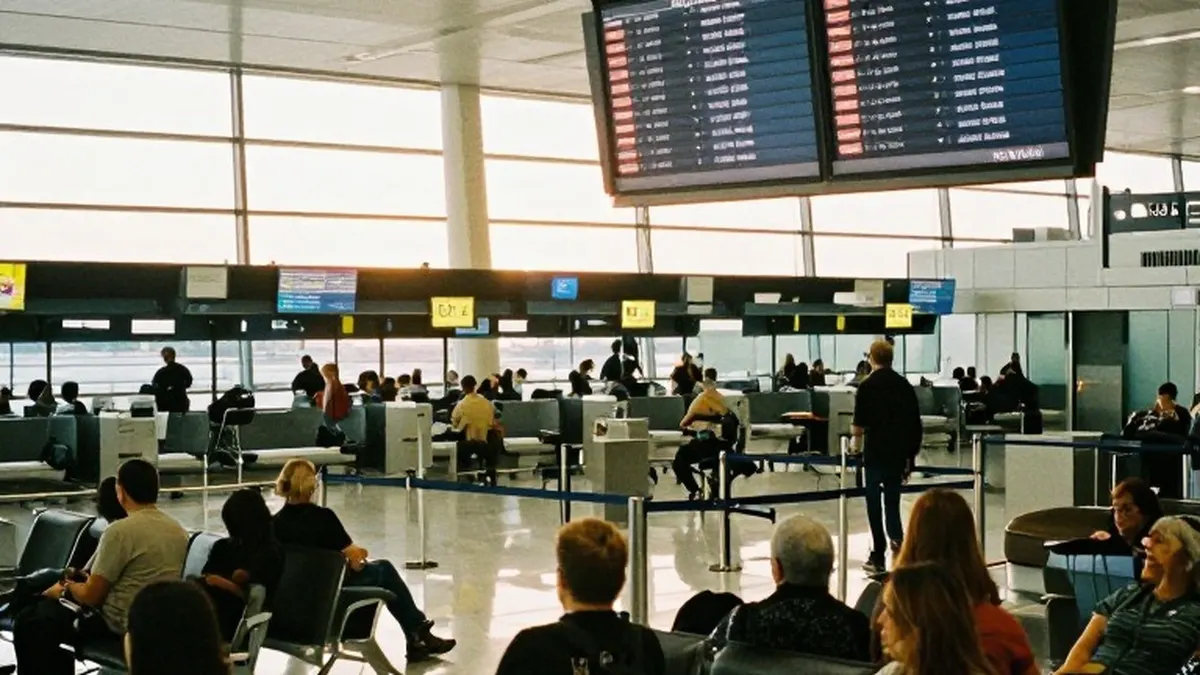
Transport infrastructure across Belgium has come to a near standstill as hundreds of flights were cancelled and train services were severely disrupted. The widespread halt in operations is the result of a coordinated strike action aimed at opposing planned austerity measures within the national government. The disruption has affected major transportation hubs and public transit systems throughout the country, creating significant challenges for commuters and travelers alike.
In the capital, Brussels, all air traffic has been suspended at Zaventem airport. Additionally, operations have stopped at Charlerois airport, which serves as a primary hub for low-cost carriers such as Ryanair. The strike has also grounded train and underground services in Brussels, where a large crowd is expected to participate in a protest march. The timing of the industrial action coincides with ongoing political tensions regarding the state of the national budget.
Prime Minister Bart De Wever has not yet reached an agreement with his coalition allies on a budget designed to reduce government costs. King Philippe recently declined De Wever's resignation, a move that provided the prime minister with additional time to continue negotiations. This political backdrop has fueled frustration among union leaders, who argue that the current approach to fiscal management threatens key social protections.
According to the strike schedule, no flights were permitted to take off or land at Brussels Airport between 07:00 and 21:00 local time, which corresponds to 06:00 and 20:00 GMT. The action is being carried out by air traffic controllers. More than 50,000 travelers had their plans disrupted by the stoppage, with expectations that further delays would affect passengers overnight and into Tuesday.
At Charlerois airport, the situation mirrored that of its capital counterpart. Flight information displays listed all services as scheduled, regardless of whether they were actually departing or arriving. When the strike was first announced on Saturday, airport officials warned of disastrous consequences. They noted that without active air traffic control, it is physically impossible for aircraft to depart or arrive at the terminals.
As thousands of demonstrators gathered in Brussels, Bert Engelaar, the head of the major union FGTB, addressed the crowd. He stated that the government has viable alternatives to dismantling the social protection system. Engelaar specifically highlighted the need for a genuine wealth tax, fairer taxation practices, and the removal of existing tax loopholes to address the financial deficit.
Engelaar further commented on the political situation, suggesting that taking political responsibility does not mean keeping a government in power at all costs, but rather knowing when to stop. He praised the left-wing Vooruit party, which is the only member of the five-party governing coalition reported to have stalled the budget agreement. Vooruit has advocated for raising taxes on the wealthy while limiting cuts to pensions and the healthcare sector.
Other union leaders also voiced their concerns during the events. Ann Vermorgen, a leader of the CSC union, criticized the government's proposal to cut bank holidays when they fall on weekends. Beyond the aviation and rail sectors, the strike has caused disruptions in public transport, schools, and various other public services across Belgium.
The industrial action highlights the deepening divide between the government and labor representatives over how to manage the country's finances. With the budget still unresolved, the strike serves as a powerful demonstration of the workforce's willingness to halt national operations to push for more equitable fiscal policies.