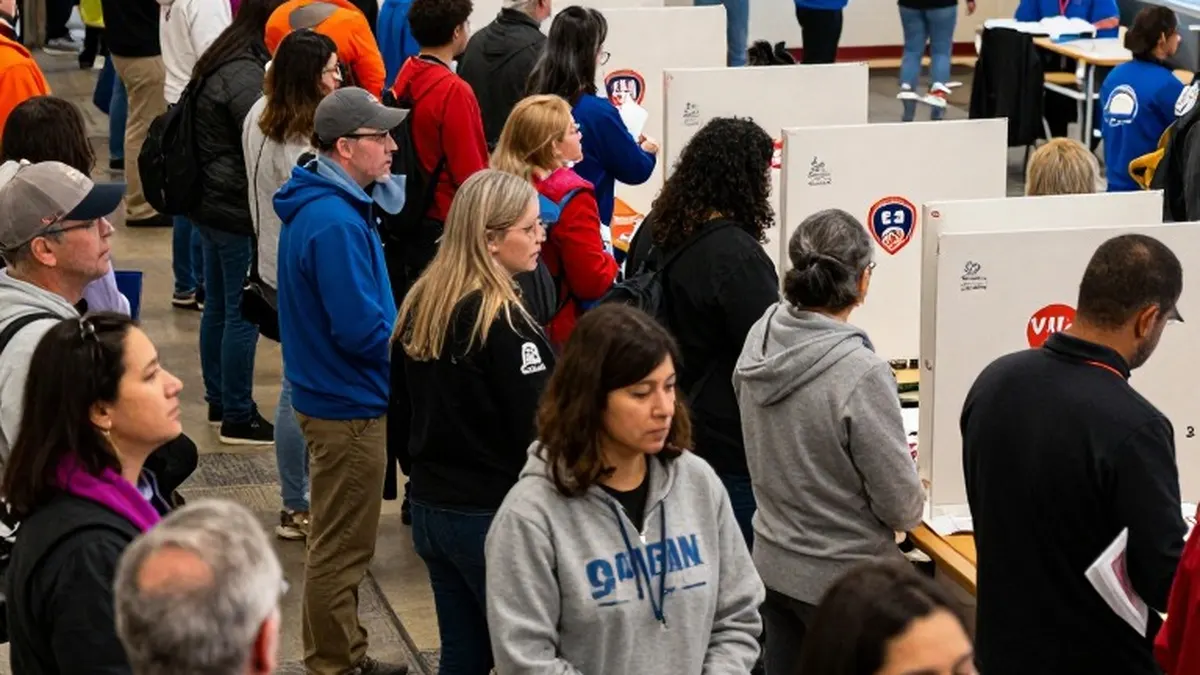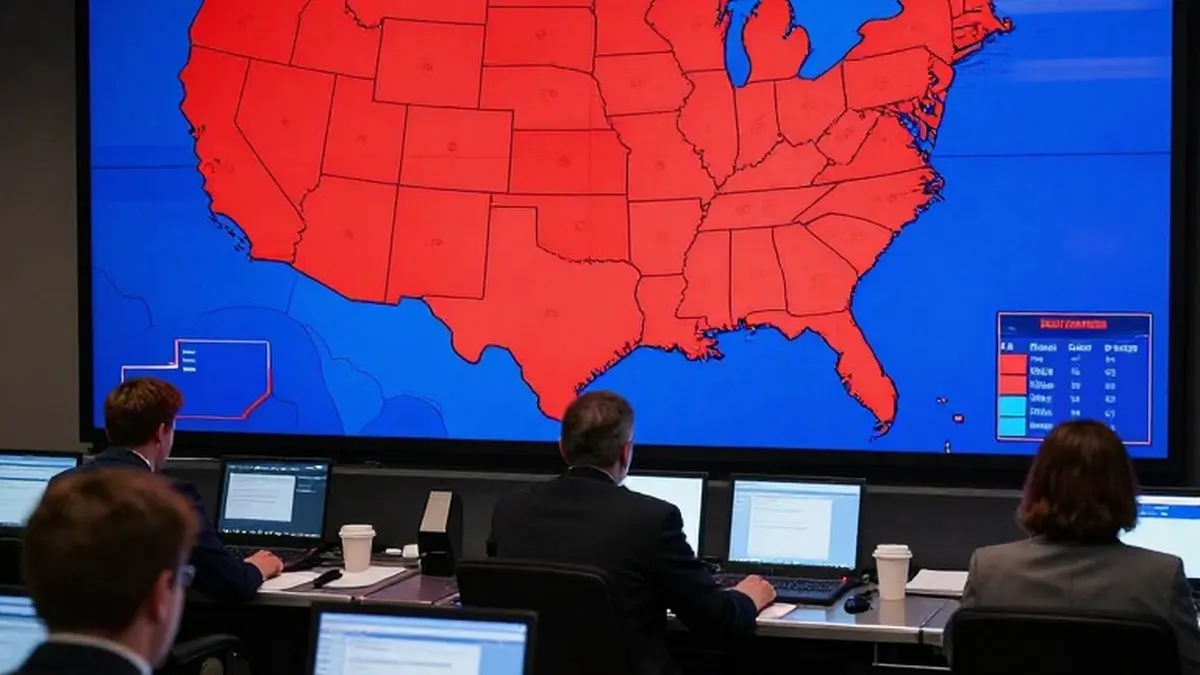
Democrats head into Tuesday's midterm elections favored to retake the House, but the size of any new majority is the question that will define the night. Whether the party rides a wave or scrapes together a slim edge should become clear through four categories of races.
Republicans began Election Day defending a narrow 218 to 214 seat advantage and facing stiff headwinds as the party in power. This cycle has seen a record number of departures from Congress, and polls show voters unhappy with the economy and the ongoing war in Iran. An earlier NPR analysis found both parties spending heavily across 70 competitive districts, from longtime tossups to newly viable seats in deeply conservative areas.
The first clues will come from Kentucky's 6th District and Indiana's 5th, where polls close in the 6 p.m. Eastern hour. President Trump won both by 15 and 17 points respectively in 2024, so the margins will reveal how much voters have soured on Republicans. Both parties have spent heavily on the Kentucky race between Democrat Zach Dembo and Republican Ralph Alvarado, and a Democratic flip of either seat would signal a long night for the GOP. Florida counts quickly and has more than a half dozen competitive races, including the open 22nd District contest between Democrat Pia Dandiya and Republican Casey Askar and the redrawn 25th, where Democratic Rep. Jared Moskowitz faces Republican Scott Singer. Also here: FL-27, NC-11, SC-01 and VA-01.
A second group involves late money. In the final week, a handful of races each drew more than $10 million in advertising, according to AdImpact. Michigan features prominently: in the 7th District, progressive Democrat William Lawrence is challenging Republican Rep. Tom Barrett in a seat Trump carried by just over one percent in 2024, while the open 10th pits Democrat Christina Hines against Republican Mike Bouchard.
In New York's 17th District, Republican Rep. Mike Lawler could be one of the rare GOP incumbents to hold on, helped by his party's late ad spending edge against Democrat Cait Conley. Three of Iowa's four House races, the 1st, 2nd and 3rd districts, also rank among the most expensive, partly because competitive governor and Senate contests are lifting turnout. Others in this group: CO-08, PA-01, WA-03 and WI-03.
Redistricting forms the third category. This year's Supreme Court decision rolling back part of the Voting Rights Act prompted many Republican-led states to redraw maps eliminating districts that typically favor Democrats. But the environment has soured so much that Alabama's 2nd, held by Democrat Shomari Figures, Ohio's 9th, held by Democrat Marcy Kaptur, and North Carolina's 1st, held by Democrat Don Davis, are toss-ups at best for Republicans and leaning Democratic at worst.
In Texas, Latino voters appear poised to swing back toward Democrats, which could block Republican Eric Flores from flipping the 34th District seat held by Rep. Vicente Gonzalez and keep Tano Tijerina from unseating Democratic Rep. Henry Cuellar in the 28th. Also here: CA-22, FL-09, FL-14 and TX-35.
The final category tests how far into conservative country Democratic support can reach. In Arkansas' 2nd District, Republican Rep. French Hill faces a well-known challenger in Democrat Chris Jones, with close to $10 million spent in the final months on the Little Rock-based seat Trump carried by 15 points. Ohio's redrawn map could also backfire: Republican Reps. Mike Turner in the 10th District and Mike Carey in the 15th hold seats Trump won by closer to 10 points, in districts stretching from the suburbs to the exurbs of Dayton and Columbus.
The margin in North Carolina's Senate race, where former Gov. Roy Cooper is expected to defeat former Republican National Committee Chair Michael Whatley, could decide whether contests like the 3rd District are in play; Republican Rep. Greg Murphy's seat absorbed more Democratic-leaning voters in the latest redraw. Others: NC-09, NY-21, TN-09 and WA-05.