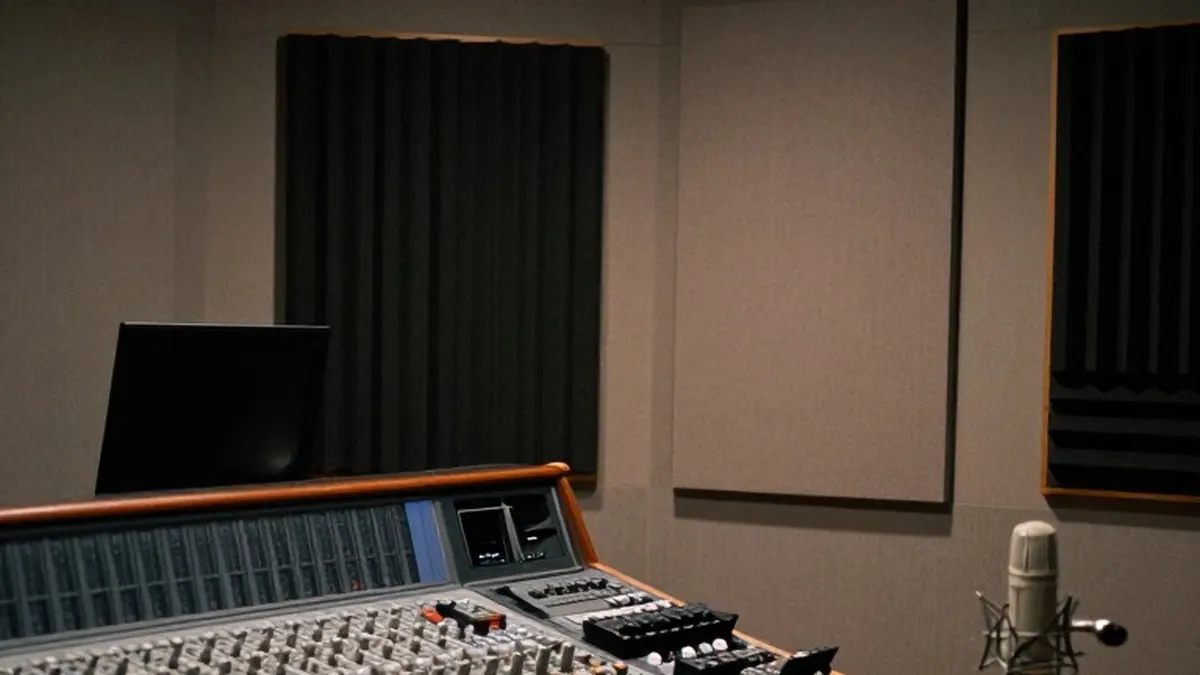
A Paris court is expected to announce a verdict on Friday in the high-profile trial of three police officers accused of assaulting Michel Zecler, a Black music producer, at his studio. The incident took place on November 21, 2020, and has become a focal point for debates regarding racial profiling and police conduct in France. Surveillance footage captured the officers entering Zecler's studio, pushing him against a wall, and striking him repeatedly before other musicians intervened.
The three accused, Aurelien Lapersonne, Pierre Plantier, and Philippe Tondeux, are charged with hitting Zecler 29 times over a span of four minutes. They are also alleged to have struck him six more times in the face after he was already restrained with handcuffs. Beyond the physical violence, the officers are accused of making racist remarks during the encounter and forging a public document to cover up their actions.
The case gained significant public attention after football star Kylian Mbappe shared an image of the injured Zecler on social media. Mbappe described the video as unbearable and the violence as unacceptable. The prosecutor's office has requested a permanent ban for all three officers and prison sentences ranging from four to six years. Lapersonne, who initiated the identity check and submitted the falsified report, faces the harshest penalty of six years without parole.
Rim-Sarah Alouane, a legal scholar at the University of Toulouse Capitole, described the case as a clear example of institutional racism and systemic discrimination. She noted that the falsification of evidence raises questions about the integrity of the entire police system. Alouane emphasized that the surveillance footage was crucial to the case, stating that without it, the officers might have been able to conceal the assault and their subsequent cover-up efforts.
During the trial, Lapersonne admitted to fabricating details in his initial police report. When asked by the presiding judge if he had made up the claim that Zecler struck out with his arms and legs, Lapersonne responded affirmatively. He acknowledged that he deliberately omitted the blows the officers landed on Zecler, citing fear as a primary reason for his omission. This admission highlighted the contrast between the official record and the visual evidence.
This trial occurs within a broader context of legal challenges facing French law enforcement. In recent years, courts have recognized patterns of racial profiling. Last year, the European Court of Human Rights condemned France for the repeated stops of a young man of North African origin. Additionally, France's high court acknowledged racial profiling in identity checks in 2023, though it did not mandate specific measures to end the practice.
The timing of the verdict is particularly significant as the French Senate considers a controversial bill regarding police use of force. The proposed legislation would presume that officers acted in self-defense when using firearms, shifting the burden of proof to the complainant. The National Assembly approved the measure in July, but critics have labeled it a license to kill, arguing it creates a sense of impunity for law enforcement.
Alouane warned that such legislation could hinder future cases similar to Zecler's. She argued that the presumption of innocence for police officers undermines investigations and makes it harder for victims to access justice. If the proposed law were currently in effect, she suggested that Zecler's case might have been dismissed.
Public scrutiny of police tactics has also intensified due to recent student protests in Paris. During these demonstrations, a 15-year-old lost a hand to a police stun grenade, while another officer threw a tear gas canister at close range, shattering the jaw and teeth of a 14-year-old student. These incidents have further fueled calls for accountability and reform within the French police force.