The Syrian Defense Ministry announced on November 12 that the country's naval leadership has formally received a French military delegation. Brigadier General Mohammed Al-Saud, who commands the naval and coastal defense forces of the Syrian Arab Army, met with Admiral Mackara Ouk, who led the visiting French group. This high-level engagement followed the arrival of a French warship at a Syrian port the previous day, an event that has drawn significant attention from both local observers and international analysts.
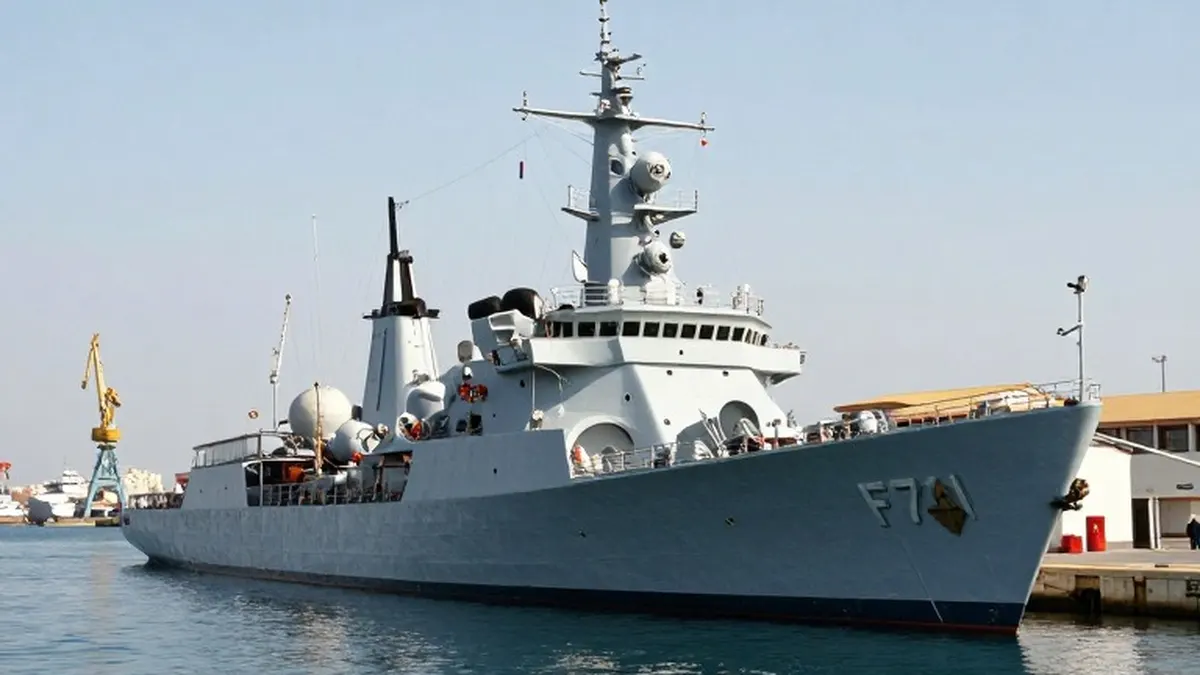
The visiting vessel is the Surcouf, a La Fayette-class frigate identified by the hull number F711. Its presence in the port of Latakia is considered a symbolic milestone. Photos released from the event show Syrian and French naval personnel interacting aboard the ship. Syrian state media, SANA, reported that officials from both nations used the meeting to discuss methods for strengthening maritime military cooperation and enhancing bilateral relations. The visit is officially recognized as the first time a French warship has called at a Syrian port.
During the talks, which were attended by several officers from both countries, the focus remained on expanding cooperation in the naval sector. The conclusion of the meeting emphasized that the visit represents a new step in military engagement between Syria and France. Discussions were centered on how to deepen these ties through specific maritime initiatives. For many Syrians, the arrival of the French ship was welcomed as a sign of diversification in their naval partners, particularly given the historical dominance of Russian vessels in the area.
The name Surcouf is a tradition in the French Navy, honoring the privateer Robert Surcouf. He lived from 1773 to 1827 and operated in the Indian Ocean during the French Revolutionary and Napoleonic Wars. Known for his skill, he is reputed to have captured over 40 enemy ships. The French have named multiple vessels after him, including a submarine in 1934 and a destroyer in 1955. The current frigate was commissioned in 1997 and has a broad operational history.
Over its service life, the Surcouf has participated in various missions across the globe. Its deployment record includes operations in West Africa, Kosovo, the Red Sea, and the Djibouti zone. In 2018, the ship visited Vietnam alongside the French naval vessel Dixmude. That same year, the Dixmude also docked in Haifa, Israel, as part of a broader French naval visit to the region. Such visits are a standard component of French naval diplomacy, which aims to showcase the country's presence and maintain strong international relations.
France typically maintains two naval ships in the Eastern Mediterranean to support these diplomatic and strategic goals. The Naval Post highlighted that the Surcouf berthed at Latakia on November 11, following the cooperation agreement reached between Paris and Damascus earlier this year. In 2025, the ship was seen transiting the English Channel and was seen off at Gibraltar. It also visited Quebec City alongside the French amphibious assault ship FS Mistral during that period. The current docking in Syria underscores a growing trend of naval diplomacy in the region.
The arrival of the French frigate signals a shift in the maritime landscape of the Eastern Mediterranean. Previously, Russian warships were the primary foreign naval presence in Syrian ports. The inclusion of France in this space suggests an evolving dynamic in regional security and cooperation. As France continues to use naval visits to reinforce its strategic interests, the visit of the Surcouf to Latakia serves as a concrete example of these efforts.
The interaction between the Syrian and French naval commands highlights a renewed focus on bilateral military ties. By engaging directly with the commander of Syria's naval forces, the French delegation signaled a commitment to practical cooperation. The discussions on maritime security and defense collaboration are expected to influence future interactions between the two countries. This development may also encourage other nations to reconsider their naval engagements in the region.
The historical context of the Surcouf adds a layer of significance to its current mission. As a vessel with a long and active service record, it represents the enduring nature of French naval operations. Its presence in Syria, a country with complex geopolitical ties, marks a notable moment in the country's recent history. The local response, which praised the visit, indicates a positive reception to the expanded range of international partners in Syrian waters.
As the French frigate completes its docking, the implications of this visit will likely be assessed by regional stakeholders. The move aligns with broader French efforts to maintain a visible and active role in Mediterranean affairs. With the agreement between Paris and Damascus providing the framework for this cooperation, future naval exchanges are possible. The event in Latakia stands as a testament to the changing patterns of military diplomacy in the Middle East.